
I remember standing at a crossroads in my life, feeling that familiar itch for something more, something creative, something that truly spoke to the part of me that loved stories. I’d always been captivated by the magic of television – not just the glossy finished product, but the sheer alchemy of how moving images, sound, and narrative came together to transport you. That’s when the idea of a TV Production Course first sparked, a tiny ember that quickly grew into a burning desire. It wasn’t just about watching TV anymore; it was about understanding its heartbeat, learning its language, and perhaps, one day, speaking it myself.
Stepping into that first classroom felt like walking onto a film set for the very first time – a mix of nervous anticipation and sheer, unadulterated excitement. The room buzzed with a similar energy from my fellow classmates, a motley crew of dreamers, technophiles, and storytellers, all eager to unlock the secrets of the television industry. Our instructor, a seasoned veteran with eyes that had seen countless sunrises and sunsets through a viewfinder, began by painting a picture of what lay ahead. This wasn’t just a course; it was an immersion, a hands-on bootcamp designed to take us from curious novices to capable creators.
The initial weeks were a deep dive into theory, the foundational grammar of visual storytelling. We learned about the history of television, the evolution of broadcasting, and the different genres that populate our screens, from gripping dramas to insightful documentaries and fast-paced news segments. It felt a bit like learning to read before writing a novel. We dissected famous scenes, analyzing camera angles, shot composition, and the subtle dance between light and shadow. I found myself looking at every commercial, every news report, every movie with a new pair of eyes, seeing the deliberate choices behind each frame. This theoretical grounding, while sometimes feeling abstract, was crucial. It taught us why certain techniques work, preparing us for the how.
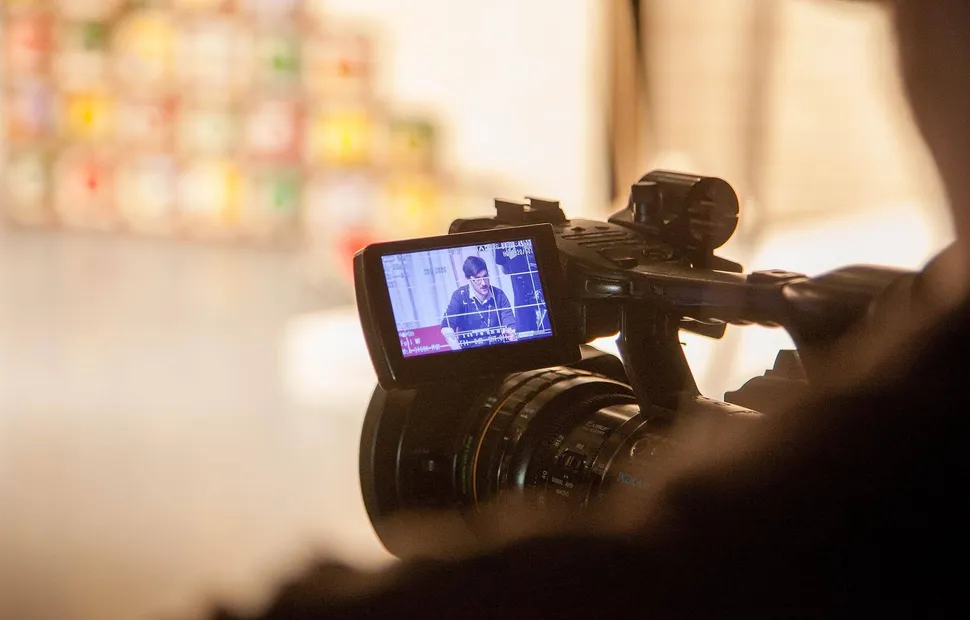
Then came the moment we’d all been waiting for: getting our hands dirty with the actual equipment. This was where the learning truly came alive. I remember the thrill of picking up a professional camera for the first time. It felt heavier, more complex, and infinitely more powerful than any smartphone I’d ever held. Our instructor walked us through the anatomy of a camera, explaining the intricacies of lenses – wide-angle for sweeping landscapes, telephoto for intimate close-ups – and the fundamental principles of aperture, ISO, and shutter speed. It was a revelation to understand how these three elements conspired to control light and motion, shaping the very look and feel of an image. Learning how to operate a camera wasn’t just about pressing buttons; it was about developing an eye, finding the perfect frame, and making the camera an extension of your creative vision. We spent hours practicing different camera movements, from smooth pans and tilts on tripods to dynamic tracking shots with dollies and sliders, each movement designed to enhance the narrative.
Lighting, I quickly discovered, was an art form unto itself. Before the course, I thought light was just… light. How wrong I was! We delved into the magical world of three-point lighting – key light, fill light, and back light – understanding how each played a critical role in shaping a subject, separating it from the background, and evoking specific moods. We experimented with different types of lights, from powerful LEDs to softboxes and practicals, learning how to manipulate shadows, create atmosphere, and draw the viewer’s eye. There were countless "aha!" moments, like seeing a drab scene transform into something cinematic with just a few carefully placed lights. It taught me that light isn’t just about illumination; it’s about sculpting, painting with photons, and storytelling through shadows.
Sound, often the unsung hero of production, received its due attention. We learned that bad audio can sink even the most visually stunning production. My ears were retrained to listen for nuances – ambient noise, dialogue clarity, the emotional impact of music. We explored various microphones – lavaliers for discreet dialogue, boom mics for wider shots, and directional mics for focused sound capture. Understanding proper mic placement, recording techniques, and the importance of monitoring audio on set became second nature. We even dabbled in sound design, learning how foley effects and background atmospheres could enrich a scene, adding layers of realism and immersion that you might not consciously notice, but would certainly feel. This part of the course truly hammered home the idea that television production is a symphony of interconnected elements.
Once the footage was captured and the audio recorded, the real magic of transformation began in the editing suite. This was where raw footage was sculpted into a coherent narrative. We were introduced to industry-standard editing software like Adobe Premiere Pro and DaVinci Resolve, which initially felt like navigating a spaceship cockpit. But with patient instruction and endless practice, the complex interfaces slowly began to make sense. We learned about pacing – how the rhythm of cuts could accelerate or slow down a scene, building tension or allowing for reflection. Transitions, color grading, adding graphics, and integrating music became part of our toolkit. It was exhilarating to see a jumble of clips coalesce into a story, to manipulate time and space, and to discover the power of post-production to refine and elevate the initial vision. Color grading, in particular, was fascinating – how a subtle shift in hue or saturation could entirely change the emotional tone of a scene.
Beyond the technical skills, the course placed a strong emphasis on the art of storytelling itself. This wasn’t just about operating equipment; it was about communicating ideas, evoking emotions, and crafting compelling narratives. We delved into scriptwriting, learning about character development, plot structure, dialogue, and how to translate an idea from concept to a producible script. Directing modules taught us how to interpret a script, block scenes, guide actors, and articulate our vision to the crew. Pre-production planning became a crucial phase, involving everything from creating detailed storyboards and shot lists to drawing up call sheets and budgeting – all essential steps to ensure a smooth and efficient production day. This holistic approach ensured that we weren’t just technicians, but also thoughtful creators.
Perhaps one of the most invaluable aspects of the TV Production Course was the emphasis on teamwork and collaboration. No single person makes a television show; it’s a collective effort, a finely tuned machine where every cog plays a vital role. We were constantly working in crews, rotating through different roles – director, cinematographer, sound recordist, gaffer, grip, editor. This gave me an incredible appreciation for every person on set. I learned firsthand the challenges of being a director trying to articulate a vision, the meticulous attention to detail required of a sound engineer, and the physical demands of being a grip. Communication, problem-solving under pressure, and mutual respect became as important as any technical skill. There were moments of frustration, certainly, when ideas clashed or equipment malfunctioned, but these challenges only strengthened our bonds and taught us resilience. It mirrored the real-world dynamics of a professional production team.
The culmination of our learning came in the form of real-world projects. These weren’t just academic exercises; they were full-fledged productions, from conceptualization to final delivery. We produced short documentaries, narrative films, and even mock news segments. I remember one particular documentary project where my team decided to explore the story of a local artisan. It involved countless hours of research, interviewing, shooting on location in challenging lighting conditions, and then painstakingly editing hours of footage into a compelling 15-minute piece. The pressure was immense, deadlines loomed, and unforeseen problems arose (a crucial interview soundbite was corrupted, forcing us to reshoot!). But overcoming these hurdles, seeing our collective vision slowly materialize, and finally presenting our finished work to the class was an incredibly rewarding experience. It truly cemented all the practical skills we had acquired.
Beyond the classroom and the studio, the course also opened doors to the wider industry. We had guest speakers – working professionals from local broadcast stations, independent filmmakers, and media producers – who shared their experiences, offered invaluable career advice, and demystified the path into the television world. These sessions provided crucial insights into networking, portfolio building, and understanding the evolving landscape of digital media and content creation. We learned that the industry is constantly changing, with new platforms and technologies emerging regularly, emphasizing the need for continuous learning and adaptability.
Looking back, the TV Production Course was more than just a series of lectures and practical sessions; it was a transformative journey. It reshaped the way I perceive the world, making me acutely aware of visual language, the power of sound, and the nuances of human storytelling. I started as someone who simply enjoyed watching TV, and emerged with a profound understanding of the immense effort, creativity, and technical expertise that goes into every frame. My hands, once clumsy, now felt a natural connection to the camera. My ears, once passive, now actively listened for sonic textures. My mind, once filled with vague ideas, now had the tools to translate them into tangible moving images.
For anyone standing where I once stood, contemplating a similar path, I wholeheartedly recommend diving into a comprehensive TV Production Course. Look for programs that prioritize hands-on experience, offer access to industry-standard equipment, and provide a strong emphasis on both technical proficiency and creative storytelling. Seek out instructors who are not just academics but also active practitioners in the field, as their real-world insights are invaluable. Be prepared to work hard, to collaborate, to fail, and to learn from those failures. The journey can be demanding, but the rewards – the thrill of creation, the satisfaction of seeing your vision come to life, and the camaraderie forged with fellow storytellers – are immeasurable.
My journey through the world of TV production is still ongoing. The course provided me with the map and the compass, but the true adventure lies in the continuous exploration, the endless learning, and the pursuit of new stories to tell. It taught me that television isn’t just a medium; it’s a powerful voice, and with the right skills and passion, anyone can learn to wield it. And that, for me, is the most exciting story of all.
/prod01/channel_8/media/marketing-media/student-work/undergrad-courses/television-production-maidstone-tv-studio/2018/BA-(Hons)-Television-Production,-Maidstone-Studios-3.jpg "My Journey Through the World of TV Production")