The day I signed up for a Crisis Communication Course, I admit, I was a little skeptical. My professional life had seen its share of minor bumps and unexpected twists, but nothing that screamed "full-blown crisis." I figured crisis communication was for the big corporations, the ones facing scandals or environmental disasters. For me, it felt like learning to fly a fighter jet when all I really drove was a sensible sedan. Yet, a nagging feeling, a whisper about preparedness and the unpredictability of life, nudged me forward. Little did I know, that course would completely reshape how I understood communication, leadership, and even human nature itself.
I remember walking into that first session, half-expecting a dry lecture on corporate jargon and legal caveats. Instead, our instructor, a seasoned veteran with stories that could fill a library, started not with definitions, but with a question: "What’s the worst thing that could happen to your company or organization right now?" The room buzzed with nervous laughter and then, slowly, a torrent of fears poured out: a data breach, a product recall, a social media meltdown, an employee misconduct scandal, even natural disasters. It was a stark reminder that crises aren’t just headline-grabbing events; they’re the everyday nightmares businesses and organizations quietly dread. This initial exercise instantly grounded the "Crisis Communication Course" in reality, making it feel incredibly relevant, not just some abstract academic pursuit.
One of the first major revelations for me was that a crisis isn’t just a problem; it’s a moment of profound vulnerability and immense opportunity. How an organization communicates during these times doesn’t just manage the damage; it defines its character, its values, and its future. We learned that the silence, the hesitation, the misstep in those critical first hours can cause more harm than the initial incident itself. It was like discovering that the actual crisis event might be a cut, but poor communication was a festering infection. This realization was a turning point for many of us in the room; the importance of the subject matter became crystal clear.
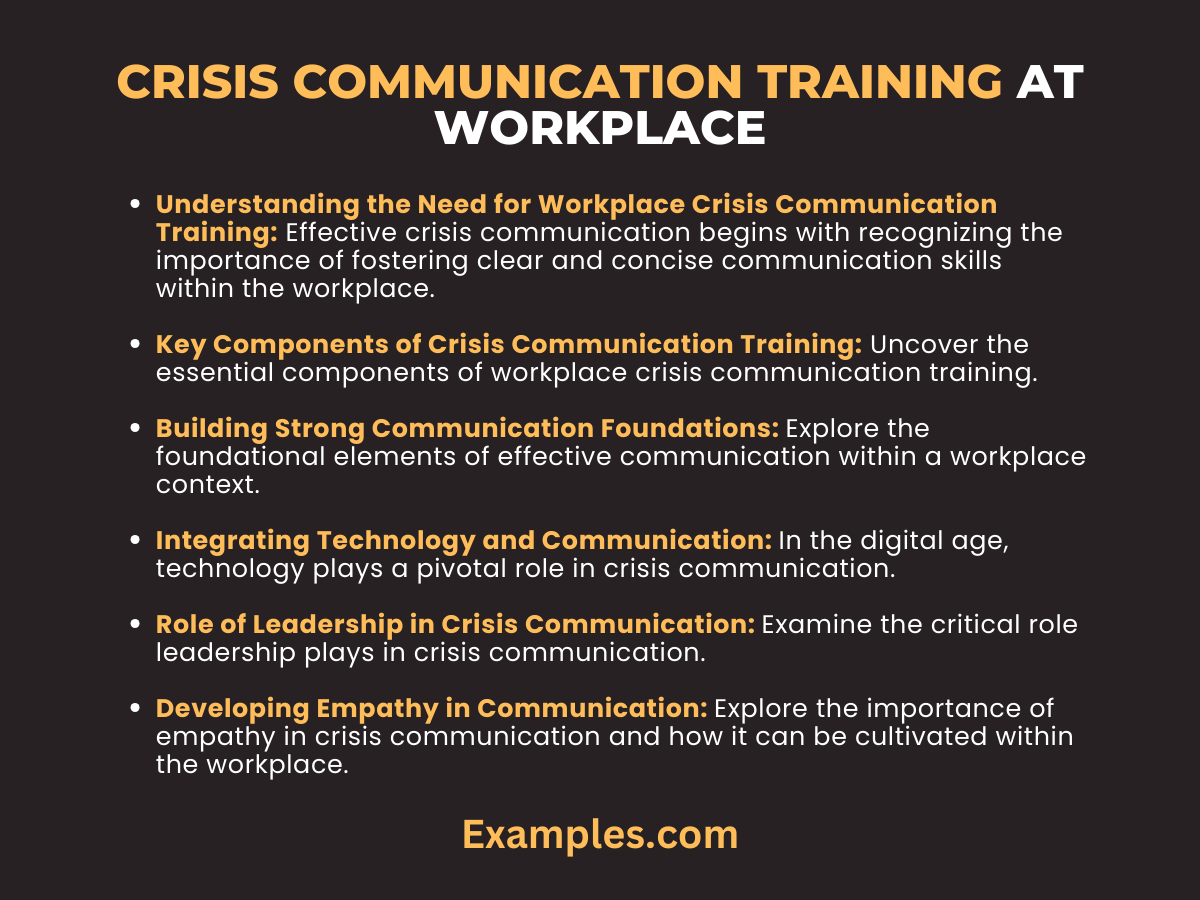
The course quickly moved beyond theory into the nuts and bolts of proactive crisis communication planning. This wasn’t about reacting; it was about anticipating. We delved into creating a comprehensive crisis communication plan, a sort of organizational emergency playbook. It sounded daunting, but our instructor broke it down into manageable steps. First, identifying potential crisis scenarios – everything from the plausible to the seemingly outlandish. Then, for each scenario, outlining key messages, identifying target audiences, and pre-approving communication channels. We talked about having holding statements ready, those initial, carefully crafted messages that buy you time without committing you to unverified details. It felt like preparing for a chess game where your opponent could make any move imaginable.
A crucial part of this planning involved assembling a dedicated crisis communication team. It wasn’t just the PR department; it was a cross-functional group involving legal, operations, human resources, and senior leadership. Each person had a defined role, a clear chain of command, and a shared understanding of the plan. I started to see that effective crisis management training wasn’t just about crafting pretty words; it was about orchestrating a cohesive, rapid, and ethical response. It was about ensuring everyone knew their part in the grand ballet of managing public perception and maintaining trust.
Then came the really interesting part: spokesperson training. This was where the practical application of effective communication strategies truly shone. We learned that a spokesperson isn’t just someone who can talk; they’re the embodiment of the organization’s integrity during its darkest hour. The training covered everything from appearance and body language to tone of voice and message delivery. We practiced answering tough questions, pivoting back to key messages without sounding evasive, and showing empathy without admitting fault prematurely. It was eye-opening to see how a simple "no comment" could be a death sentence for reputation management, whereas a carefully worded "we are investigating the matter thoroughly and will share more information as soon as it’s verified" could buy valuable time and demonstrate responsibility. We did role-playing exercises that felt incredibly real, with classmates playing aggressive reporters and skeptical customers. The pressure was intense, but the lessons were invaluable.
Social media, naturally, was a huge topic. The course highlighted how social media transforms a local incident into a global spectacle in seconds. We learned about social listening – monitoring online conversations to catch the first whispers of a potential crisis. We discussed the lightning-fast speed required for responses, the importance of consistency across all platforms, and the delicate balance between transparency and avoiding speculation. The instructor showed us examples of companies that had brilliantly navigated a PR crisis on Twitter and others that had spectacularly failed, turning a minor issue into an inferno of public outrage. It hammered home that social media isn’t just a marketing tool; it’s a volatile, always-on crisis battleground.
Beyond external communication, the Crisis Communication Course emphasized the critical importance of internal communication. When a crisis hits, employees are often the first to know and the most affected. They can be your biggest advocates or your most damaging source of leaks if left in the dark. We learned that keeping employees informed, addressing their concerns, and empowering them with accurate information is paramount. A well-informed employee is less likely to panic, less likely to spread rumors, and more likely to stand by the organization. It was a powerful lesson in treating your own people with the same respect and transparency you offer the outside world.
One of the most profound aspects of the course was the focus on ethical considerations. It wasn’t just about protecting the brand; it was about doing the right thing. We explored case studies where companies prioritized profit over people, or concealed information, only to face devastating long-term consequences. The discussions often revolved around the moral compass that must guide every communication decision during a crisis. Transparency, honesty, and accountability weren’t just buzzwords; they were the foundational pillars of true business resilience and long-term trust. It taught me that genuine reputation management isn’t about spin; it’s about integrity.
The simulations were, without a doubt, the most challenging and rewarding part of the experience. We were thrown into fictional scenarios – a sudden product contamination, a highly sensitive data breach, a public accusation of misconduct against a senior executive. My team had to identify the crisis, activate our plan, draft press releases, prepare FAQs, craft social media responses, and even conduct mock press conferences. The pressure was immense, the clock was always ticking, and every decision felt like it had real consequences. In one simulation, I was the designated spokesperson for a company facing a cyberattack. My hands were shaking as I faced a barrage of questions from my "reporters" (fellow students playing the role). I stumbled, I recovered, I learned to pause, to breathe, and to remember my key messages. It was messy, imperfect, and utterly transformative. These practical exercises cemented the theoretical knowledge, making the abstract feel tangible and giving me a taste of what handling a crisis truly entails.
Coming out of that Crisis Communication Course, I wasn’t just equipped with a checklist or a set of rules. I felt like I had gained a new lens through which to view the world, especially the world of business and public interaction. I understood that every organization, regardless of its size or industry, is inherently vulnerable. And I also understood that vulnerability doesn’t have to be a weakness; it can be an opportunity for growth, for demonstrating leadership, and for building stronger, more authentic relationships with stakeholders.
The experience transformed my understanding of communication itself. It’s not just about what you say, but when you say it, how you say it, who says it, and even what you don’t say. It’s about empathy, foresight, strategic thinking, and the courage to face uncomfortable truths. I learned that silence isn’t golden in a crisis; it’s often perceived as guilt. I learned that an apology, when sincere and timely, can be incredibly powerful. And I learned that consistent, clear communication is the bedrock of trust, whether times are good or bad.
For anyone in a leadership position, or indeed, anyone who cares about the longevity and integrity of an organization, I cannot stress enough the value of undertaking such a program. It’s not just about preparing for the worst-case scenario; it’s about building a stronger, more resilient organization overall. It teaches you to think critically under pressure, to lead with clarity, and to protect something far more valuable than profit margins: your reputation and the trust of those you serve. The skills I acquired in that Crisis Communication Course have become an indispensable part of my professional toolkit, giving me a quiet confidence that, should the storm ever hit, I’ll be ready to help navigate through it, not just with words, but with a clear plan and a steady hand. It’s an investment not just in your career, but in the future resilience of any entity you are a part of.