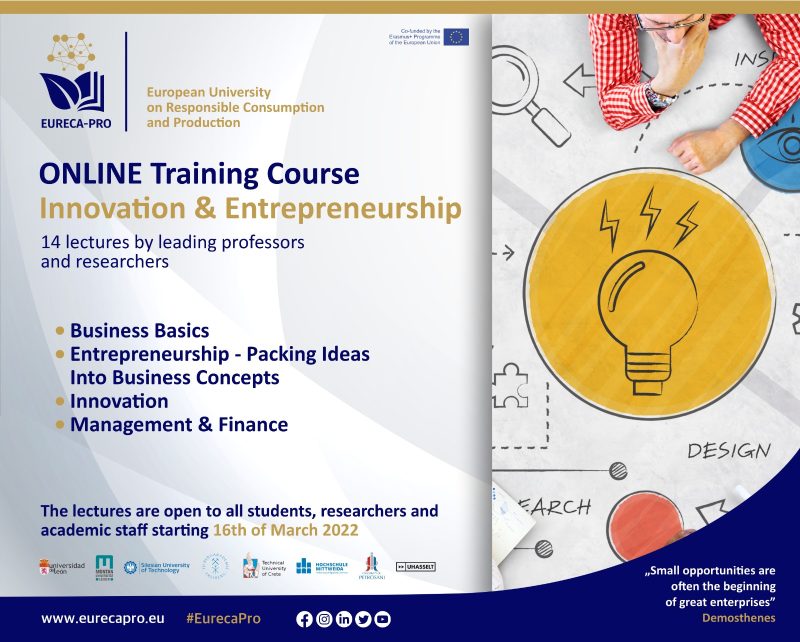

I remember staring at the enrollment form, a faint sense of apprehension mingling with a spark of curiosity. The brochure promised an "Innovation Course," a phrase that sounded simultaneously grand and vague. What even was innovation, really? My own world felt perfectly ordered, perhaps a little too ordered, a predictable rhythm of tasks and familiar challenges. I wasn’t an inventor, nor did I see myself as a particularly "creative" person in the traditional sense. My imagination, I suspected, was more of a well-trodden path than a wild jungle. Yet, something in the description of "unlocking potential" and "problem-solving" tugged at me. I signed up, not entirely sure what I was getting myself into, but feeling a faint whisper that perhaps, just perhaps, there was more to discover within myself than I currently knew.
The first day felt like stepping into a new world. The classroom wasn’t rows of desks facing a whiteboard; it was a vibrant, open space with movable furniture, walls covered in writable surfaces, and an abundance of colorful sticky notes. Our instructor, a person with an infectious energy and a twinkle in their eye, introduced themselves not as a lecturer, but as a guide for our "innovation journey." They began by debunking a common myth: innovation isn’t just about inventing the next big gadget. It’s about finding new, better ways to solve problems, create value, and improve experiences – whether for a customer, a community, or even just for ourselves. This simple redefinition was my first "aha!" moment. It shifted my perspective from grand, unattainable feats to something practical, human, and wonderfully accessible.
We started with empathy, a concept I hadn’t really associated with business or problem-solving before. The idea was to deeply understand the people we were trying to help. This wasn’t just about surveys; it was about observing, listening, asking open-ended questions, and trying to step into someone else’s shoes. I remember one early exercise where we were paired up and tasked with interviewing each other about a seemingly mundane daily routine – like making coffee or commuting to work. My partner talked about their struggle to find a quiet moment in the morning before the chaos of family life began. I listened, really listened, not to judge or offer solutions, but just to understand their frustration, their desires, their hidden pain points. It was an eye-opening experience. I realized how often I approached problems with my own assumptions, rather than truly understanding the user’s perspective. This module, focused on human-centered design, laid the groundwork for everything that followed. It taught me that true innovation begins not with a brilliant idea, but with a profound understanding of human needs.
Next, we plunged into the exhilarating chaos of ideation. This was where my "well-trodden path" imagination was truly challenged. We learned techniques like brainstorming, mind mapping, and SCAMPER (Substitute, Combine, Adapt, Modify, Put to another use, Eliminate, Reverse). The rule was simple: quantity over quality, no idea is too silly, and absolutely no judgment. I remember feeling a bit self-conscious at first, hesitant to blurt out what felt like outlandish suggestions. But as I watched my classmates enthusiastically share everything from flying bicycles to invisible alarm clocks, I slowly let go. Sticky notes proliferated across the walls, each one a testament to unbridled imagination. We learned to "diverge" – to generate as many ideas as possible – before "converging" – selecting the most promising ones. It was liberating. I discovered that creativity wasn’t a talent you either had or didn’t; it was a muscle that could be trained and strengthened with the right techniques and a safe environment. My inner critic, usually so loud, found itself temporarily muted amidst the buzz of collective creative energy.
Then came prototyping, a concept that initially sounded daunting, conjuring images of intricate machinery or complex software. But our guide explained it simply: a prototype is anything that allows you to test an idea quickly and cheaply. It could be a sketch on a napkin, a role-play, a storyboard, or even a simple model made from cardboard and tape. I recall a project where we had to design a better way for students to organize their notes. My team’s initial idea was a complex app. But instead of spending weeks coding, we spent an afternoon sketching out screens on paper, cutting out little buttons, and role-playing how a user would interact with it. It looked rudimentary, almost childish, but it allowed us to quickly identify flaws and areas for improvement without wasting valuable resources. This taught me the immense value of iteration and the concept of "fail fast, learn faster." It stripped away the fear of perfection and replaced it with an eagerness to experiment.
Testing and validation were the crucial next steps. This involved taking our rough prototypes to actual potential users and getting honest feedback. This was perhaps the most humbling part of the course. I remember presenting one of my early prototypes, something I thought was quite clever, only to have a user look at it with a puzzled expression and say, "I don’t really understand what this is supposed to do." It stung a little, but the course had prepared us for this. Feedback wasn’t a personal attack; it was a gift, data that helped us refine and improve. We learned to ask open-ended questions, to observe user behavior, and to not lead them to the answers we wanted to hear. It reinforced the empathy stage, reminding us that the user’s experience is paramount, and our own brilliant ideas might not always align with their actual needs. This iterative loop of empathize, ideate, prototype, and test – often referred to as Design Thinking – became a powerful framework that I realized could be applied to almost any problem, big or small.
Beyond these core innovation methodologies, the course delved into other critical aspects. We explored the Lean Startup approach, learning about minimum viable products (MVPs) and validated learning. This was particularly insightful for understanding how to bring an innovative idea to market without exhaustive initial investment, focusing instead on continuous learning and adaptation based on customer feedback. We studied different business models and how to articulate the value proposition of an innovation. It wasn’t enough to have a great idea; you also needed to understand how it would create value and be sustainable.
Collaboration was another cornerstone of the experience. We worked in diverse teams throughout the course, bringing together individuals from different backgrounds, disciplines, and perspectives. This was challenging at times, as each person brought their own working style and ideas to the table. I learned to navigate group dynamics, to listen actively, to compromise, and to advocate for my ideas respectfully. More importantly, I learned the immense power of collective intelligence. The ideas generated by a diverse team, when properly facilitated, were almost always richer and more robust than anything I could have come up with alone. It taught me that innovation is rarely a solitary pursuit; it thrives in an environment of shared purpose and respectful disagreement.
One of the most profound lessons wasn’t about a specific technique but about mindset. The course fostered a culture of curiosity, resilience, and a willingness to embrace ambiguity. Our guide often reminded us that the path to innovation is rarely linear; it’s full of twists, turns, and dead ends. There were moments of frustration, moments when an idea seemed to hit a brick wall, or when team dynamics felt strained. But through these challenges, I learned the importance of perseverance, of reframing problems, and of viewing obstacles not as roadblocks, but as opportunities for deeper learning and creative pivots. It instilled in me a "growth mindset," a belief that abilities can be developed through dedication and hard work, rather than being fixed.
The final project was the culmination of everything we had learned. My team tackled a real-world problem: how to make healthy eating more accessible and appealing to busy urban professionals. We went through the entire innovation process: deep-diving into user interviews to understand their daily struggles, brainstorming a myriad of solutions, developing low-fidelity prototypes for a meal kit service with a unique twist, and then testing these prototypes with our target audience. The feedback was invaluable, forcing us to rethink our assumptions about pricing, packaging, and even the types of meals we offered. It was a whirlwind of late-night discussions, frantic sketching, and passionate presentations. The final presentation wasn’t just about showcasing a product; it was about telling the story of our journey, the insights we gained, the failures we learned from, and the potential impact of our solution.
Looking back, the Innovation Course was far more than just a series of lessons; it was a transformative experience that reshaped my approach to life and work. I walked in as someone who saw problems as obstacles; I walked out seeing them as invitations to create. I entered believing creativity was a mystical gift; I left understanding it as a learnable skill, a muscle that grows with exercise.
My career trajectory shifted. I found myself approaching my daily tasks with a new lens, constantly asking "Why?" and "What if?" I started identifying inefficiencies and proposing novel solutions in my workplace, not just following established protocols. I became more confident in challenging the status quo, armed with the tools and frameworks to articulate my ideas and test their viability. I also became a better collaborator, understanding how to facilitate productive discussions and harness the collective intelligence of a team.
On a personal level, the course cultivated a deeper sense of curiosity and an openness to new experiences. I became more adaptable, less afraid of uncertainty, and more willing to experiment in various aspects of my life, from trying new hobbies to approaching personal challenges with a problem-solving mindset. It wasn’t just about developing new products or services; it was about developing a new way of thinking, a mindset that embraces change, seeks opportunities, and relentlessly strives for improvement.
For anyone standing at a similar crossroads, feeling a flicker of curiosity about what lies beyond the familiar, I wholeheartedly recommend an innovation course. It’s not just for aspiring entrepreneurs or designers. It’s for anyone who wants to sharpen their problem-solving skills, ignite their creative spark, understand human needs more deeply, and ultimately, discover a more adaptable and resourceful version of themselves. It’s an investment not just in a skill set, but in a mindset that will serve you well, no matter where your uncharted expedition takes you. It certainly rewrote my story, turning a predictable narrative into an ongoing adventure of discovery and creation.