My Unexpected Journey: How an NFT Course Changed Everything I Knew About Digital Art and Beyond

Honestly, when I first heard about NFTs, I rolled my eyes. Hard. Digital pictures selling for millions? It sounded like a collective hallucination, a tech-bro pyramid scheme, or maybe just a really elaborate joke that I wasn’t in on. My friends would talk about "floor prices" and "gas fees" and "minting," and it all sounded like a secret language, whispered in dimly lit Discord servers I had no interest in joining. I was happy with my physical art, my tangible possessions, and the idea of owning something that only existed on a screen felt utterly pointless.
But then, slowly, something shifted. I started seeing artists I admired experimenting with NFTs. Small businesses were using them for loyalty programs. Even major brands were dipping their toes in. It wasn’t just about pixelated apes anymore; there was something deeper, something bubbling beneath the surface of all the hype. My curiosity, a stubborn beast, began to stir. I’d spend hours tumbling down rabbit holes, reading articles, watching YouTube videos, trying to piece together this sprawling, often contradictory puzzle. The more I dug, the more confused I got. The sheer volume of information was overwhelming, and half of it seemed designed to scare you, while the other half promised instant riches. I’d learn about one concept, only to find three more intertwined with it that I didn’t understand. It was like trying to learn to swim by reading a dozen different books on oceanography, without ever getting in the water.
That’s when a lightbulb flickered. I needed structure. I needed guidance. I needed someone to connect the dots for me, to cut through the noise and show me the path. I needed an NFT course. The idea felt a bit like admitting defeat, like I couldn’t figure it out on my own. But the truth was, I couldn’t. Not effectively, anyway. I wanted to understand the why behind NFTs, not just the what. I wanted to know how to participate safely, intelligently, and perhaps even creatively. So, I started looking. I sifted through countless options, from free YouTube playlists to incredibly expensive bootcamps. I wasn’t looking for a get-rich-quick scheme; I was looking for genuine understanding. I wanted to build a solid foundation.
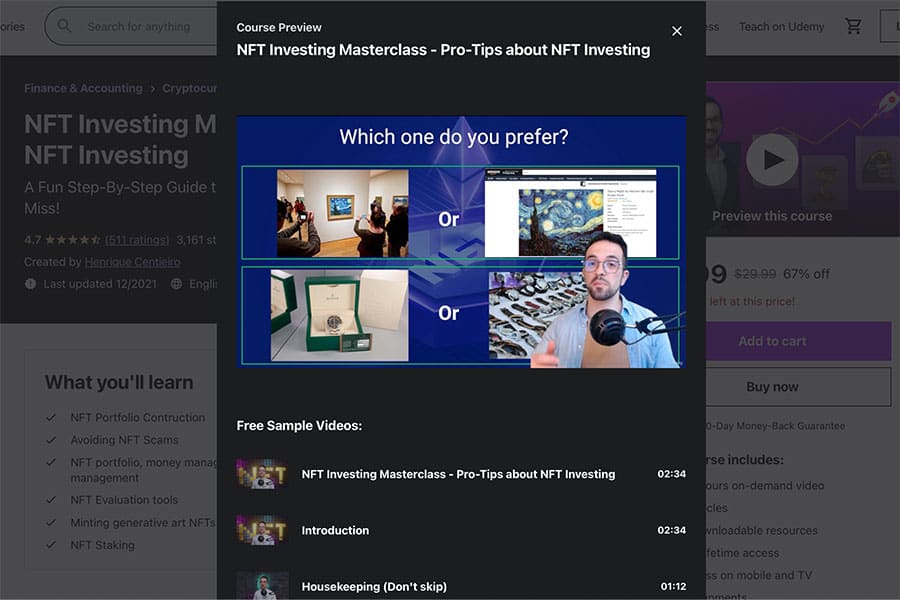
The NFT course I eventually settled on wasn’t the flashiest, but it promised clarity and practical knowledge for beginners. And let me tell you, it was one of the best decisions I’ve made in a long time. It transformed my skepticism into genuine interest, and my confusion into a sense of exciting possibility.
The very first modules were like learning the alphabet of a whole new language: blockchain technology. Our instructor, a calm and patient guide, didn’t just tell us what a blockchain was; they explained why it mattered. They broke down concepts like decentralization, immutability, and distributed ledgers into stories we could grasp. Imagine a public ledger, kept by thousands of people simultaneously, where every entry is permanent and verifiable by everyone. That’s the essence of it. No single entity controls it, making it incredibly secure and transparent. This was the bedrock, the fundamental concept that underpins everything in the NFT world. Without understanding this, everything else felt like magic. With it, things started to click.
Next came cryptocurrency wallets. This was a big one for me. The idea of having my money, or my digital assets, stored in something called a "hot wallet" or a "cold wallet" felt alien. The course walked us through setting up a MetaMask wallet, step-by-step. We learned about seed phrases – those crucial 12 or 24 words that are the ultimate key to your wallet, and how losing them or sharing them is akin to handing over your entire bank account. We practiced sending tiny bits of test currency back and forth, getting comfortable with the interface, understanding transaction hashes, and the concept of public and private keys. This practical, hands-on approach was invaluable. It took away a lot of the fear factor.
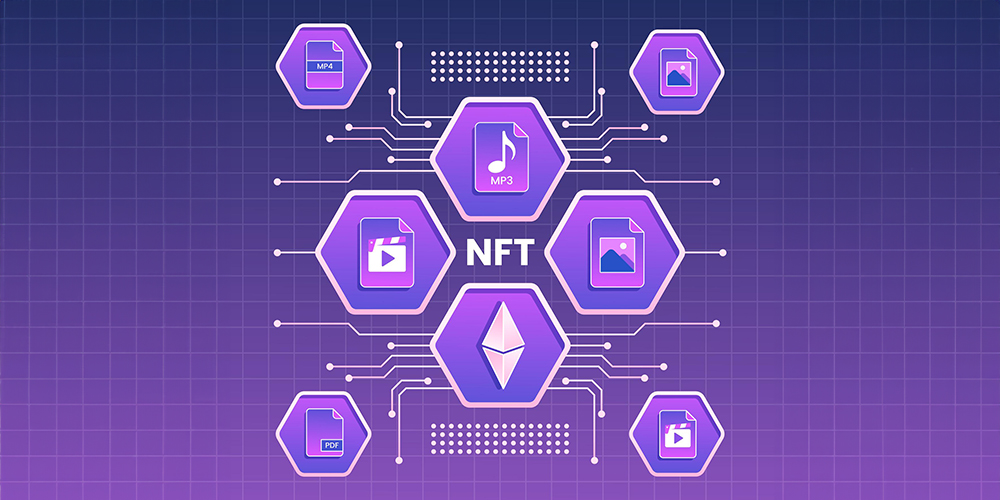
Then came the fun part, or so I thought: understanding NFTs themselves. We delved into different types of NFTs – digital art, collectibles, music, gaming assets, virtual land, even tickets and certificates. The course didn’t just show us examples; it explored the utility behind them. It wasn’t just a picture; it could be a membership pass, a key to exclusive content, a piece of a larger story, or an item in a metaverse game. This was where my initial cynicism really started to crumble. I began to see NFTs not just as speculative JPEGs, but as versatile digital tools, capable of representing ownership and enabling new forms of interaction and value creation.
The instructor also spent considerable time on minting NFTs. This is the process of taking a digital file – an image, a song, a video – and turning it into an NFT on the blockchain. We learned about different blockchains, primarily Ethereum and Polygon, and the varying costs associated with minting, known as gas fees. Oh, the stories I could tell about gas fees! They fluctuate wildly, depending on network congestion. The course taught us how to check gas prices, how to estimate costs, and how to choose the right time and platform to mint to save money. We even went through a simulated minting process, which was incredibly helpful for demystifying what had seemed like a complex, technical ritual.
Of course, once you have NFTs, you need to know where to buy, sell, or trade them. This brought us to NFT marketplaces. OpenSea, Rarible, Foundation, SuperRare – the course covered the major players, explaining their unique features, fee structures, and the types of collections you typically find on each. We learned how to navigate these platforms, how to verify collections, how to understand listing prices, and how to place bids or make offers. It was like being given a guided tour through a bustling new digital bazaar, with someone pointing out the best stalls and warning you about the shady alleyways.
And speaking of shady alleyways, a significant and incredibly important part of the NFT course was dedicated to security and avoiding scams. This was perhaps the most sobering but vital lesson. The world of NFTs, being new and somewhat unregulated, is unfortunately rife with bad actors. We learned about phishing attempts, fake websites, rug pulls (where creators abandon a project after selling NFTs), discord scams, and how to protect our wallets from malicious links. The mantra was repeated often: "Never share your seed phrase. Double-check every link. If it seems too good to be true, it probably is." This section alone felt worth the price of admission, potentially saving me from costly mistakes down the line.
Beyond the technicalities, the course also touched upon community building and engagement. NFTs are often intrinsically linked to communities – creators, collectors, and enthusiasts gathering around shared interests. We learned about the importance of Discord servers, Twitter, and other platforms for staying informed, connecting with projects, and understanding market sentiment. It emphasized that often, the value of an NFT isn’t just in the digital asset itself, but in the community and access it provides.
One of the unexpected benefits was understanding NFT project analysis. How do you tell a promising project from a dud? The course taught us to look beyond just the art. We learned to research the team behind the project, their roadmap (what are their plans for the future?), the utility of the NFTs, the strength of the community, and the transparency of the creators. It was about developing a critical eye, rather than just chasing hype. This was a skill that resonated far beyond NFTs, teaching me to approach new digital ventures with a more discerning perspective.
Towards the end, we even touched upon the broader implications: legal considerations, taxes, and the future of NFTs. While not diving deep into legal specifics (which vary by region), it opened my eyes to the fact that these aren’t just toys; they have real-world financial and legal implications that need to be considered. The discussions about the potential future of NFTs – how they might revolutionize industries from real estate to healthcare, intellectual property to ticketing – were genuinely mind-expanding. It showed me that what we’re seeing now is just the tip of a very large iceberg.
Looking back, that NFT course wasn’t just a collection of lessons; it was a journey. It took me from a place of outright dismissal to one of genuine curiosity and even excitement. It didn’t promise me riches, and I certainly haven’t become an overnight millionaire. What it did give me was knowledge, confidence, and a framework for understanding a rapidly evolving digital landscape. I can now navigate OpenSea without feeling lost. I can participate in Discord discussions with a basic grasp of the lingo. I can assess a project with a more informed eye.
If you’re standing where I once stood, peering into the world of NFTs with a mix of fascination and confusion, wondering if it’s all just a fad or something genuinely revolutionary, I wholeheartedly recommend finding a good NFT course. It’s not about being spoon-fed answers, but about getting the right questions, the foundational knowledge, and the practical skills to explore this space safely and intelligently. It saves you countless hours of sifting through fragmented information, protects you from common pitfalls, and connects you with a community of learners. It transforms a bewildering landscape into an exciting frontier, waiting to be explored. And who knows, like me, you might just find that your perspective on digital ownership, art, and community completely changes for the better. It’s an investment, not just in knowledge, but in understanding a piece of our unfolding digital future.