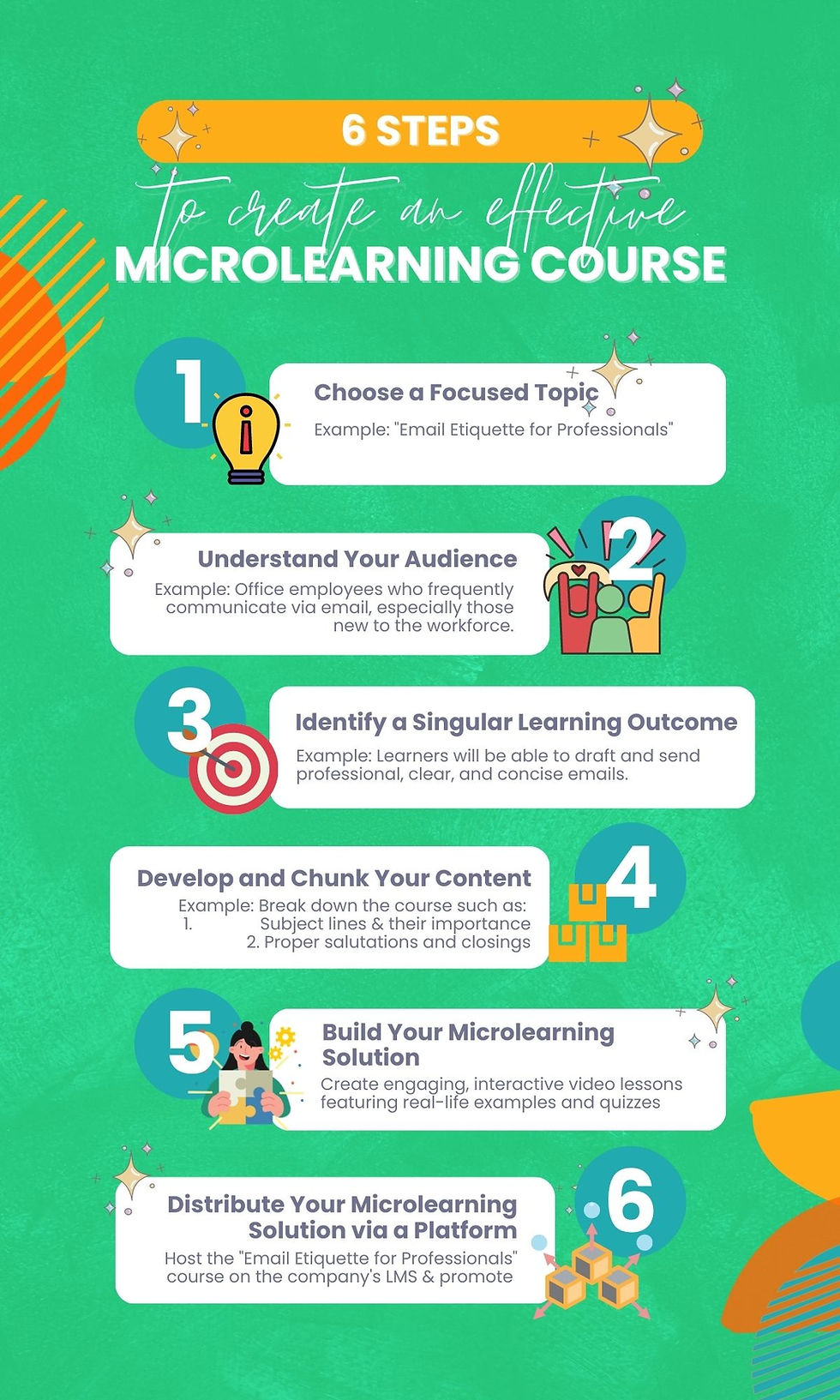
My Journey from Overwhelmed Learner to Microlearning Master: How Small Steps Made a Big Difference

I remember the feeling all too well. It was a suffocating mix of ambition and despair. I wanted to learn so many things: a new programming language, the basics of digital marketing, even how to properly prune my rose bushes. My mind buzzed with topics, each one a glittering promise of a better, more capable me. But then reality would hit, usually in the form of an online course description boasting "40 hours of video content" or a textbook with a spine thicker than my wrist. My heart would sink. Forty hours? Who had forty consecutive, uninterrupted hours to dedicate to anything when life was already a relentless juggling act of work, family, errands, and the occasional desperate attempt at self-care? I’d enroll, full of good intentions, only to abandon the course after the second module, feeling like a failure. The information felt like a tidal wave, and I was just trying to sip from a teacup.
This went on for years, a cycle of enthusiasm, overwhelm, and eventual guilt. I was a lifelong learner trapped in a system that seemed designed for people with infinite time and an iron will. Then, one day, while scrolling through an article about future trends in education, a word caught my eye: "microlearning." It sounded… small. Intriguing. Could something small actually make a big difference? My curiosity, albeit cautious, was piqued. I started digging, and what I found completely revolutionized how I approached learning, transforming me from that perpetually overwhelmed student into someone who genuinely looks forward to acquiring new knowledge, one tiny, powerful chunk at a time.
My initial understanding of microlearning was simple: it’s learning in short, focused bursts. Think five to fifteen minutes. Not an hour-long lecture, but a crisp, concentrated nugget of information designed to teach one specific concept or skill. It felt almost too good to be true. How could such brief interactions truly lead to mastery? Skepticism lingered, but the sheer practicality of it was too appealing to ignore. I decided to give it a try. My first foray into a microlearning course wasn’t for anything grand, mind you. It was a short series on understanding basic financial statements – something I’d always wanted to grasp but found incredibly intimidating.
I signed up for a course offered through a platform that specialized in bite-sized learning. The first module was a three-minute animated video explaining the concept of assets. Three minutes! I watched it during my coffee break. It was clear, concise, and even had a little quiz at the end to check my understanding. I got it right. A tiny spark of accomplishment ignited. The next day, during my commute on the train, I tackled the next module: liabilities, another four-minute video. By the end of the week, dedicating just a few minutes each day, I had a surprisingly solid grasp of the balance sheet. I wasn’t an accountant overnight, but I could read a basic financial statement without feeling utterly lost. This was a revelation. My brain, which usually started wandering five minutes into any traditional lecture, remained engaged, alert, and receptive. There was no time for it to get bored or distracted. Each small piece of information felt digestible, like a perfectly portioned snack rather than an all-you-can-eat buffet that left me feeling stuffed and uncomfortable.
This initial success was the push I needed. I started exploring other microlearning courses. I found one on improving my public speaking skills, another on advanced Excel formulas, and even a fun series on conversational Spanish phrases for travelers. What struck me was the consistent design: each module focused on a single learning objective. A video would explain a concept, an interactive exercise would let me practice it, a flashcard deck would reinforce vocabulary, or a short article would provide deeper context. The variety kept things fresh, and the immediate feedback from quizzes or interactive elements made the learning loop incredibly tight and satisfying.
So, why did microlearning work so well for me, and why do I believe it’s a game-changer for so many others?
Firstly, and perhaps most crucially, it’s all about time management. My life is a mosaic of commitments, and microlearning courses fit perfectly into the tiny gaps, the nooks and crannies of my day. Waiting for my turn at the doctor’s office? Five minutes for a quick lesson. Standing in line at the grocery store? A short article on my phone. During lunch break, instead of mindlessly scrolling, I’d dedicate ten minutes to a foreign language lesson. These weren’t wasted moments anymore; they became productive learning opportunities. It wasn’t about finding large blocks of time, but about reclaiming the small, forgotten ones. This flexibility made learning feel less like a chore and more like an integrated part of my daily routine.
Secondly, the impact on engagement and retention was profound. When you’re only asked to focus for a few minutes, your brain is far more likely to stay sharp and absorb the information. There’s less mental fatigue. I found that I remembered details from these short modules far better than I did from hour-long sessions where my mind would inevitably wander. The brain, much like a muscle, can only sustain intense focus for so long. Microlearning respects this limitation, delivering information in doses that are optimal for absorption. Plus, the frequent repetition of key concepts across different short modules, often presented in varying formats, naturally strengthened memory pathways.
Then there was the magical feeling of reduced overwhelm. Complex topics, which once seemed like insurmountable mountains, were broken down into manageable steps. Learning to code, for instance, felt less like trying to climb Mount Everest in one go, and more like a series of gentle, rewarding hikes. Each successful step built confidence, making the next one feel achievable. There was no dread of "what else do I have to learn?" because the scope was always clearly defined and limited for each module. This made the learning journey feel empowering rather than daunting.
The benefit of immediate application also cannot be overstated. Often, a microlearning course would teach me a specific skill or piece of information that I could put into practice almost instantly. Learning a new keyboard shortcut for a software I used daily? I’d try it out immediately. A tip on crafting a better email subject line? I’d use it in my next email. This instant feedback loop, seeing the direct result of my learning, was incredibly motivating. It solidified the knowledge and demonstrated its practical value, reinforcing the idea that learning wasn’t just an abstract pursuit but a tool for immediate improvement.
Finally, the continuous feeling of motivation and progress was a powerful driver. Each completed module, each correct quiz answer, was a tiny victory. These small wins accumulated, creating a powerful sense of momentum. I wasn’t waiting weeks to see progress; I was experiencing it every single day. This constant reinforcement kept me coming back for more, transforming learning from a dreaded obligation into an enjoyable habit.
Over time, I encountered various forms of microlearning, each with its own charm and effectiveness. I devoured short video tutorials that distilled complex ideas into visually engaging snippets. I relied on infographics and visual summaries to quickly grasp data or processes. Interactive quizzes and flashcards became my go-to for reinforcing vocabulary or factual recall. I found immense value in short articles or blog posts that offered deep dives into specific sub-topics without overwhelming me with an entire chapter. Even podcast snippets or daily email newsletters providing a single tip or insight contributed to my microlearning journey. Some platforms even incorporated gamified elements, turning learning into a fun challenge with points, badges, and leaderboards, which, I must admit, appealed to my competitive side.
Through my own experience and observations, I realized that microlearning courses are incredibly versatile and can benefit a wide array of individuals. They are perfect for busy professionals looking to upskill or reskill without disrupting their demanding schedules. They’re excellent for students needing quick refreshers on specific concepts or for supplementary learning that complements their main studies. Lifelong learners like myself, who simply have an insatiable curiosity but limited time, find them indispensable. Even companies are increasingly adopting microlearning for employee training, recognizing that short, frequent training modules are far more effective for knowledge retention and skill development than lengthy, infrequent seminars. If you’ve ever felt overwhelmed by the sheer volume of information out there, or if you struggle with procrastination when faced with large learning tasks, then microlearning might just be your answer.
Of course, my journey wasn’t without its minor hurdles. The biggest challenge was initially forming the habit. It’s easy to say "I’ll do five minutes of learning during my commute," but actually remembering to open the app or website and engage with the content required a conscious effort at first. To overcome this, I started linking microlearning to existing routines. For example, I’d make it a rule to complete one module while my coffee brewed in the morning. Or, I’d set a daily reminder on my phone. Soon, it became second nature. Another challenge was sifting through the vast amount of online content to find quality microlearning courses. Not everything that’s short is good. I learned to look for platforms with good reviews, clear learning objectives, and content created by reputable experts. It also helped to experiment with different formats to see what resonated most with my learning style. Finally, there was the temptation to just "skim" the content, especially when it was so short. I learned that even for a three-minute video, active engagement – pausing to think, making a mental note, or even jotting down a quick point – significantly boosted my retention.
Looking back, it’s astonishing how much I’ve learned through these small, consistent efforts. I’ve gained proficiency in several software applications, learned enough basic phrases in two new languages to comfortably navigate travel, developed a deeper understanding of economic principles, and even cultivated new hobbies like digital drawing, all through microlearning courses. The cumulative effect of these small chunks of knowledge is truly remarkable. It’s like building a magnificent wall, brick by brick. Each brick might seem insignificant on its own, but together, they form something strong and substantial. My mindset towards learning has completely shifted; from dreading the daunting task of acquiring new skills, I now eagerly anticipate my daily dose of knowledge.
For anyone considering diving into the world of microlearning, here are a few tips based on my experience:
Start Small, Really Small: Don’t try to cram too much into your initial sessions. Begin with just 5-10 minutes a day. The goal is consistency, not intensity, at first.
Be Consistent: Little and often is far more effective than long, infrequent sessions. Make microlearning a daily habit, even if it’s just one module.
Choose Relevant Topics: Pick subjects that genuinely interest you or directly relate to a skill you need. This intrinsic motivation will make it easier to stick with it.
Integrate It into Your Routine: Find natural breakpoints in your day – your commute, lunch, waiting times – and designate them as your microlearning slots.
Find a Good Platform/Source: Look for reputable online learning platforms, apps, or even YouTube channels that specialize in short, focused educational content. Check reviews and course outlines.
Don’t Be Afraid to Experiment: Try different formats – videos, quizzes, articles, interactive exercises – to discover what works best for your learning style.
Review Periodically: Even with microlearning, revisiting past topics occasionally helps solidify knowledge. Many platforms offer spaced repetition features for this purpose.
My journey from feeling perpetually overwhelmed by the prospect of learning to becoming a confident, continuous learner is a testament to the quiet power of microlearning. It’s not just a trend; it’s a fundamental shift in how we can approach knowledge acquisition in our fast-paced world. It taught me that you don’t need grand gestures or endless hours to grow and improve. Sometimes, all it takes are small, consistent steps, one bite-sized lesson at a time, to build a vast and impressive landscape of knowledge. So, if you’re like I was, staring down the barrel of another massive course, feeling that familiar dread, I urge you to try microlearning. You might just discover that the smallest steps can lead to the biggest transformations.