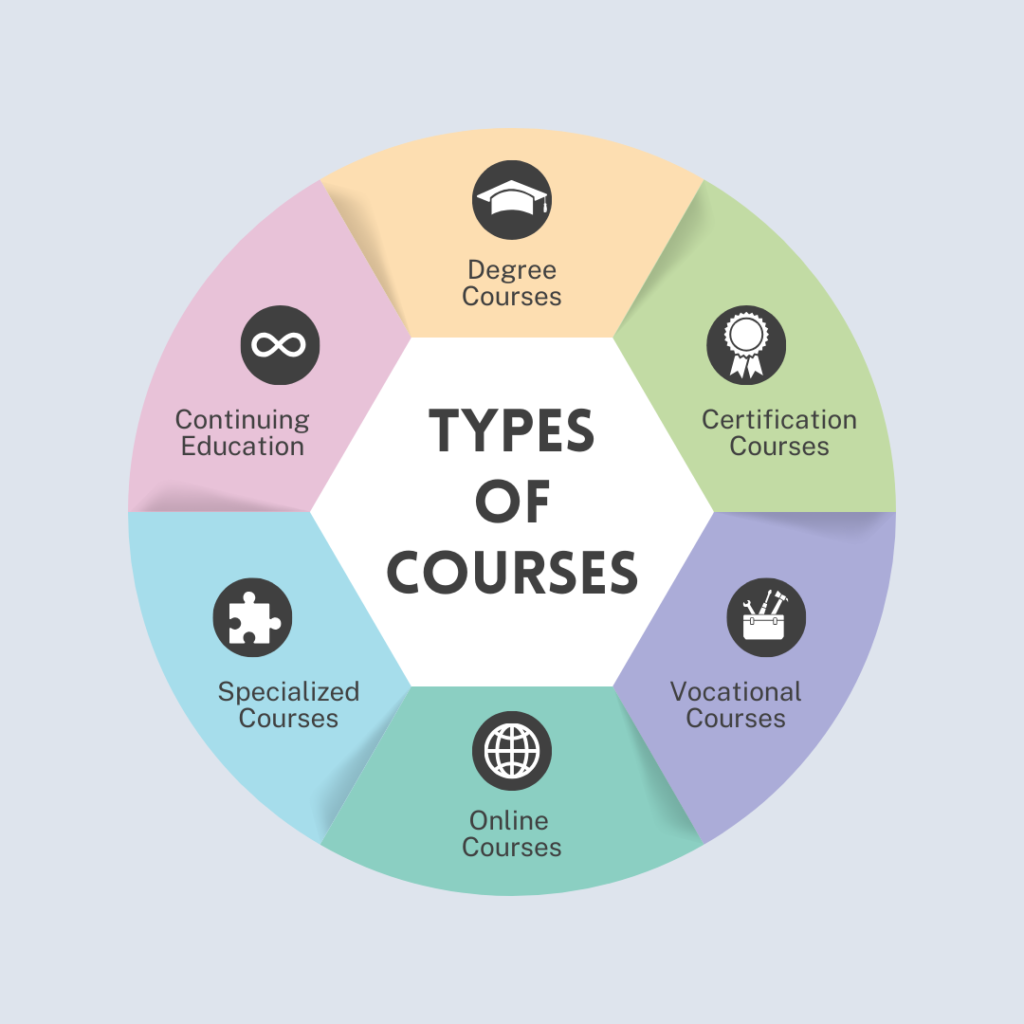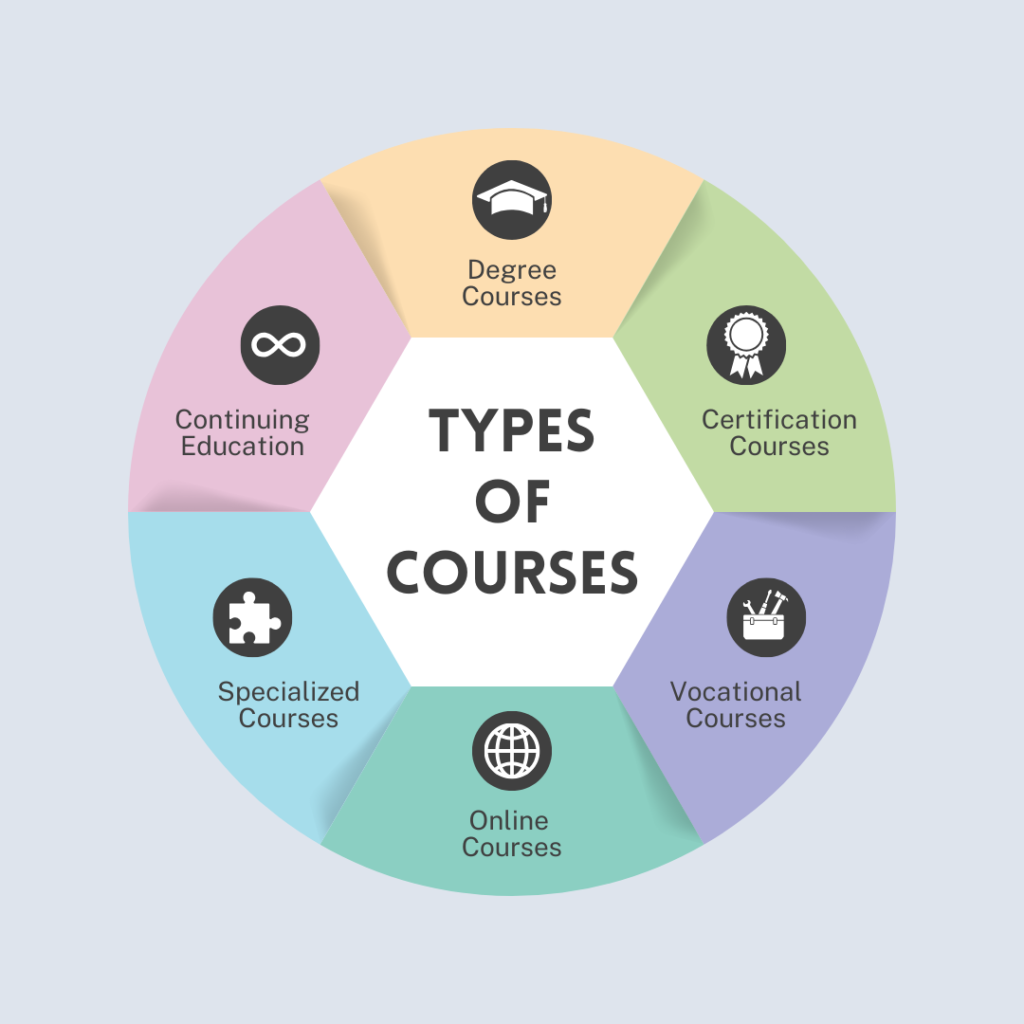

I remember standing at the precipice of adulthood, staring at a dizzying array of university course brochures. Each glossy page promised a brilliant future, a world-changing career, or a profound intellectual awakening. The problem? They all sounded equally appealing and equally terrifying. Choosing a university course felt less like making a decision and more like trying to pick a single thread from a massive, tangled ball of yarn, knowing that the wrong choice might unravel everything. If you’re standing where I once stood, feeling a mix of excitement and sheer panic, take a deep breath. This isn’t just about picking a subject; it’s about embarking on one of the most significant learning journeys of your life, and I’m here to tell you a little about what that journey might look like, through my own experiences and observations.
My own adventure began with a lot of uncertainty. High school had been straightforward enough: study, pass exams, repeat. University, however, demanded something more – a direction, a passion, a purpose. I found myself asking, "What do I even want to study?" This question haunted my waking hours and even crept into my dreams. I’d cycle through possibilities: medicine, law, engineering, literature, art history, economics. Each one felt like trying on a new hat that didn’t quite fit, or perhaps fit too well in some ways and not at all in others. The pressure was immense, not just from parents or teachers, but from an internal voice whispering, "This is it. This is your one shot to get it right."
What helped me most during that initial phase was a simple exercise: I stopped looking at course titles and started looking inward. I grabbed a pen and paper and just brainstormed. What subjects genuinely excited me in school? What did I love reading about outside of class? What problems did I enjoy trying to solve? Did I prefer working with people, data, ideas, or physical objects? It sounds basic, but stripping away the fancy university course descriptions and focusing on my core inclinations was incredibly clarifying. I realized I loved understanding why people behaved the way they did, the intricate dance of societies, and the power of communication. This wasn’t a sudden epiphany, mind you, but a slow dawning, a collection of small observations that eventually pointed me towards the social sciences.
Once I had a general direction, the real research began. This wasn’t just about skimming university websites; it was about digging deep. I looked at the specific modules offered within different courses. For instance, if I was considering a psychology degree, I wouldn’t just note "Psychology B.A." I’d look at the first-year modules: "Introduction to Cognitive Psychology," "Social Psychology Fundamentals," "Research Methods 101." Do these sound interesting? Do they align with what I thought I’d enjoy? Some universities might have a strong emphasis on research, others on practical application. Some might offer a broad generalist degree, while others specialize early on. Understanding these nuances is crucial because the university course content can vary wildly even for degrees with similar names.
I also spent a good deal of time looking at the faculty. Who would be teaching me? What were their areas of expertise? Were they actively publishing research that fascinated me? While you might not interact with every single professor, knowing the academic leanings of a department can tell you a lot about the kind of intellectual environment you’ll be stepping into. I even reached out to a few current students through online forums or university open days. Their candid insights about the workload, the teaching style, and the overall student life were invaluable. They could tell me if the university course was as challenging as it sounded, or if a particular professor was known for engaging lectures. This peer perspective is something you won’t find in a brochure.
The application process itself felt like another hurdle. Crafting personal statements, gathering references, meeting deadlines – it was a meticulous dance. But by this point, I felt more confident. My research had given me a clearer picture, and my personal statement wasn’t just a list of achievements; it was a narrative of my intellectual curiosity, directly linking my experiences and interests to the specific university course I was applying for. It wasn’t about pretending to be someone I wasn’t, but about articulating who I was and why this particular academic journey called to me.
Finally, the acceptance letters arrived, and I made my choice. Stepping onto campus for the first time as a registered student felt surreal. The university course I’d chosen was an exciting blend of sociology, politics, and communication studies. It was a broad degree, which suited my still-developing interests. The initial days were a whirlwind of orientation, making new friends, and trying to decipher a timetable that looked like a complex puzzle. High school had prepared me for a lot, but not entirely for the unique demands of higher education.
University courses are fundamentally different from high school classes. In high school, teachers often hold your hand, guiding you through every step. At university, it’s about independent learning. Lectures, often delivered to hundreds of students, are just the starting point. They provide the framework, the key concepts, and the theories. But the real learning happens in the library, in study groups, and in your own quiet moments of reflection. You’re expected to read extensively, critically analyze information, form your own arguments, and manage your time effectively. This shift from being taught to actively teaching yourself was challenging, but also incredibly liberating. I remember feeling overwhelmed by the reading lists – entire books to be consumed in a week! But gradually, I learned to prioritize, to skim effectively, and to synthesize information from multiple sources.
Tutorials or seminars were where the rubber met the road. These smaller group sessions, led by a professor or a teaching assistant, were opportunities to discuss the lecture material, debate ideas, and present your own insights. This is where I truly learned to articulate my thoughts, defend my arguments, and engage in constructive academic discourse. It was intimidating at first, but the more I participated, the more my confidence grew. These were also the places where I felt a strong connection to my fellow students, building friendships rooted in shared intellectual curiosity and the mutual struggle of understanding complex theories.
Assignments were another beast entirely. Essays, research papers, presentations, group projects – each required a different set of skills. Crafting a well-structured essay with a clear thesis and compelling evidence was a skill I had to painstakingly develop. Learning to conduct proper research, cite sources correctly, and avoid plagiarism were foundational lessons. Group projects taught me about teamwork, compromise, and the frustrations (and occasional triumphs) of collaborating with diverse personalities. Every assignment, whether I aced it or stumbled through it, was a building block, teaching me not just about the subject matter but about the process of learning itself.
Exams, of course, were always lurking. They were periods of intense stress and focus. But even exams at university felt different. They weren’t just about memorizing facts; they were about demonstrating understanding, applying theories, and thinking critically under pressure. My university course taught me how to approach problems from multiple angles, to synthesize vast amounts of information, and to communicate my knowledge effectively, all skills far more valuable than rote memorization.
Beyond the academic rigour, a university course is also an immersive experience in personal growth. My chosen degree encouraged me to question assumptions, challenge prevailing narratives, and develop a more nuanced understanding of the world. I learned about different cultures, political systems, and social structures. It wasn’t just about absorbing information; it was about transforming my worldview. I found myself engaging in deeper conversations, reading news with a more critical eye, and understanding the complexities of human society in ways I never had before. This intellectual awakening was perhaps the most profound aspect of my time there.
And it wasn’t just confined to the classroom. The university campus was a microcosm of the world, teeming with opportunities. I joined student societies – a debating club, a volunteer group, and even a quirky film society. These extracurricular activities were crucial. They allowed me to develop leadership skills, meet people from different courses and backgrounds, and pursue interests outside my primary academic focus. I even took on a part-time job, which taught me about managing responsibilities, budgeting my time and money, and navigating the professional world, albeit on a small scale. These experiences, though not directly part of my university course curriculum, enriched my overall journey immensely and contributed significantly to my personal and professional development.
Towards the end of my degree, the question of "what next?" resurfaced, but this time, it felt less daunting. My university course had equipped me with a robust set of transferable skills: critical thinking, problem-solving, effective communication, research aptitude, and the ability to adapt to new information. While my degree didn’t funnel me into one specific career path, it opened up a wide range of possibilities. I felt confident in my ability to learn new things, to analyze complex situations, and to contribute meaningfully in various settings. Many of my peers went on to further study, some directly into graduate jobs, and others took time to explore. The beauty of a broad university course is that it lays a strong foundation, allowing you to pivot and explore different avenues as your interests and the job market evolve.
Reflecting now, choosing that particular university course was less about finding a perfect fit and more about finding a launchpad. It wasn’t just about the knowledge I acquired, but the skills I honed, the perspectives I gained, and the person I became. If I were to offer advice to anyone contemplating their own university journey, it would be this:
First, don’t be afraid to explore. The initial confusion is normal. Use it as a starting point for self-discovery. What truly sparks your curiosity? What problems do you genuinely want to solve?
Second, research, research, research. Go beyond the glossy brochures. Look at specific modules, faculty research, and student testimonials. Understand the learning environment.
Third, remember that a university course is not a life sentence. It’s a significant investment, yes, but it’s also a journey of growth. It’s okay if your interests evolve or if you discover new passions along the way. Many degrees offer flexibility, allowing you to combine subjects or specialize later.
Fourth, embrace the challenges. University life, both academic and social, will push you out of your comfort zone. That’s where the most profound learning happens. Lean into the struggle, ask for help when you need it, and celebrate every small victory.
Finally, and perhaps most importantly, understand that your university course is just one chapter in your story. It will shape you, equip you, and open doors, but your path will continue to unfold long after graduation. The real value lies not just in the piece of paper you receive at the end, but in the intellectual adventure you embark upon, the skills you acquire, and the person you become along the way. So, take that deep breath, choose your path with curiosity and courage, and prepare for an incredible journey.