My Journey from Clueless to Confident: How a Videography Course Opened My Eyes to the World of Moving Stories

I remember the feeling vividly. A camera in my hand, a world of potential in front of me, and absolutely no idea how to bridge the gap between what I saw with my eyes and what the lens captured. It was a mix of excitement and profound intimidation. I wanted to tell stories, to capture moments, to create something beautiful that moved people, but every button, every setting, every piece of jargon felt like a foreign language. My videos were shaky, poorly lit, and the sound was often a garbled mess. They lacked soul, a narrative thread, and frankly, any semblance of professional polish. That’s when I knew: pointing and shooting wasn’t enough. I needed a guide, a roadmap, a proper education. Deciding to enroll in a videography course felt like a leap of faith, an investment in a skill I wasn’t even sure I possessed, but it turned out to be one of the most transformative decisions I’ve ever made.
My first few days in the online videography course were a revelation. We started not with expensive gear, but with the very fundamentals of how a camera sees the world. It was less about the brand of my camera and more about understanding its core functions. The instructors made it clear: you don’t need the latest, most expensive equipment to start creating compelling video. You need to understand light. This was my first "aha!" moment. I learned about the exposure triangle: aperture, shutter speed, and ISO. I’d heard these terms before, of course, but they were always shrouded in mystery. The course broke them down into simple, understandable concepts. Aperture, I learned, was like the pupil of your eye, controlling how much light enters and how much of your scene is in focus. Shutter speed was how long the camera’s "eye" stayed open, affecting motion blur. And ISO, well, that was the camera’s sensitivity to light, a setting I often cranked up too high in dimly lit rooms, only to end up with grainy, noisy footage. The course taught me how to balance these three elements, how to make them work together in harmony to achieve a well-exposed and clean image. It wasn’t just theoretical; there were practical exercises, little challenges that forced me to experiment and make mistakes, which is truly the best way to learn.
Once I started to grasp the technical language of the camera, the course moved on to the art of seeing – composition. This was where my perspective truly began to shift. Before, I just pointed the camera at whatever I found interesting. Now, I was taught to consider the frame, to think about what was in it and, just as importantly, what wasn’t. The rule of thirds became my new best friend, helping me place subjects in a more aesthetically pleasing way. I discovered leading lines that drew the viewer’s eye through the scene, natural frames within the environment that added depth, and the power of negative space to create a sense of calm or focus. We explored different shot types – wide shots to establish the scene, medium shots to show interaction, and close-ups to reveal emotion or detail. It was like someone handed me a new pair of glasses that allowed me to see the world with a storyteller’s eye, constantly looking for interesting angles, compelling arrangements, and ways to guide my audience’s gaze. My daily walks became exercises in visual storytelling, mentally framing shots, and imagining how I would capture a particular scene.
Then came the magic of light. Oh, how I underestimated light before this videography course! I used to think of it as just "being there," but I quickly learned that light isn’t just illumination; it’s a character in itself, shaping mood, revealing textures, and guiding the viewer’s interpretation of a scene. The course taught me about natural light – the golden hour, the soft light of an overcast day, the harshness of midday sun and how to work with or against it. I learned simple tricks like positioning my subject with the sun behind them for a beautiful rim light or using a reflector to bounce light into shadows. We delved into the basics of artificial lighting, demystifying the intimidating setup of studio lights. I learned about three-point lighting – key light, fill light, and backlight – and how even with just one or two simple lamps and some creativity, I could transform a flat, uninteresting shot into something with depth and drama. Understanding light wasn’t just about making things brighter; it was about sculpting, creating atmosphere, and evoking emotion. It made me appreciate every shadow, every glint, every subtle shift in illumination.
One of the biggest revelations for me during my videography course was the importance of sound. Before, I was so focused on the visual that I often neglected the audio entirely. My early videos were filled with distracting background noise, muffled dialogue, or just an overall muddy soundscape. The course hammered home a crucial point: bad audio can ruin even the most visually stunning video. People will tolerate slightly imperfect visuals if the sound is clear and engaging, but they will quickly click away from a video with poor audio, no matter how beautiful the images. I learned about different types of microphones – shotgun mics for capturing sound directly in front of the camera, lavalier mics for clear dialogue, and even simple external recorders to capture ambient sounds that add texture to a scene. We practiced listening actively, identifying unwanted noise, and techniques for minimizing it during recording. It wasn’t just about capturing sound; it was about designing it, understanding how music, sound effects, and dialogue all work together to create an immersive and impactful experience. Suddenly, my focus shifted from just seeing to truly hearing the world around me, realizing how much sonic information contributes to a story.
But all the technical skills and beautiful shots in the world mean little without a compelling story. This was the heart of the videography course, the module that truly resonated with my initial desire to tell tales. We weren’t just learning how to operate a camera; we were learning how to communicate ideas, emotions, and narratives through moving images. The course taught me that every video, no matter how short, needs a purpose, a message, a beginning, a middle, and an end. I learned about crafting a basic script or outline, even for impromptu shoots. Storyboarding, even if it was just rough sketches on a notepad, became an invaluable tool for visualizing the sequence of shots and anticipating potential challenges. We discussed the elements of good storytelling: establishing characters, creating conflict, building suspense, and ultimately, finding a resolution. Pacing, rhythm, and the emotional arc of a video became as important as any camera setting. This module transformed me from someone who just recorded events into someone who thoughtfully constructed narratives. It was here that I understood that videography isn’t just about recording reality; it’s about interpreting it, shaping it, and presenting it in a way that resonates with an audience.
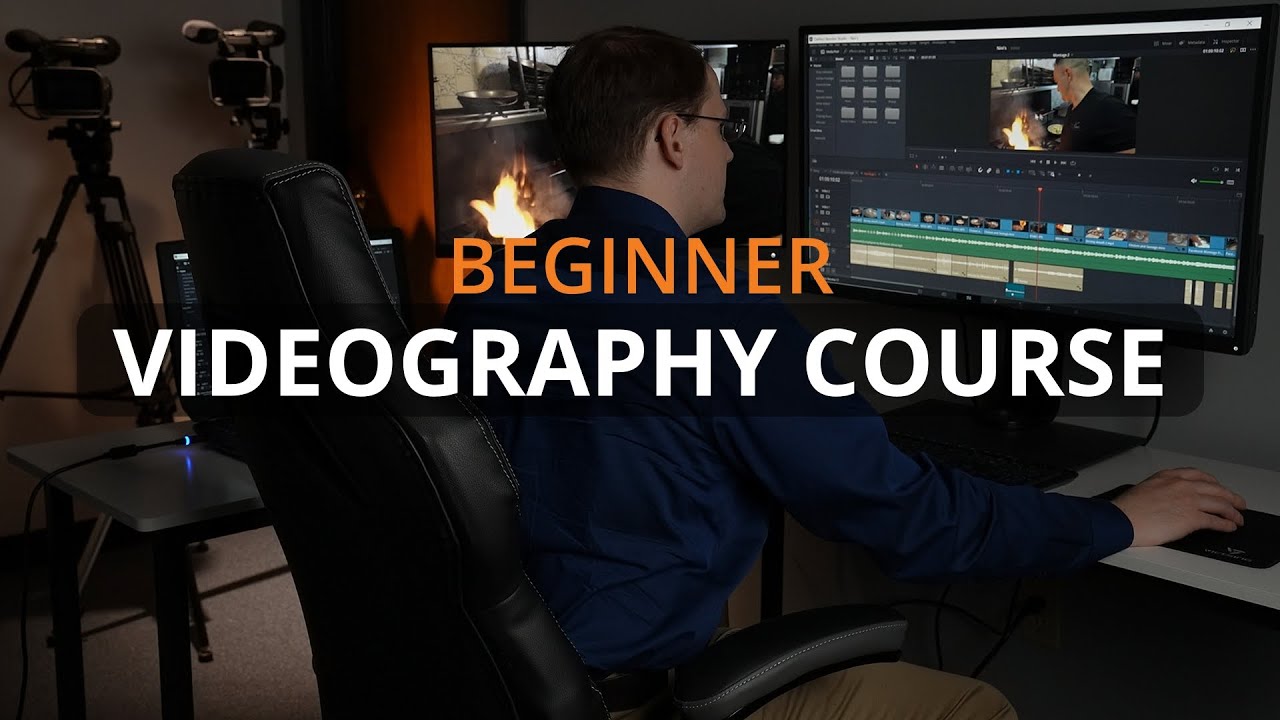
With all this footage and newfound understanding, the next logical step was bringing it all together: editing. This was another area that initially felt overwhelming. The sheer complexity of editing software, with its myriad of tracks, timelines, and effects, seemed insurmountable. But again, the videography course broke it down into manageable steps. We started with the basics: importing footage, making simple cuts, and arranging clips in a logical sequence. I learned about different types of transitions – gentle dissolves for smooth changes, hard cuts for impact, and avoiding overly flashy effects that distract from the story. Organizing my media became second nature, a crucial step for efficient workflow. Then came the magic of color correction and grading, transforming raw, flat footage into vibrant, cinematic images. I learned how to balance colors, adjust contrast, and create a consistent look across my entire video. Sound editing, too, became a powerful tool. Syncing dialogue, layering background music, adding subtle sound effects – these elements dramatically enhanced the emotional depth and professional feel of my projects. The feeling of taking fragmented clips and weaving them into a coherent, emotionally resonant story was incredibly rewarding. It was in the editing suite that the true vision often came to life, where the pieces of the puzzle finally clicked into place.
The most crucial part of any videography course, in my opinion, isn’t just the lessons themselves, but the encouragement to practice, to experiment, and to apply what you’ve learned. My instructors emphasized that the best way to improve is to simply make things, even if they’re not perfect. So, I did. I started with small personal projects: a short film about my morning coffee ritual, a quick montage of my neighborhood, a video diary of a weekend trip. My first few attempts were, to put it mildly, far from perfect. The lighting was sometimes off, the sound occasionally distorted, and my editing felt clunky. But with each video, I learned something new. I reviewed my work critically, comparing it to what I envisioned and what I learned in the course, identifying areas for improvement. This iterative process of creation and critique was invaluable. Slowly but surely, my skills sharpened. I started to develop my own visual style, a personal touch that made my videos uniquely mine. Soon, friends and family noticed the improvement, and I even began taking on small, paid projects, filming events for local businesses or creating personal videos for special occasions. Building that initial portfolio, no matter how modest, was a huge boost to my confidence.
The videography course provided an incredible foundation, a sturdy launchpad into the world of moving pictures, but it wasn’t the end of my learning journey. In fact, it was just the beginning. The world of videography is constantly evolving, with new cameras, software updates, and innovative techniques emerging all the time. The course instilled in me a curiosity and a passion for continuous learning. I found myself devouring online tutorials, joining filmmaking communities, and experimenting with new gear and software. I learned to analyze films and commercials not just as a viewer, but as a creator, dissecting their lighting, composition, editing, and storytelling techniques. Every project I take on, big or small, still feels like an opportunity to learn and grow. The principles I learned in the course remain the bedrock of my practice, but the application and refinement are an ongoing adventure. It’s a field where you can never truly know everything, and that endless possibility is what makes it so exciting.
Looking back, the transformation in my abilities and my perspective has been profound. I went from someone intimidated by a camera to someone who feels empowered to capture and tell stories. What started as a vague desire to create has blossomed into a tangible skill and a genuine passion. The videography course didn’t just teach me how to operate equipment; it taught me a new way to see the world, to listen more intently, and to craft narratives that resonate. It gave me the confidence to pursue creative projects, to experiment without fear of failure, and to share my unique perspective with others.
If you’re reading this and feeling that familiar mix of excitement and intimidation, that yearning to create but feeling lost in the technical jargon, I wholeheartedly recommend investing in a videography course. It doesn’t have to be the most expensive or prestigious one. Find one that fits your learning style and budget, and just take that first step. You don’t need to be an aspiring Hollywood director; you might just want to create better family videos, document your travels, or share your passions with the world. The skills you gain are applicable across countless personal and professional endeavors. Learning videography isn’t just about mastering a craft; it’s about unlocking a powerful new form of self-expression, a way to preserve memories, share ideas, and connect with people on a deeper, more visual level. It’s a journey of discovery, creativity, and endless possibility, and it all began for me with that single decision to learn how to tell a story, one frame at a time.