
Imagine standing at a crossroads in your career. On one path, you see the familiar, the comfortable, perhaps a steady but unremarkable ascent. On the other, a vibrant, winding road, promising new opportunities, increased earnings, and the thrill of mastering something new. What if I told you there’s a proven way to confidently step onto that second path, armed with new skills and recognized expertise? That’s precisely what professional certification training offers – a powerful catalyst for career transformation, a true game-changer in today’s fast-paced world.
Let’s talk about Sarah. Sarah had been working in marketing for five years. She was good at her job, but felt stuck. Promotions were slow, and her salary hadn’t budged much in years. She saw colleagues with fancy new titles and wondered how they did it. One day, she stumbled upon a LinkedIn post about digital marketing certification. Intrigued, she started researching. She learned about Google Ads certification, HubSpot Inbound Marketing certification, and various SEO specialist certifications. The thought of investing time and money felt daunting, but the potential rewards – a higher salary, a more challenging role, the chance to lead projects – were too appealing to ignore. Sarah decided to take the leap. Her story, and countless others like it, perfectly illustrates the profound impact of professional certification training.
Why Certifications Are More Than Just Pieces of Paper
In a job market that’s constantly evolving, where technology reshapes industries overnight, simply having a degree often isn’t enough anymore. Employers aren’t just looking for knowledge; they’re looking for validated skills. They want to know you can do the job, not just talk about it. This is where professional certifications shine. They are tangible proof of your expertise in a specific area, recognized by industry leaders and employers alike.
Think about it from an employer’s perspective. When they see a candidate with a PMP certification for a project management role, they immediately know that person understands the globally recognized standards for managing projects. If they see an AWS certification for a cloud computing position, they know the individual has hands-on experience with Amazon Web Services. These aren’t just random letters after your name; they are powerful signals that scream competence and commitment.
The Undeniable Benefits: Why You Should Invest in Yourself
So, beyond the general idea of "proving your skills," what are the real, tangible benefits that make professional development courses and certifications so valuable?
-
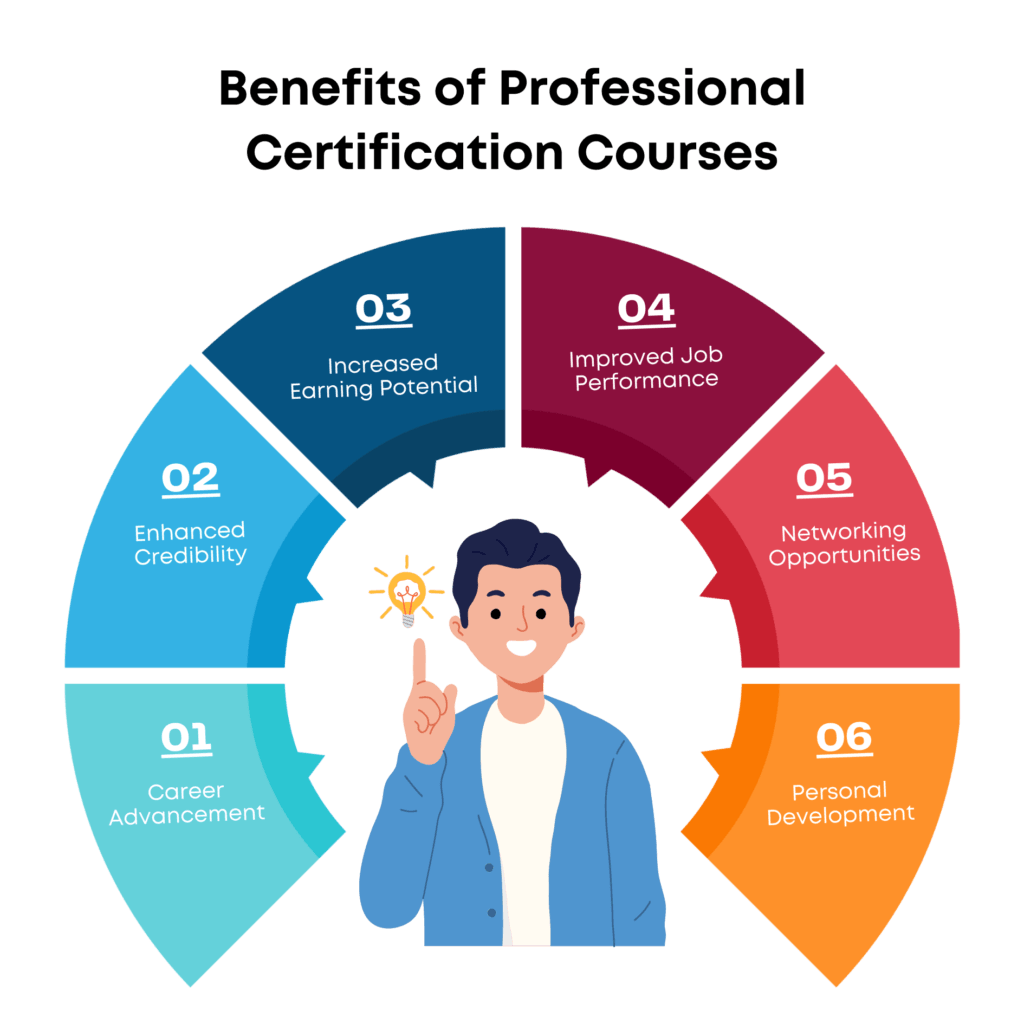
Career Advancement and New Opportunities: This is often the primary driver. A certification can be the missing link that qualifies you for that promotion you’ve been eyeing, or opens doors to completely new roles within your company or a different organization. Many companies even require specific certifications for certain positions, especially in IT, cybersecurity, and project management. Want to move into a leadership role? A leadership training course combined with a relevant certification can be your ticket.
-
Increased Earning Potential: Let’s be frank, money matters. Research consistently shows that certified professionals, across various industries, often command higher salaries than their non-certified counterparts. For instance, individuals with IT certification training frequently see a significant boost in their paychecks. An ITIL certification or a CompTIA Security+ can noticeably increase your value in the job market, translating directly into better compensation.
-
Validation and Credibility: Imagine walking into an interview knowing you have a globally recognized credential backing your claims. It boosts your confidence and instantly establishes your credibility. You’re not just saying you know something; you have an official stamp of approval from an authoritative body. This is crucial for anyone looking to be seen as an expert in their field.
-
Staying Competitive and Relevant: The world doesn’t wait. Skills that were valuable five years ago might be obsolete today. Upskilling programs and certifications force you to learn the latest tools, technologies, and best practices. This ensures you remain a valuable asset in the workforce, especially in rapidly evolving fields like data science certification online or cloud computing certification.
-
Personal Growth and Confidence: There’s an immense sense of accomplishment that comes with earning a professional certification. The rigorous study, the challenging exam – it all builds discipline, resilience, and a deeper understanding of your chosen field. This personal growth translates into increased self-confidence, not just in your professional life but in all areas.
-
Networking Opportunities: The journey to certification often involves training programs, study groups, and professional communities. These are fantastic opportunities to connect with like-minded individuals, industry experts, and potential mentors or employers. Many certification exam preparation programs foster strong communities that last long after the exam is over.
Diverse Pathways: Finding Your Perfect Certification
The beauty of professional certification training is its vast landscape. There’s a certification for almost every industry and every skill you can imagine.
-
Information Technology (IT): This is a huge domain for certifications. From foundational credentials like CompTIA A+ (for entry-level IT support) and Network+ (for networking basics) to advanced specializations like CCNA (Cisco Certified Network Associate), AWS Certified Solutions Architect, Microsoft Certified Azure Administrator, and Google Cloud Professional Data Engineer. These are essential for anyone building a career in tech.
-
Cybersecurity: With threats constantly evolving, cybersecurity professionals are in high demand. Certifications like CompTIA Security+, Certified Ethical Hacker (CEH), and CISSP (Certified Information Systems Security Professional) are critical for those protecting digital assets. These cybersecurity certification programs are often linked to very high earning potentials.
-
Project Management: If you’re leading teams or managing complex initiatives, certifications like the PMP (Project Management Professional) or PRINCE2 are gold standards. They provide a structured approach to project execution and are widely respected across industries. Many wonder about project management certification cost, but the ROI often far outweighs the initial investment.
-
Business and Finance: For accountants, the CPA (Certified Public Accountant) is indispensable. Financial analysts might pursue the CFA (Chartered Financial Analyst). HR professionals benefit from credentials like SHRM-CP or SPHR. These certifications demonstrate a commitment to ethical practice and advanced knowledge.
-
Marketing: Beyond Sarah’s journey, the digital marketing world offers numerous credentials. Think about Google Analytics certification, Facebook Blueprint certifications, or specialized digital marketing certification courses that focus on content strategy, social media, or email marketing.
-
Healthcare: Many roles in healthcare require specific certifications beyond a degree, from medical coding to specialized nursing credentials. These ensure patient safety and adherence to strict regulations.
-
Data Science and Analytics: As data becomes the new oil, certifications in Python for Data Science, R programming, SQL, or specific data analytics tools are becoming increasingly popular and valuable.
The Journey: How to Navigate Certification Training
Embarking on professional certification training is a commitment, but it’s a manageable one with the right approach.
-
Choosing the Right Certification: Don’t just pick one at random. Research what’s in demand in your industry, what aligns with your career goals, and what will genuinely add value to your skill set. Look at job descriptions for your desired roles – what certifications do they mention? Consider best professional certifications reviews and industry reports.
-
Training Options: Self-Study vs. Formal Programs:
- Self-study: This is often the most cost-effective route. You’ll use official study guides, online resources, practice exams, and forums. It requires significant self-discipline and motivation.
- Formal Courses: Many providers offer online certification courses, bootcamps, and instructor-led classes. These can be more expensive but often provide a structured learning environment, direct access to instructors, and peer support. Look for career development courses that offer comprehensive packages. Some people thrive in intensive environments like software development bootcamps, which combine training with career support.
-
Crafting Your Study Plan: Once you’ve chosen your path, create a realistic study schedule. Break down the material into manageable chunks. Utilize practice tests – they are invaluable for identifying your weak areas and getting accustomed to the exam format. Joining a study group, whether in-person or online, can provide motivation and a platform for discussing challenging concepts.
-
The Exam Experience: Certification exams can be nerve-wracking. Be well-rested, read each question carefully, and manage your time effectively. Remember, it’s not just about memorization; it’s about understanding and applying the concepts.
Overcoming the Hurdles: Addressing Your Concerns
It’s natural to have reservations. Let’s tackle some common ones:
-
Time Commitment: "I don’t have enough time." This is a valid concern. However, even dedicating an hour a day, or a few hours on weekends, can make a significant difference over time. Think of it as an investment, not a burden. Many executive education online programs are designed with busy professionals in mind.
-
Financial Investment: "Certifications are expensive." While some certifications and their associated training can have a notable certification cost, consider it an investment in yourself and your future earning potential. Many employers offer tuition reimbursement, or you can explore payment plans. Remember the increased salary potential – it often recoups the cost quickly.
-
Fear of Failure: "What if I don’t pass?" Failure is a part of learning. Many certification bodies allow retakes. The knowledge you gain during the study process is valuable, regardless of the immediate exam outcome. Focus on the learning journey, not just the final score.
Maximizing Your Certification Investment
Earning the certification is a huge step, but it’s not the finish line. To truly maximize your investment, you need to:
-
Apply Your New Skills Immediately: Don’t let your new knowledge gather dust. Look for opportunities at work to implement what you’ve learned. Volunteer for projects that utilize your certified skills. The more you practice, the more proficient you become.
-
Update Your Professional Profile: Shout it from the rooftops! Update your LinkedIn profile, resume, and professional bios. Use the official certification badge if available. Make sure potential employers and clients know about your new credential.
-
Network with Fellow Certified Professionals: Connect with others who hold the same certification. Join online communities, attend webinars, and participate in local chapters. This expands your professional network and keeps you informed about industry trends.
-
Continuous Learning and Re-certification: Many certifications require continuing education credits or periodic re-certification. This isn’t a burden; it’s an opportunity to stay current and deepen your expertise. The world is always changing, and your skills should too. Look for skill enhancement programs to keep your knowledge fresh.
The Future is Certified
As we look ahead, the importance of professional certification training will only grow. The rise of AI and automation means that foundational knowledge will be less about rote memorization and more about critical thinking, problem-solving, and adapting to new technologies. Micro-credentials – smaller, highly focused certifications – are also gaining traction, allowing individuals to build specific skill sets quickly.
The message is clear: lifelong learning is no longer a suggestion; it’s a necessity. Professional certifications are a powerful tool in your arsenal, providing a structured, recognized path to acquiring and validating the skills you need to thrive.
Your Next Step: Take the Leap
Perhaps you’re like Mark, a software developer who wants to move into cloud architecture and is researching AWS certification courses. Or maybe you’re like Jessica, an aspiring project manager who sees the value in PMP certification training. Whatever your aspirations, the opportunity to redefine your career trajectory is within reach.
Don’t let uncertainty hold you back. Research your options, talk to professionals in your desired field, and take that first step. Investing in professional certification training isn’t just about getting a better job or a higher salary – it’s about investing in yourself, your confidence, and your ability to shape a future where you are not just keeping up, but leading the way. The game has changed, and professional certifications are your winning strategy.