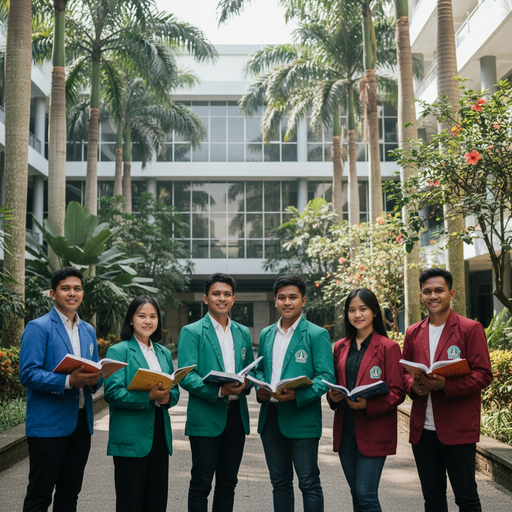

The Spark of a Dream
Imagine a young girl named Sari, sitting by a window in a small village in Central Java. She spends her afternoons reading tattered textbooks, her eyes wide with curiosity about the world beyond the emerald rice fields. Sari dreams of becoming an environmental engineer, but her family’s modest income barely covers their daily needs. For a long time, university felt like a distant planet—visible, but entirely unreachable.
This is not just Sari’s story; it is the story of thousands of brilliant minds across the Indonesian archipelago. However, the narrative is changing. Today, the bridge between a humble begiing and a prestigious degree is built with the bricks of scholarship programs. Whether you are a student aiming for local excellence or an aspiring global scholar, the landscape of scholarships in Indonesia has never been more vibrant or accessible.
The Golden Ticket: Government-Funded Scholarships
When we talk about scholarships in Indonesia, the conversation almost always begins with the prestigious LPDP (Lembaga Pengelola Dana Pendidikan). Funded by the Indonesian Ministry of Finance, LPDP has become a symbol of hope for thousands. It is the “golden ticket” for those wishing to pursue Master’s or Doctoral degrees at top-tier universities, both domestically and internationally.
What makes LPDP so special is its holistic support. It doesn’t just cover tuition; it provides a living allowance, book money, and even flight tickets. But with great support comes great responsibility. The program seeks “Future Leaders” who are committed to returning to Indonesia and contributing to the nation’s growth. If you have a vision for a better Indonesia, LPDP is looking for you.
On the undergraduate side, the government offers the KIP-Kuliah (Kartu Indonesia Pintar Kuliah). This initiative is a game-changer for social mobility. It targets students from low-income families, ensuring that financial constraints do not act as a barrier to higher education. By providing tuition fees and a monthly stipend, KIP-Kuliah has empowered millions of students to step into lecture halls that were once considered out of reach.
Corporate Philanthropy: Private Sector Contributions
Beyond the government’s reach, the private sector in Indonesia plays a massive role in shaping the country’s human capital. Large corporations view scholarships not just as charity, but as a long-term investment in the workforce.
Take the Djarum Beasiswa Plus, for example. It is one of the most sought-after programs for undergraduate students. What sets it apart is the “Plus” factor—it isn’t just about the money. Scholars receive extensive soft skills training, ranging from character building and leadership to international exposure. It turns students into well-rounded individuals ready for the competitive global market.
Similarly, the Tanoto Foundation offers the TELADAN program. This scholarship focuses ourturing future leaders who are “internationally competitive.” The foundation provides rigorous mentorship and networking opportunities, ensuring that their scholars are equipped with the grit and grace needed to navigate the modern professional world. Other notable mentions include the BCA Finance Scholarship and the CIMB Niaga Scholarship, which specifically target students with high academic potential and leadership qualities.
Global Horizons: International Scholarships for Indonesians
For many Indonesian students, the dream is to study under the cherry blossoms of Japan, the historic spires of the United Kingdom, or the bustling campuses of the United States. Fortunately, many foreign governments are eager to welcome Indonesian talent.
The Australia Awards Scholarships (AAS) have a long-standing history of fostering the relationship between Indonesia and Australia. They prioritize sectors that align with Indonesia’s development goals, such as health, education, and sustainable economy. Similarly, the Chevening Scholarship offers a fully-funded opportunity to study in the UK, focusing on individuals with the potential to lead and influence.
For those looking toward the USA, the Fulbright Program remains the gold standard. It emphasizes cultural exchange and academic excellence. These international programs do more than provide an education; they offer a global perspective, allowing Indonesian students to bring home iovative ideas and international networks that can accelerate national progress.
The Secret Sauce: How to Win a Scholarship
You might be wondering, “With so much competition, how do I actually win one?” The truth is, scholarships are rarely just about the grades. While a high GPA opens the door, it is your story and your character that get you through it.
1. Craft a Compelling Personal Statement
Your essay is your voice. Don’t just list your achievements; tell a story. Why do you want to study this subject? How has your background shaped your goals? Be authentic. Selection committees have read thousands of essays; they can spot a generic one from a mile away. Show them your passion and your “Why.”
2. Demonstrate Impact, Not Just Activity
Being the president of a club is great, but what did you actually achieve? Did you increase membership? Did you organize an event that helped the community? Focus on the impact of your actions. Scholarship providers want to see that you are a “doer” who can create positive change.
3. Master the Interview
The interview is where you bring your application to life. Practice common questions, but don’t memorize answers. Be prepared to discuss your future plans and how the scholarship fits into those plans. Most importantly, show your resilience. If you’ve faced challenges, don’t be afraid to mention them and explain how they made you stronger.
The Ripple Effect of Education
Scholarships are more than just financial transactions; they are catalysts for a massive ripple effect. When one student like Sari receives a scholarship, her entire family’s trajectory changes. Her younger siblings see that education is a viable path. Her village gains a knowledgeable resource. The nation gains a skilled professional who can solve complex problems.
In the digital age, information about these opportunities is at our fingertips. Websites like the Ministry of Education’s portal, official embassy pages, and scholarship aggregator platforms are goldmines for those willing to look. The barriers are falling, and the message is clear: if you have the talent and the drive, there is a seat for you in the classroom.
Conclusion: Your Journey Starts Today
The path to a scholarship is rarely a straight line. It is filled with late nights, multiple essay drafts, and perhaps a few rejection letters. But remember, every “no” brings you closer to the “yes” that will change your life. Indonesia is a country brimming with potential, and its scholarship programs are the keys to unlocking that treasure.
Whether you are aiming for the halls of UI, ITB, or Harvard, the opportunity is there. Start researching today, build your profile, and most importantly, believe in the value of your own story. The world is waiting for your contribution, and your scholarship is the first step toward making that impact a reality. Don’t let your dreams stay as dreams—turn them into your degree, and then, turn that degree into a legacy.