Mastering the Digital Gateway: How to Build and Navigate the Ultimate Scholarship Registration Website

The Evolution of a Dream: From Paper Piles to Digital Portals
Imagine a young student named Leo. It is 11:00 PM, and he is sitting at a kitchen table cluttered with manila envelopes, coffee-stained application forms, and a stack of physical transcripts. He is searching for a way to fund his dream of becoming an aerospace engineer. A decade ago, this was the standard reality for millions of students. The “scholarship hunt” was a physical marathon of postage stamps and waiting by the mailbox.
Fast forward to today, and the landscape has undergone a radical transformation. The kitchen table has been replaced by a sleek laptop screen, and the manila envelopes have evolved into sophisticated scholarship registration websites. These digital gateways are more than just forms; they are the bridges between ambition and opportunity. However, not all portals are created equal. Whether you are an organization looking to host a program or a student trying to navigate one, understanding the mechanics of a world-class scholarship website is the key to success.
Why the Architecture of a Scholarship Website Matters
When we talk about a scholarship registration website, we aren’t just talking about a place to upload a PDF. We are talking about a user experience (UX) that can either empower a student or discourage them. For an educational institution or a non-profit, the website is the face of their mission. If the site is clunky, slow, or confusing, the brightest talents might give up before they even hit the submit button.
A great scholarship portal serves three primary masters: the applicant, the reviewer, and the administrator. For the applicant, it must be intuitive. For the reviewer, it must be organized. For the administrator, it must be secure and data-driven. When these three elements align, the process of distributing educational funds becomes a seamless engine of social mobility.
Key Features of a High-Performing Scholarship Portal
If you were to build the “Ferrari” of scholarship websites, what would be under the hood? It goes beyond aesthetics. Here are the non-negotiable features that define a modern registration platform:
1. Mobile-First Responsiveness
In today’s world, many students complete their initial research—and sometimes their entire application—on a smartphone. A scholarship website that isn’t mobile-responsive is effectively locking its doors to a significant portion of the population. Every button, form field, and document upload tool must work flawlessly on a five-inch screen.
2. The “Save and Return” Functionality
Scholarship applications are rarely finished in one sitting. They require essays, letters of recommendation, and financial records. A professional website must allow users to create an account, save their progress, and return later. There is nothing more heartbreaking for a student than losing three hours of essay writing because a browser tab crashed.
3. Secure Document Uploads
Security is the silent hero of scholarship websites. Students are sharing sensitive information: social security numbers, tax returns, and personal stories. Utilizing SSL encryption and secure cloud storage isn’t just a technical requirement; it’s a moral obligation to protect the next generation’s data.
4. Automated Eligibility Screeners
Nothing wastes time like a student filling out a 20-page application only to realize they don’t meet the basic GPA requirement. Modern websites use “logic branching” or “eligibility quizzes” at the very begiing. This ensures that only qualified candidates spend time on the full application, while others are gently redirected to more suitable opportunities.
The Story of the User Journey: From Landing Page to “Submitted”
Let’s walk through the ideal journey of a user on a scholarship registration website. This narrative helps us understand the psychology of the applicant.
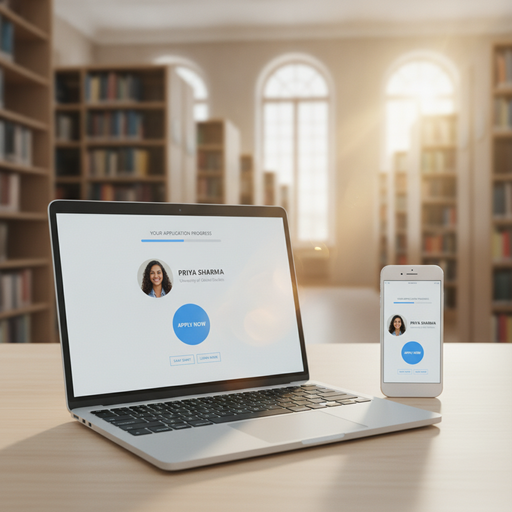
It begins with the Landing Page. This page shouldn’t be a wall of text. Instead, it should feature inspiring imagery and a clear “Apply Now” button. The value proposition—what the scholarship is and who it’s for—should be visible within the first five seconds of scrolling.
Next comes the Account Creation. We want to keep the friction low. Social media logins or simple email verification are best. Once the student is in, they should see a Dashboard. This is their mission control. It shows them which sections are complete, what documents are missing, and how many days are left until the deadline.
As they move into the Application Form, the UI should be clean. Using progress bars is a psychological trick that keeps students motivated; seeing that they are “75% complete” provides the dopamine hit needed to finish that final personal statement.
Finally, the Confirmation Page. After hitting submit, the student shouldn’t be left wondering if it worked. A clear “Success!” message, followed by an automated email confirmation, provides the peace of mind they’ve earned through their hard work.
The Backend: Making Life Easier for Committees
While the student sees a beautiful interface, the organization behind the scholarship needs a powerful backend. Managing 10,000 applications manually is a nightmare. A professional registration website integrates an Applicant Tracking System (ATS) designed for academia.
This system allows reviewers to score essays based on rubrics, filter candidates by specific criteria (like zip code or major), and communicate with applicants in bulk. By automating the mundane tasks, the selection committee can focus on what really matters: reading the stories and identifying the potential of the human beings behind the data points.
The Role of Accessibility and Inclusivity
A scholarship is an equalizer, which means the website itself must be accessible to everyone, including those with disabilities. This means following WCAG (Web Content Accessibility Guidelines). High contrast modes, screen-reader compatibility, and keyboard-only navigation are not “extra” features—they are essential components of a website dedicated to education.
Furthermore, language should be clear and free of uecessary academic jargon. The goal is to invite students in, not to make them feel like they aren’t “smart enough” to navigate a complex web interface.
The Future: AI and Personalization in Scholarship Portals
As we look toward the future, Artificial Intelligence is begiing to play a role in scholarship registration websites. We are seeing the rise of “Smart Matching.” Instead of a student searching through a list of 500 scholarships, the website analyzes their profile and suggests the top 5 they are most likely to win.
Predictive analytics can also help organizations identify “at-risk” applications—students who started an application but stopped halfway. The system can send a gentle nudge or offer help, ensuring that great candidates don’t fall through the cracks of a digital system.
Conclusion: Building a Bridge to the Future
A scholarship registration website is more than just a collection of code and databases. It is a digital manifestation of hope. For the student, it represents the possibility of a better life. For the provider, it represents an investment in the future of society.
By focusing on user-centric design, robust security, and seamless functionality, we can turn the daunting task of applying for financial aid into an empowering experience. When technology is used to remove barriers rather than create them, everyone wins. The next great scientist, artist, or leader is out there right now, looking for an opportunity. Let’s make sure the website they find is ready to welcome them.