
I remember the day it truly began, not with a flourish of music, but with a quiet, persistent whisper in my heart. For years, the sound of a violin had been like a secret language I longed to understand. There was something about its voice – capable of such profound sorrow and exhilarating joy – that always pulled at me. It wasn’t just the melody; it was the story held within each vibrato, each soaring note. But life, as it often does, had a way of pushing such dreams to the back burner. "Too hard," I’d tell myself. "Too late to start." "Where would I even begin?" These were the familiar refrains that kept me from picking up a bow.
Then came a turning point. A quiet evening, perhaps prompted by a particularly moving piece of classical music, ignited a stubborn resolve. Enough with the excuses. If I wanted to learn, I had to simply start. And so, my search for a violin course began. This wasn’t a whimsical decision; it was a carefully considered step. I knew I needed structure, guidance, and a path laid out clearly, especially as an adult beginner. The internet, as it turns out, is a treasure trove, and I sifted through countless options: local academies, private tutors, and, increasingly, comprehensive online violin courses. The thought of an online course was appealing. It offered flexibility, allowing me to learn at my own pace, around my existing commitments, without the pressure of fixed class times. It felt less intimidating, somehow, to embark on this personal journey from the comfort of my living room.
After much deliberation, reading reviews, and watching introductory videos, I finally settled on a beginner violin course that seemed to strike the right balance between foundational technique and musicality. What drew me in was its promise to break down complex concepts into digestible steps, using language that didn’t assume prior musical knowledge. It was designed for someone exactly like me: eager, but utterly clueless. The initial investment in a decent student violin, a bow, rosin, and a tuner felt like a commitment, a tangible step toward fulfilling that long-held dream. When the instrument arrived, nestled in its velvet-lined case, a mixture of excitement and trepidation washed over me. It smelled of wood and newness, a scent that now forever reminds me of fresh beginnings.
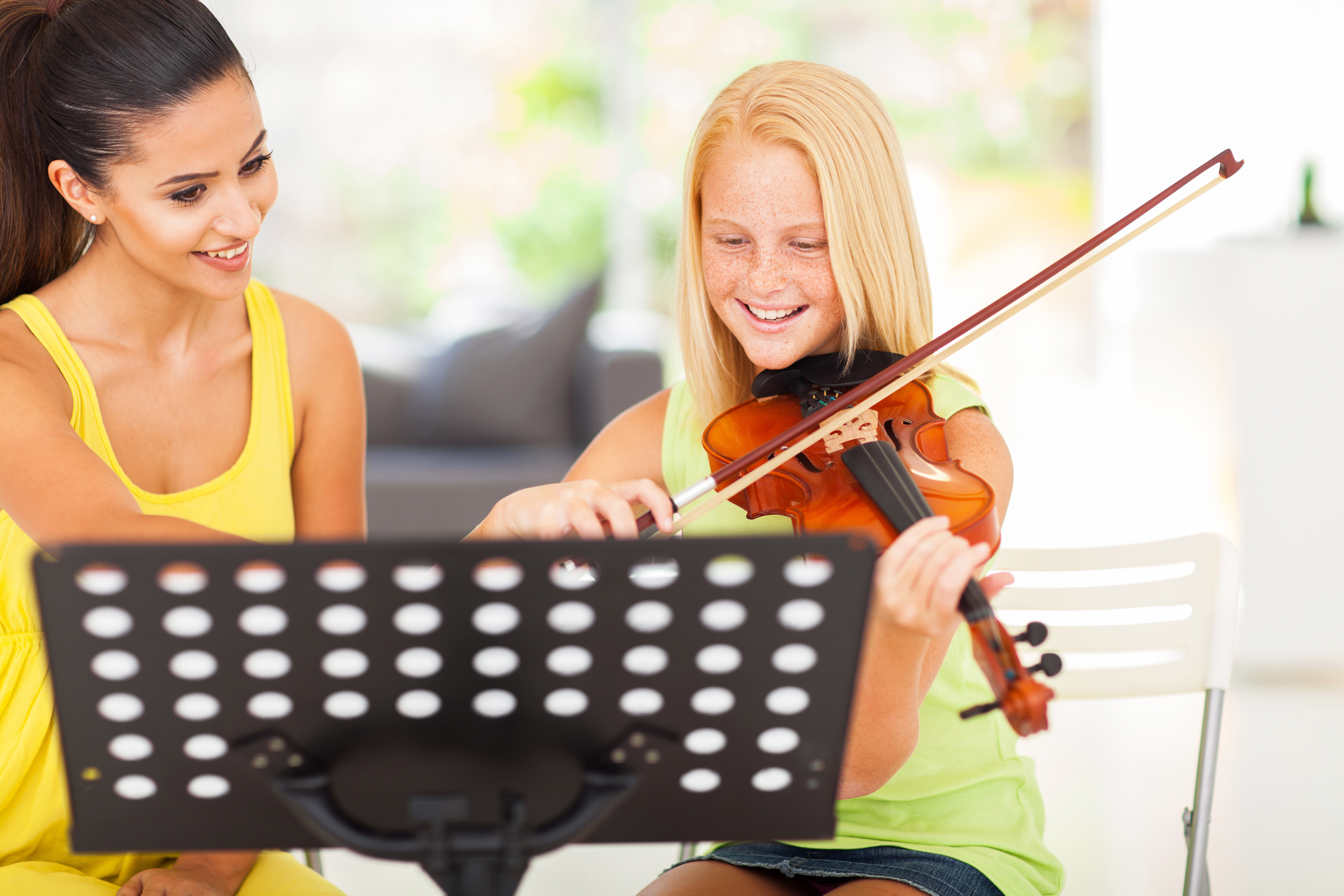
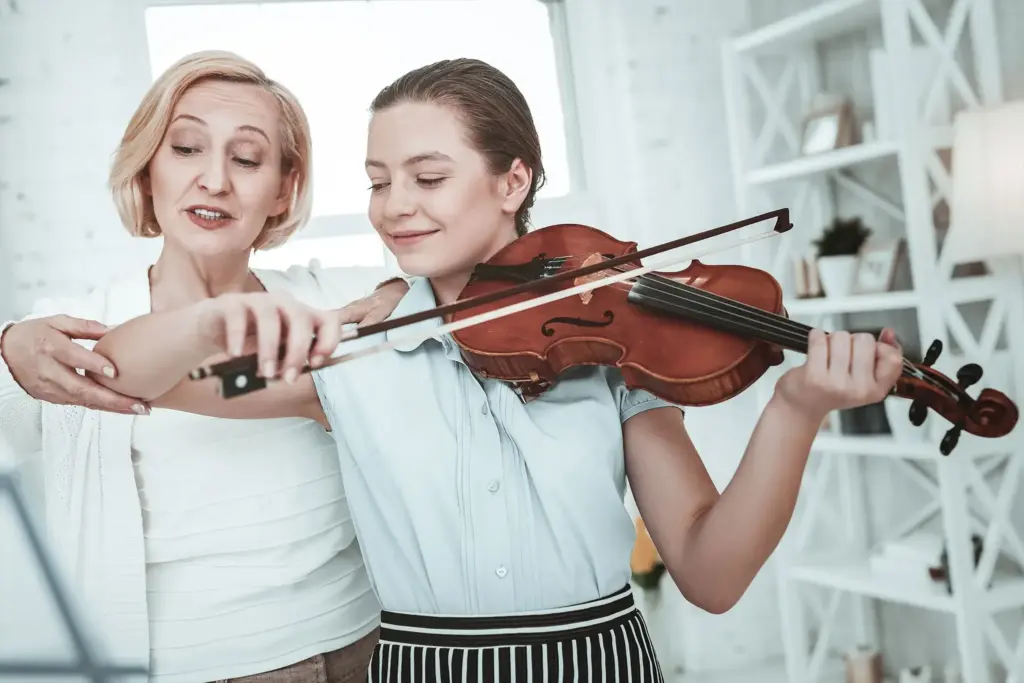
My very first lesson, delivered through my screen, was surprisingly gentle. It didn’t throw me into scales or complex pieces. Instead, it focused on the absolute basics: how to hold the violin, how to hold the bow, and the correct posture. These initial steps felt awkward, almost comical. My left arm, usually so cooperative, suddenly seemed to forget how to bend naturally. The bow felt like a slippery foreign object in my right hand. The instructor, a warm and patient presence on the screen, emphasized relaxation, reminding me that tension was the enemy of good sound. I spent what felt like an eternity just practicing the "violin hold" and the "bow hold," trying to find that sweet spot of balance and ease. My shoulders ached, my fingers felt clumsy, but there was a quiet determination simmering beneath the surface. This was harder than it looked, but the challenge itself was exhilarating.
Then came the moment of truth: making a sound. The course started with open strings – no fingers involved, just bowing. I remember the first time the bow met the D string. Instead of the rich, resonant tone I’d imagined, a rather indignant, scratchy squeak emerged. My heart sank a little, but the instructor’s encouraging words (pre-recorded, but still effective) reminded me that this was perfectly normal. "Every violinist starts here," she’d say. "Patience is your best friend." Gradually, with practice and careful attention to bow speed, pressure, and contact point, those squeaks began to transform into something resembling a sustained note. It wasn’t beautiful, not yet, but it was sound. It was progress. Each tiny improvement felt like a monumental victory. I’d celebrate a less-scratchy A string with a small, private cheer.
The course then gently introduced music theory – the language of music. Staffs, clefs, notes, rests. It felt like learning a new alphabet, a new way to read and interpret the world. The online format was brilliant here, offering animated diagrams and interactive exercises that reinforced the concepts. It wasn’t just about memorizing; it was about understanding how these symbols translated into the physical act of playing. Soon, my left hand, which had initially been a reluctant participant, began its own journey. Finger placement was next. Taping small markers onto the fingerboard of my violin felt a bit like cheating, but it was an invaluable crutch for a beginner. The goal was to train my fingers to find the precise spots that would produce an in-tune note. The challenge of intonation – playing notes perfectly in tune – quickly became my nemesis. A millimeter off, and the note would sound flat or sharp, a jarring dissonance that grated on my ears. It required intense focus, a keen ear, and endless repetition. Scales, simple melodies like "Twinkle, Twinkle Little Star," and beginner exercises became my daily companions. My practice sessions were filled with a mix of frustration and profound satisfaction. One day, a note would ring true, clear and sweet, and for that brief moment, all the effort felt worth it.
What I appreciated most about the structure of this particular violin course was its holistic approach. It wasn’t just about drilling techniques; it intertwined the mechanics with the musicality. It taught me how to play, but also why we play certain ways to achieve different expressions. Bowing techniques, for instance, were a revelation. I learned about legato (smooth, connected notes), staccato (short, detached notes), and how varying bow speed and pressure could dramatically alter the sound. It was like learning to paint with sound, using the bow as my brush and the strings as my canvas. The course provided detailed explanations, close-up videos, and downloadable sheet music with clear annotations. It emphasized listening – not just to my own playing, but to professional recordings, to develop a sense of what a "good" sound should be. This constant exposure to excellence, coupled with practical, step-by-step guidance, created a powerful learning environment.
Of course, the journey wasn’t without its bumps and detours. There were days when my fingers felt like sausages, incapable of moving independently. Days when my bowing arm seemed to have a mind of its own, producing only scratchy, uneven sounds. Days when the sheer difficulty of coordinating both hands, reading music, and listening for intonation felt utterly overwhelming. My motivation would dip, and the violin would sit silently in its case for a day or two. But the beauty of a well-structured violin course, especially one I had committed to, was that it gently pulled me back. The next lesson would be waiting, a fresh challenge, a new concept to explore. I learned to be patient with myself, to understand that progress isn’t linear. Some days would be breakthroughs, others would be about reinforcing fundamentals. The important thing, I discovered, was to keep showing up, even for five or ten minutes, just to keep the connection alive.
One of the most profound aspects of taking this violin course was what it taught me beyond just playing an instrument. It cultivated a level of discipline I hadn’t realized I possessed. Daily practice, even when I didn’t feel like it, built a mental muscle. It honed my listening skills, not just for music, but for subtleties in general. It demanded focus and presence, pulling me away from the distractions of daily life and into the present moment of creating sound. There’s a meditative quality to the repetitive motions of practice, a calming rhythm that settles the mind. And the sheer joy of finally being able to play a simple, recognizable melody – even "Ode to Joy" – was a feeling of accomplishment unlike any other. It was a tangible manifestation of effort, perseverance, and a willingness to embrace the learning process.
For anyone considering embarking on their own violin journey, especially through a beginner violin course, I can offer a few insights from my experience. Firstly, choose your instrument wisely. You don’t need the most expensive Stradivarius, but a decent student model makes a world of difference. A poor-quality instrument can make learning unnecessarily frustrating. Secondly, research your course. Look for one that emphasizes fundamental techniques, provides clear, step-by-step instructions, and offers plenty of exercises and practice pieces. A good online violin course will often include video demonstrations, sheet music, and even backing tracks to play along with. Look for instructors who are patient and encouraging.
Thirdly, cultivate patience – with yourself and with the process. Learning the violin is a marathon, not a sprint. There will be frustrating moments, but these are part of the growth. Celebrate the small victories: a clear open string, a perfectly in-tune note, playing a simple phrase without stopping. Consistency in practice is far more important than long, infrequent sessions. Even 15-20 minutes daily can yield incredible results over time. Find a quiet space where you can practice without interruption. Don’t be afraid to sound bad initially; everyone does. It’s part of the journey to sounding good. And most importantly, remember why you started. Hold onto that initial spark of fascination, that love for the violin’s voice. Let it guide you through the challenging moments.
My journey with the violin course continues. I’m no virtuoso, not by any stretch of the imagination, but I can now play a variety of pieces, read music with greater fluency, and, most importantly, I understand the instrument in a way I never thought possible. The violin is no longer a mysterious object; it’s a friend, a confidante, a source of endless learning and joy. The course provided the map, the tools, and the initial guidance, but the exploration, the dedication, and the connection to the music – that has been my own unfolding story. If you’ve ever felt that whisper in your heart, that longing to create music, don’t let the "too hard" or "too late" excuses hold you back. A good violin course, coupled with your own perseverance, can open up a world of resonance you never knew existed. Pick up that bow, embrace the squeaks, and let your own beautiful, unique melody begin.