
I remember staring at my smartphone screen, utterly bewildered. Not by the apps themselves – I used them constantly, just like everyone else – but by the sheer mystery of how they came to be. Here I was, a few years out of college, feeling a little directionless in my job, and every day I saw new apps pop up, each one solving a problem or making life a little bit easier. They felt like magic, built by sorcerers who spoke a secret language. For a long time, I convinced myself that this world of technology, of coding and development, was completely beyond me. My background was in something entirely different, something that involved a lot more talking to people and a lot less talking to computers. But a tiny, persistent voice in the back of my head kept whispering, "What if? What if you could build something like that?"
That "what if" eventually grew loud enough to become an itch I couldn’t ignore. I was tired of feeling like a passive consumer of technology; I wanted to understand how it worked, perhaps even contribute to it. The idea of creating something from scratch, something functional that people could use, began to genuinely excite me. But where do you even begin when the whole concept feels like trying to learn ancient Greek overnight? Google searches led me down rabbit holes of programming languages, frameworks, and developer jargon that made my head spin. It was overwhelming, a vast ocean of information with no clear map. That’s when the term "App Course" started appearing in my search results, a beacon promising a structured path through the wilderness.
The decision to enroll in an app course wasn’t made lightly. It meant investing time, money, and a considerable amount of mental energy. I worried about failing, about discovering I truly wasn’t cut out for it. But the alternative – staying put, forever wondering – felt worse. I scoured reviews, compared curricula, and finally picked one that seemed to cater specifically to absolute beginners, promising to take you from zero to building your first functional app. The course structure looked approachable: a mix of video lectures, coding exercises, and real-world projects. It wasn’t just about learning syntax; it was about understanding the process of mobile app development, from conception to execution. That holistic approach was what ultimately sold me. I took a deep breath, clicked "enroll," and braced myself for what felt like a leap into the unknown.
The first few weeks were a strange mix of exhilaration and frustration. We started with the very basics, the foundational concepts that underpin all coding. Variables, data types, conditional statements – these were new words that quickly became the building blocks of a new language. My fingers fumbled on the keyboard as I tried to type out my first lines of code. It felt clunky, unnatural. Debugging, which I soon learned meant finding and fixing errors in your code, felt like detective work where the clues were often cryptic messages from the computer. There were moments when I’d stare at a piece of code for an hour, convinced it was perfect, only for the compiler to tell me otherwise. The temptation to throw my hands up in exasperation was strong. But then, there would be a breakthrough. A line of code would finally work, an exercise would pass, and a tiny "hello world" message would appear on my screen, put there by my own commands. Those small victories were incredibly powerful, fueling my motivation to keep going. This was the true essence of learning to code: persistent problem-solving, celebrating small wins, and slowly, steadily, building competence.
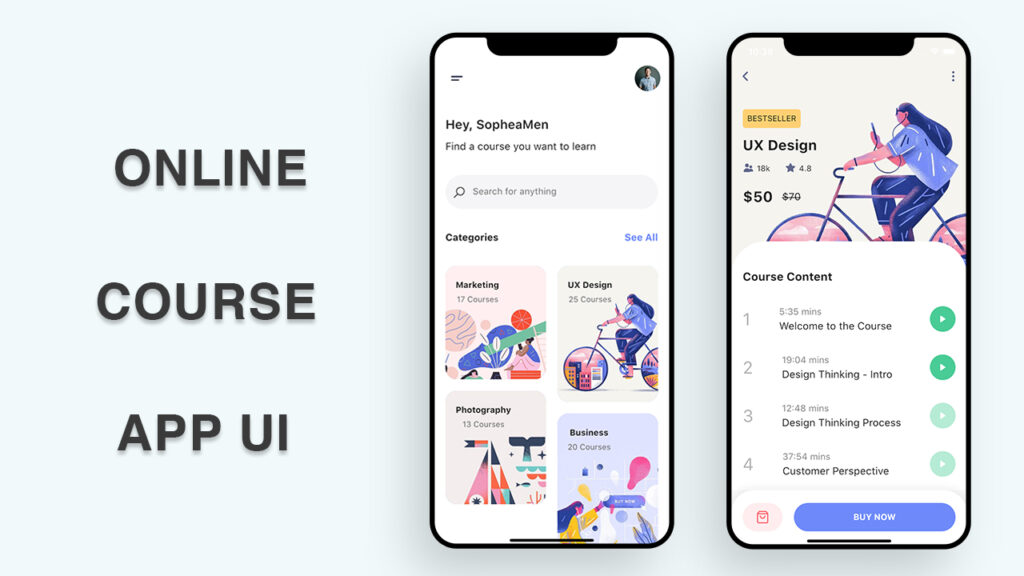
The app course wasn’t just about individual coding exercises; it was meticulously designed to build skills incrementally. We moved from simple logic puzzles to understanding user interface (UI) and user experience (UX) design principles. This part was fascinating because it connected directly to how I, as a user, interacted with apps every day. I started to see why some apps felt intuitive and others were a pain to navigate. Learning about wireframing and prototyping, sketching out the flow of an app before writing a single line of code, felt like drawing blueprints for a tiny digital house. It made the abstract idea of an app feel much more tangible. We delved into different programming languages, getting a taste of what it means to develop for iOS versus Android, or how cross-platform tools work. While the course didn’t expect us to become masters of all of them, it provided a solid understanding of the ecosystem. This breadth of knowledge was invaluable, giving me context rather than just isolated skills.
One of the most defining moments came when we were tasked with building our first significant project. The assignment was to create a simple to-do list app. Simple, right? I quickly learned that "simple" in app development doesn’t always mean "easy." I had to put together everything I’d learned: designing the layout, writing the code to add tasks, mark them as complete, and delete them. I had to figure out how to store this data so it wouldn’t disappear every time I closed the app. This was where the real learning happened. I spent hours wrestling with bugs, searching online forums for solutions, and re-watching course videos until the concepts clicked. There were moments of genuine despair, where the code just refused to cooperate, and the screen stared back at me with unhelpful error messages. But with each problem solved, each tiny feature implemented, a sense of accomplishment washed over me. When I finally ran the app on a simulator, and could actually add an item to my to-do list, check it off, and delete it, it felt like magic again, but this time, I was the magician. I had created something functional, something that mirrored the apps I used daily. The feeling was electrifying.
The app course also introduced me to a community. There were forums where students asked questions, shared their struggles, and celebrated their successes. Seeing other beginners grapple with the same issues, and experienced developers offer guidance, made the journey feel less lonely. It was a reminder that everyone starts somewhere, and that perseverance is a universal ingredient for success in coding. This community aspect was surprisingly important for staying motivated. Knowing that I wasn’t the only one pulling my hair out over a misplaced semicolon, or finally experiencing that "aha!" moment when a complex concept finally made sense, made the whole experience much richer. We were all on this path of learning to build apps, supporting each other along the way.
As the weeks turned into months, my confidence grew. The initially overwhelming world of mobile app development started to make sense. I could look at an app and deconstruct it in my mind, identifying potential UI components, imagining the underlying logic, and even spotting areas for improvement. I started to think creatively about problems I encountered in my daily life and how an app could potentially solve them. The app course didn’t just teach me coding; it taught me a new way of thinking, a problem-solving mindset that extended beyond the screen. It was about breaking down complex challenges into smaller, manageable pieces, and then systematically building up a solution. This skill, I realized, was valuable in any field, not just tech.
By the time I completed the app course, I had a small portfolio of functional apps – nothing groundbreaking, but solid proof of my newly acquired skills. More importantly, I had shed the fear and intimidation that once surrounded technology. I understood the fundamentals of app building, from front-end design (what the user sees) to back-end logic (what makes it work). I wasn’t a senior developer overnight, but I had a clear path forward. I felt empowered, knowing that I could continue to learn, to experiment, and to potentially turn my ideas into reality.
The impact of that app course extended far beyond just learning to code. It opened doors I never knew existed. I started attending local tech meetups, speaking a language I previously couldn’t comprehend. I began exploring job opportunities in the tech sector, something I would have laughed at just a year prior. While my initial goal wasn’t necessarily a complete career change, the skills I gained made me more adaptable, more valuable in the evolving digital landscape. It sparked a genuine passion for digital creation and problem-solving. Whether it’s building my own little utility apps for fun, contributing to open-source projects, or even just having a better understanding of the technology I use every day, the foundation laid by that app course has been truly transformative.
For anyone out there feeling that same "what if" whisper, that curiosity about how apps are made, or that desire to build something new, I wholeheartedly recommend exploring an app course. It’s not an overnight magic trick, but a structured journey that makes the seemingly impossible, possible. You don’t need to be a math genius or a computer science prodigy. You need curiosity, patience, and a willingness to learn from your mistakes. The world of mobile app development is constantly evolving, full of opportunities for creative minds and problem-solvers. Taking that first step, enrolling in an app course, was one of the best decisions I ever made. It demystified the digital world, turned my passive consumption into active creation, and ultimately showed me that the magic of apps isn’t in some secret sorcery, but in the power of structured learning and persistent effort. So, if you’re ready to stop wondering and start building, an app course might just be your next great adventure. It certainly was mine.