
You know, there comes a point in many of our working lives where we hit a bit of a wall. For me, it wasn’t a sudden crash, but more of a slow realization, like water seeping into a basement. I was good at my job; I could handle tasks, meet deadlines, and even solve tricky problems. But I felt a growing unease, a sense that I was missing something fundamental when it came to truly moving things forward, especially when it involved other people. I watched my superiors, some effortlessly guiding teams, others seeming to stumble, and I knew I wanted to be one of the former. That’s when the idea of a management course began to take root in my mind.
I wasn’t looking for a magic bullet or a fast track to the corner office. What I truly craved was understanding. How do you motivate a diverse group of individuals? What goes into making a big decision that affects everyone? How do you keep a project on track when things inevitably go sideways? These questions buzzed in my head, and I started seeing them everywhere – in my workplace, in news stories, even in how my local community group operated. A management course, I reasoned, might just give me the framework I needed to start piecing together the answers.
Frankly, I was a bit apprehensive. My imagination conjured up dusty lecture halls, professors droning on about abstract theories, and textbooks thicker than bricks. I worried it would be too academic, too far removed from the messy reality of day-to-day work. But a friend who had recently completed a similar program assured me it wasn’t like that at all. "It’s about people," she said, "and how things actually get done. You’ll see." Her words were a small spark of encouragement, enough to push me over the edge and sign up.
The first few weeks felt like stepping into a new world, one filled with unfamiliar terms and concepts, but delivered in a way that felt surprisingly down-to-earth. Our instructor, a seasoned professional with a twinkle in his eye and an endless supply of real-world anecdotes, quickly dispelled my fears. He didn’t just teach us what management was; he showed us why it mattered, often by sharing stories of his own triumphs and, more importantly, his mistakes. It wasn’t about memorizing definitions; it was about understanding human behavior, organizational structures, and the delicate dance of making things happen.
One of the earliest modules, and perhaps the most impactful for me, focused on Leadership. Before the course, my idea of a leader was someone who simply told people what to do, someone who had all the answers. I quickly learned how wrong I was. Leadership, it turned out, was less about authority and more about influence. It was about creating a vision that others could believe in, about giving your team space to grow, and about having the courage to make tough calls while also being humble enough to admit when you were wrong. We talked about different leadership styles – transformational, servant, democratic – and the importance of adapting your approach to different situations and different people. I remember a particularly engaging discussion where we analyzed case studies of famous leaders, dissecting their strategies and their impact. It made me look at my own work and interactions in a completely new light. I started observing how my own managers led, recognizing patterns and understanding the why behind their actions, rather than just the what.
Then came the deep dive into Organizational Behavior and Team Dynamics. This was fascinating. It peeled back the layers of how individuals interact within a group, how personalities clash or complement each other, and how to build a cohesive team. We learned about conflict resolution techniques, active listening, and the power of psychological safety – creating an environment where people feel comfortable sharing ideas and even making mistakes without fear of blame. I recalled countless frustrating group projects from my past, suddenly understanding the underlying dynamics that had made them so challenging. We even did some team-building exercises that, while a bit cheesy at times, really drove home the point about communication and trust. One exercise involved building a complex structure with limited instructions and a "silent" leader, which was surprisingly illuminating about how assumptions can derail even the simplest tasks.
Strategic Planning was another eye-opener. I used to think of strategy as something only the top executives did, something far removed from my daily grind. But the course showed me that strategic thinking is about looking ahead, understanding the bigger picture, and aligning your actions with long-term goals. We learned about SWOT analysis (Strengths, Weaknesses, Opportunities, Threats) and Porter’s Five Forces – tools that helped break down complex business environments into understandable components. It wasn’t just about crafting grand plans; it was about asking the right questions: Where are we going? How will we get there? What obstacles might we face? And how do we adjust when things change? This module helped me connect my day-to-day tasks to the broader objectives of my organization, making my work feel more purposeful. I started seeing how a small decision in my department could ripple outwards, impacting other areas, which was a perspective I hadn’t truly grasped before.
Of course, no management course would be complete without a solid grounding in Project Management. This was incredibly practical. We covered everything from defining project scope and setting realistic timelines to allocating resources and managing risks. I learned about Gantt charts, critical path analysis, and agile methodologies. It felt like being given a toolkit – a set of concrete steps and instruments to bring an idea from conception to completion efficiently. We even had a simulated project where we had to plan and "execute" a small event, complete with budget constraints and unexpected hiccups. It was a controlled environment, but the pressure and the need for quick, informed decisions felt very real. This was where my personal struggle with perfectionism and micromanagement really came to light. I had to learn to trust my "team" (fellow students) and delegate effectively, a skill I was still very much developing.
Decision Making was a constant theme woven throughout the curriculum. It wasn’t just about making a decision, but making good decisions. We explored different frameworks for decision-making, considering data, ethical implications, stakeholder interests, and even our own biases. The instructor often challenged us with hypothetical dilemmas, forcing us to justify our choices and consider the potential downstream effects. It taught me that sometimes the "right" decision isn’t obvious, and often involves trade-offs. It also highlighted the importance of gathering diverse perspectives before settling on a path. I remember one particular group discussion about a company facing a difficult ethical choice regarding product safety versus profit. The room was buzzing with different viewpoints, and seeing how carefully considered arguments could sway opinions was a powerful lesson.
Beyond these core areas, the course also touched upon other vital aspects that underpin effective management. We spent time on Communication Skills, not just how to present ideas clearly, but how to listen actively, provide constructive feedback, and navigate difficult conversations. I used to dread giving presentations; my voice would get shaky, and my palms would sweat. But through practice and specific techniques taught in class, I learned to structure my thoughts, project confidence, and engage my audience. It wasn’t about being a brilliant orator, but about being clear, concise, and credible.
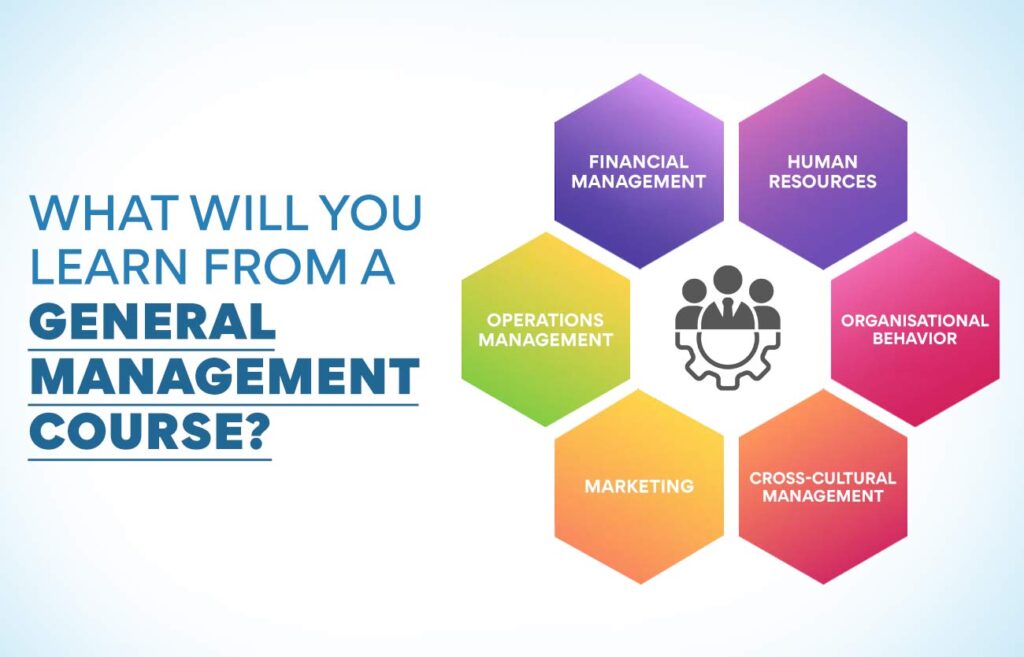
We also had modules on the basics of Financial Management, which, for someone who used to glaze over at spreadsheets, was surprisingly illuminating. It wasn’t about becoming an accountant, but about understanding key financial statements, budgeting, and how financial health impacts an organization’s decisions. Similarly, an introduction to Marketing Principles taught me about identifying customer needs, understanding market trends, and positioning a product or service effectively. It demystified what seemed like a complex field, showing me that at its heart, marketing is about understanding people and connecting with them.
Even Human Resources and Operations Management got their due. We discussed the importance of attracting and retaining talent, performance management, and the legal and ethical considerations of managing people. In operations, we learned about efficiency, supply chains, and process improvement – how to make sure things run smoothly and effectively. These modules gave me a more holistic view of how a business operates, showing me that every department, every function, is interconnected. It helped me appreciate the complexity of running even a small enterprise and the sheer number of moving parts involved.
One of the most valuable, and unexpected, benefits of the course was the chance to learn from my classmates. We came from various industries – tech, healthcare, non-profit, retail – and brought with us a wealth of different experiences and perspectives. The discussions were rich, often challenging my assumptions and broadening my understanding of how management principles apply in diverse contexts. We shared war stories, celebrated small wins, and collectively puzzled over complex problems. These interactions were just as important as the lectures and readings, reinforcing the idea that management isn’t a solitary pursuit; it’s a collaborative effort.
As the weeks turned into months, I began to notice a shift in myself. It wasn’t just that I was accumulating knowledge; I was developing a new way of thinking. My confidence grew. I found myself approaching problems at work with a more structured mindset, asking better questions, and offering more thoughtful solutions. I started taking initiative in areas where I previously would have hesitated, like volunteering to lead a small internal project or facilitating a team brainstorming session. I even noticed improvements in how I managed my personal time and projects at home. The skills I was learning weren’t just for the workplace; they were life skills.
I remember one particular instance where my team was facing a difficult client situation. Before the course, I might have felt overwhelmed, perhaps even passed the buck. But armed with new tools, I was able to step up. I helped facilitate a discussion, encouraging everyone to share their perspectives, and then guided the team through a problem-solving exercise. We broke down the issue, brainstormed solutions, and ultimately presented a cohesive plan to our client that salvaged the relationship. It wasn’t perfect, but it was a vast improvement from where I would have been before, and I felt a genuine sense of accomplishment. My manager even commented on my newfound clarity and proactive approach, which was a nice bonus.
For anyone considering a management course, my advice is simple: go for it. It’s an investment, yes, both in time and money, but the return is immeasurable. It’s not just about getting a piece of paper or adding a line to your resume, though those are certainly benefits. It’s about personal growth. It’s about gaining a deeper understanding of how the world works, how organizations function, and how you can contribute more effectively. It equips you with the tools to not just manage tasks, but to lead people, inspire change, and build something meaningful.
The course helped me see that management isn’t about being a boss; it’s about being a guide, a facilitator, and a problem-solver. It’s about continuously learning, adapting, and striving to bring out the best in yourself and those around you. It’s a journey, not a destination, and my management course was the perfect starting point for what I hope will be a long and rewarding path of leadership and impact. It taught me that the biggest challenge, and the biggest reward, in management often lies in the human element – understanding, connecting, and inspiring. And that, I believe, is a lesson worth learning for anyone who wants to make a difference, wherever they are.