
I remember the first time I really considered taking a science course. It wasn’t in some grand lecture hall or a gleaming lab, but in my high school cafeteria, staring at a course catalog that felt as thick as a phone book. Up until that point, science had been a nebulous concept, something that happened in textbooks with complicated diagrams and equations that looked more like alien hieroglyphs than actual language. I thought of scientists as these super-geniuses, locked away in their ivory towers, far removed from the everyday world. But there, on that page, were words like "Biology," "Chemistry," and "Physics," each promising a glimpse into a world I barely understood. A part of me, the curious part that always wondered how things worked, felt a little spark.
Choosing to dive into science wasn’t an immediate love affair for me. Honestly, it was a bit intimidating at first. The sheer volume of new terms, the strict rules of experiments, and the abstract ideas felt overwhelming. My first biology class, for example, started with the basics of cells. I remember thinking, "How can something so small be so complicated?" We learned about mitochondria as the "powerhouses of the cell," and ribosomes as the "protein factories." It was like learning a whole new language, one spoken by tiny, invisible beings inside every living thing. There were moments of genuine frustration, especially when trying to remember the names of all the different organelles or the phases of mitosis. I’d sit there, flipping through my notes, feeling like I was trying to memorize an entire dictionary in one go.
But then, something shifted. It wasn’t a sudden flash of enlightenment, but a gradual unfolding. One day, our biology teacher brought in microscopes, and we got to look at actual onion cells. Seeing those neat, rectangular structures, the visible nucleus, and the cell wall was a revelation. It wasn’t just a diagram anymore; it was real. These tiny, living units were bustling with activity, a silent, intricate dance happening right before my eyes. That was my first "aha!" moment. It wasn’t about memorizing words; it was about understanding the underlying story, the incredible complexity that builds up to something as simple as an onion or as complex as a human being. Biology courses, I discovered, were about life itself – from the smallest microbes to the largest ecosystems, and everything in between. We explored genetics, evolution, the human body, and the delicate balance of nature. Each topic was a new adventure, showing me how interconnected everything truly is. Learning about DNA felt like reading the blueprint of existence, and understanding ecosystems made me see my backyard in a completely new light.
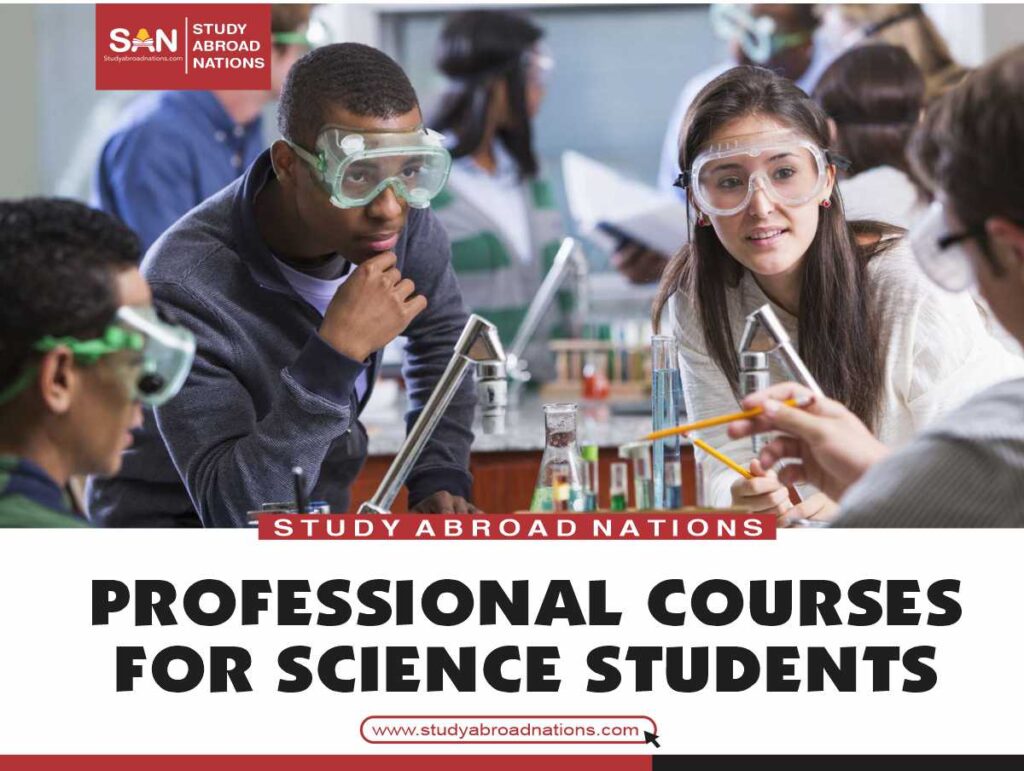
Next came chemistry, and if biology was about life, chemistry felt like it was about the very fabric of existence. Atoms, molecules, chemical reactions – it was all about how things combine, break apart, and transform. My first encounter with the periodic table was like being introduced to a massive family tree of elements, each with its own personality and quirks. Hydrogen, carbon, oxygen – they weren’t just names; they were the building blocks of everything around us. I distinctly remember our first lab where we mixed two clear liquids, and suddenly, a vibrant yellow solid formed at the bottom of the beaker. It was magic! Or, rather, it was chemistry. It was seeing abstract concepts come to life, witnessing matter change right before my eyes.
Chemistry courses were a different kind of challenge. They demanded precision, careful observation, and a good grasp of mathematical concepts. Balancing equations felt like solving a puzzle, trying to make sure all the atoms on one side matched the other. Sometimes, my experiments went awry – a solution turning the wrong color, a reaction not quite happening as expected. Those moments were frustrating, but they also taught me an important lesson: science isn’t always about getting it right the first time. It’s about trial and error, adjusting your approach, and learning from your mistakes. It taught me patience and meticulousness, skills that surprisingly spilled over into other areas of my life. From understanding how baking soda makes a cake rise to realizing why certain medicines work, chemistry gave me a deeper appreciation for the unseen reactions happening all around us, all the time.
Then there was physics, the one that initially scared me the most. Physics felt like the realm of true geniuses, full of gravity, motion, energy, and forces. It seemed so abstract, so mathematical. But once I started, I found a strange beauty in it. Physics courses are about understanding the fundamental laws that govern the universe. Why does an apple fall from a tree? Why does a ball curve when thrown? How does electricity flow? It’s about explaining the world through elegant equations and observable principles. My first physics class involved a lot of problem-solving. We’d calculate the speed of objects, the force required to move them, or the energy stored in a spring. It felt like playing detective, using clues (the given numbers) and tools (the formulas) to uncover the answer.
One of my most memorable physics experiences was during a lab where we had to build a small roller coaster for a marble. We had to apply concepts of potential and kinetic energy, friction, and gravity to ensure the marble completed the loop. My first design failed spectacularly, with the marble barely making it halfway. But through adjustments, calculations, and a lot of sticky tape, I eventually built a track that worked perfectly. Seeing that marble smoothly navigate the twists and turns, knowing I had applied scientific principles to make it happen, was incredibly satisfying. Physics taught me to look at the world with a new lens, to see the forces at play in everything from a swinging pendulum to the trajectory of a thrown ball. It made the world feel less random and more ordered, governed by beautiful, predictable rules.
Beyond these core sciences, I also dabbled in others. Earth science courses opened my eyes to the incredible history of our planet, from the formation of mountains and oceans to the shifting continents and the power of volcanoes and earthquakes. It was like reading a biography of Earth itself, understanding how it came to be and how it continues to change. Learning about geology, meteorology, and oceanography made me appreciate the sheer scale and dynamic nature of our world. A walk in the woods or a trip to the beach suddenly became an opportunity to observe ancient processes still at work.
Later, I even took an introductory computer science course. While it might not seem like a traditional "science" to some, it certainly felt like one. It was all about logic, problem-solving, and understanding how to build systems using code. Learning to write simple programs, to tell a machine what to do step-by-step, felt akin to designing an experiment or solving a complex physics problem. It taught me a new way of thinking, a systematic approach to breaking down big problems into smaller, manageable parts. This blend of creativity and strict logic was surprisingly engaging and showed me how vast the umbrella of "science" truly is.
Then there was environmental science, which felt like a beautiful synthesis of biology, chemistry, and earth science. It wasn’t just about understanding how nature works, but also about understanding our place within it and our impact on it. We studied climate change, pollution, conservation efforts, and sustainable practices. This course felt particularly urgent and relevant, connecting all the abstract knowledge I’d gained to real-world issues affecting us all. It instilled in me a sense of responsibility and a desire to understand complex global challenges.
What I came to realize is that a science course, no matter the specific field, isn’t just about memorizing facts. It’s about developing a particular way of thinking. It’s about learning the scientific method: asking questions, forming hypotheses, designing experiments, collecting data, analyzing results, and drawing conclusions. It’s about critical thinking – questioning assumptions, evaluating evidence, and not just accepting things at face value. It teaches you to be skeptical but open-minded, to seek evidence, and to build your understanding step-by-step.
There were definitely challenges. Some concepts were incredibly difficult to grasp, requiring hours of focused study and multiple attempts at problem sets. Lab work could be tedious at times, especially when experiments didn’t yield the expected results or when I accidentally spilled something (which happened more often than I’d like to admit!). The sheer volume of material often felt overwhelming, and there were times I wondered if I was truly cut out for it. But every time I struggled through a tough concept and finally understood it, or successfully completed a challenging experiment, the feeling of accomplishment was immense. Those small victories fueled my curiosity and kept me going.
Looking back, these science courses didn’t just fill my head with knowledge; they fundamentally changed how I see the world. They taught me to observe more closely, to ask "why?" and "how?" more often, and to appreciate the incredible intricacies of everything around us. They gave me a framework for understanding complex issues, whether it was a news report about a new medical discovery or a discussion about climate change. The problem-solving skills, the analytical thinking, and the perseverance I learned in those labs and lectures have proven invaluable in every aspect of my life, not just in academic or professional settings.
For anyone standing where I once stood, staring at that intimidating course catalog, wondering if science is for them, my advice is simple: just try it. Start with an introductory course that sparks your interest, whether it’s the wonder of life in biology, the transformations of matter in chemistry, or the forces of the universe in physics. Don’t be afraid of the difficulty; embrace it as a challenge. Find a study buddy, ask questions (even the "dumb" ones, because chances are someone else has the same question), and don’t be discouraged by setbacks.
The beauty of science courses isn’t just in the facts you learn, but in the journey of discovery itself. It’s about learning to think like a scientist, to approach problems with curiosity and rigor, and to see the world as an endless source of fascinating questions waiting to be answered. It’s a journey that continues long after the final exam, shaping your understanding and appreciation for the incredible, complex, and beautiful world we live in. My journey through science courses started with a hesitant click of a pen on a course selection sheet, but it led me to a lifelong fascination and a way of seeing the world that I wouldn’t trade for anything.