
There was a time, not so long ago, when my professional life felt like a tangled ball of yarn. I was good at what I did, or so I thought, but every new initiative, every big idea, seemed to spiral into chaos before it ever truly found its footing. Deadlines were often missed, communication felt like a game of telephone, and budgets… well, let’s just say they had a habit of developing a mind of their own. I remember distinctly a particularly frustrating Tuesday afternoon, staring at a spreadsheet that refused to balance, feeling an overwhelming sense of dread. It wasn’t just this one project; it was a recurring theme, a pattern of well-intentioned efforts dissolving into stress and inefficiency. I knew I needed a change, a framework, something to bring order to the beautiful, messy ambitions of my team. That’s when the idea of a project management course first whispered in my ear.
At first, I dismissed it. Project management sounded like something for engineers in hard hats, or perhaps suited-up executives overseeing multi-million dollar constructions. I was neither. My world was about creativity, about ideas, about people. How could a rigid methodology possibly help? But the whisper grew louder, especially as I watched colleagues who did seem to have a handle on things. They talked about "scope" and "stakeholders" and "risk registers" with a calm confidence I sorely lacked. They weren’t just doing their jobs; they were orchestrating success. It was a revelation: maybe project management wasn’t just about big, complex engineering feats. Maybe it was about bringing structure to any endeavor, big or small. Maybe it was about making ideas happen, effectively and efficiently.
So, I started digging. I spent evenings researching, reading testimonials, comparing different programs. There were so many options: online courses, university certificates, crash courses, deep dives into specific methodologies like Agile or Scrum. The sheer volume of information was almost as overwhelming as my previous work life. I worried about the time commitment, the cost, and frankly, whether I was smart enough to grasp the concepts. Was I ready to truly invest in myself, to potentially shift the way I approached my entire career? The turning point came when I found a program that emphasized practical application and real-world scenarios, one that promised not just theories, but tools I could use immediately. It felt less like an academic exercise and more like a skill-building workshop. That was it; I signed up, a mix of apprehension and genuine excitement bubbling within me.
The first few weeks of the project management course were a revelation. We started with the absolute basics: "What is a project?" It sounds simple, but defining it precisely – a temporary endeavor with a unique outcome – immediately started to clarify so much. We delved into the project lifecycle: initiation, planning, execution, monitoring and controlling, and closure. It was like finally getting a map for a journey I’d been stumbling through blindfolded. My instructor, a seasoned project manager named Sarah, had a knack for explaining complex ideas in simple, relatable terms. She often shared anecdotes from her own career, illustrating how a seemingly dry concept like a Work Breakdown Structure (WBS) could prevent colossal headaches down the line.
I remember struggling initially with the concept of scope definition. In my old way of working, "scope" was essentially "everything we can possibly think of that might be useful." The course taught me the critical importance of defining what is and is not part of the project. It was about drawing clear boundaries, getting agreement from everyone involved, and then sticking to it. This seemingly small shift in perspective was monumental. It meant fewer last-minute "oh, by the way" requests, fewer feature creeps, and a much clearer path to delivering what was promised. We learned about tools like a scope statement and a requirements traceability matrix, which sounded intimidating but were, in practice, incredibly logical and helpful.
Then came project planning, which felt like the heart of the course. This wasn’t just about making a to-do list; it was about strategically mapping out every step, anticipating challenges, and allocating resources. We learned about scheduling techniques, from simple Gantt charts to critical path analysis. I saw how a well-constructed schedule wasn’t just about dates, but about understanding dependencies – knowing that step B couldn’t start until step A was fully completed. This was where the practical exercises truly shone. We’d be given a hypothetical project – building a new website, organizing an event, launching a product – and tasked with creating a full project plan. The collaborative aspect of these exercises, working with classmates from diverse backgrounds, was invaluable. We debated, we brainstormed, and we often made mistakes, but those mistakes were where the real learning happened.
Risk management was another eye-opener. Before the course, my approach to risk was mostly "hope for the best and panic when things go wrong." The course introduced a systematic way to identify potential risks, analyze their likelihood and impact, and then plan proactive responses. It wasn’t about eliminating all risks – that’s often impossible – but about being prepared. Learning to create a risk register and developing mitigation strategies felt like acquiring a superpower. Instead of being blindsided, I learned to look ahead, anticipate pitfalls, and build contingency plans. This proactive mindset not only reduced stress but also made my projects far more resilient.
A significant portion of the course was dedicated to the human element of project management. We explored stakeholder management, understanding that every project has multiple parties with vested interests, and their engagement (or lack thereof) can make or break a project. Communicating effectively with different groups, managing expectations, and navigating potential conflicts became central themes. It wasn’t just about sending emails; it was about understanding motivations, building relationships, and fostering collaboration. We practiced communication planning, realizing that different stakeholders require different types of information, delivered at different frequencies and through different channels. This resonated deeply with my creative background, as I understood the power of tailoring messages to an audience.
As the course progressed, we moved beyond the traditional Waterfall methodology and delved into the world of Agile and Scrum. Initially, I was skeptical. It sounded so fluid, so unstructured compared to the detailed planning of Waterfall. But as Sarah explained the principles of iterative development, continuous feedback, and self-organizing teams, I began to see its immense value, especially for projects with evolving requirements or in fast-paced environments. Learning about Scrum roles (Product Owner, Scrum Master, Development Team), ceremonies (daily stand-ups, sprint reviews, retrospectives), and artifacts (product backlog, sprint backlog) provided a whole new toolkit. The idea of short "sprints" and constant adaptation was incredibly liberating. It wasn’t about abandoning planning; it was about planning in smaller, more adaptable cycles.
The practical application of these concepts was fascinating. We simulated Scrum teams, rotating roles, experiencing the rhythm of daily stand-ups, and learning to estimate effort using "story points." It taught me about the importance of transparency, quick problem-solving, and the power of a dedicated, focused team. I started to appreciate that there isn’t one "right" way to manage a project; the best approach depends on the project’s nature, its constraints, and the organizational culture. A good project manager, I learned, is adaptable and knows when to employ which methodology.
Beyond the specific methodologies, the course also honed crucial soft skills. We discussed leadership skills, not just in terms of giving orders, but in inspiring teams, resolving conflicts, and empowering individuals. We learned about negotiation, active listening, and providing constructive feedback. These were skills I used daily, even outside of formal project work. The emphasis on ethical considerations and professional conduct also left a lasting impression, reminding me that effective project management isn’t just about hitting targets, but about doing so responsibly and with integrity.
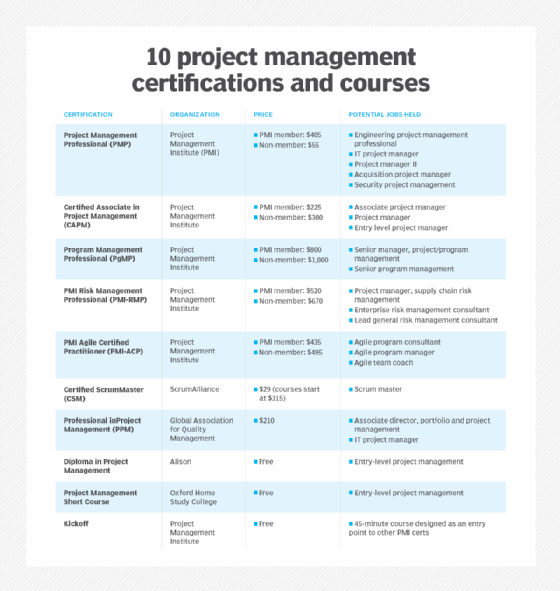
Towards the end of the program, the idea of pursuing a PMP certification started to become a tangible goal for many of us. While the course itself provided a strong foundation, the PMP (Project Management Professional) is often seen as the gold standard, a testament to a project manager’s experience and knowledge. I knew it would require further dedicated study, but the course had certainly demystified the process and ignited that ambition within me. For those less interested in formal certification, the understanding gained was still immensely valuable.
After completing the project management course, I felt like a different person. The tangled ball of yarn had been meticulously unraveled and re-wound into neat, organized skeins, each clearly labeled. I returned to my work with a newfound confidence and a structured approach. My first post-course project was a small internal initiative, but I applied everything I had learned. I meticulously defined the scope, created a realistic schedule, identified potential risks, and set up clear communication channels with stakeholders. The difference was astounding. The project ran smoothly, hit its deadlines, stayed within budget, and delivered exactly what was promised. My colleagues noticed, my manager noticed, and most importantly, I noticed the reduction in my own stress levels.
The impact didn’t stop there. My improved organizational skills and ability to articulate project plans led to new opportunities. I was entrusted with larger, more complex projects. My voice in meetings carried more weight because I could back up my suggestions with a logical framework. I started seeing "projects" everywhere – in personal goals, in team initiatives, in even the simplest tasks. The principles of breaking down work, setting clear objectives, and managing resources became ingrained in my daily thinking. It was no longer just about completing tasks; it was about strategically achieving outcomes.
This journey also opened my eyes to the continuous learning aspect of project management. The world of projects is constantly evolving, with new tools, technologies, and methodologies emerging regularly. I found myself naturally gravitating towards articles on online project management tools, discussions about hybrid methodologies, and webinars on advanced leadership in project management. The course wasn’t just a destination; it was a launchpad. It gave me the foundational knowledge and, more importantly, the curiosity and confidence to keep exploring.
If you find yourself in that familiar place of overwhelm, struggling to bring your ideas to life effectively, or simply wanting to take your career to the next level, I wholeheartedly recommend exploring a project management course. It’s not just about learning jargon or memorizing processes; it’s about developing a mindset that empowers you to tackle any challenge with clarity and purpose. It’s about transforming chaos into order, turning aspirations into achievements, and ultimately, unlocking a potential you might not even realize you possess. Whether you aim for a formal certification in project management or simply want to improve your everyday effectiveness, the skills you gain are universally applicable and profoundly impactful. It changed my world, and I believe it can change yours too.