
I remember the ache in my lower back, a constant companion after years spent hunched over a desk, my shoulders creeping up towards my ears with every deadline. It wasn’t just physical; there was a dullness in my spirit, a longing for something more than the repetitive cycle of work and fleeting weekends. I felt disconnected from my own body, sluggish and surprisingly weak despite my relatively young age. That’s when I stumbled upon the idea of a Pilates Course, not just as a way to fix my posture, but as a potential path to a whole new life, a complete re-evaluation of how I moved, felt, and even thought.
The thought of embarking on a full Pilates course was daunting. My experience with Pilates up to that point was limited to a few online videos where I mostly just flailed around, feeling more confused than empowered. I knew it promised core strength and flexibility, but the depth of it, the commitment required for a certification, seemed like climbing a mountain. Yet, something inside me urged me forward. I was tired of feeling stiff, tired of the constant low-level discomfort, and truly, I was yearning for a career that felt more aligned with wellness and helping others.
Choosing the right Pilates course felt like navigating a dense jungle. There were so many options: online Pilates courses, intensive in-person Pilates training, courses focused solely on mat work, others encompassing the full range of apparatus. I spent weeks researching, pouring over syllabi, reading reviews, and trying to understand the different accreditation bodies. I had to weigh the pros and cons of convenience versus hands-on experience. An online Pilates course offered flexibility, which was appealing given my current job, but I worried about missing the tactile feedback and the immediate corrections from an instructor. Conversely, an in-person Pilates course meant a significant time commitment and often higher tuition, but the idea of being fully immersed, surrounded by passionate people, felt incredibly compelling.
Ultimately, I decided on a hybrid approach – a program that started with a comprehensive online component for theoretical knowledge, followed by intensive in-person practical sessions. This allowed me to learn at my own pace initially, absorbing the foundational concepts, and then transition into a studio environment where I could truly feel the movements and practice teaching under expert supervision. The curriculum was extensive, promising to cover everything from basic anatomy and Pilates principles to advanced exercises on all apparatus, along with teaching methodology and client assessment. It wasn’t just about learning the exercises; it was about learning how to teach Pilates safely and effectively, how to adapt it for different bodies and conditions. This felt like a true Pilates instructor certification, not just a casual introduction.
My journey began with the online modules, diving headfirst into the history of Joseph Pilates, the principles he championed, and the intricate details of human anatomy. I remember poring over diagrams of muscles, trying to visualize their origins and insertions, how they connected, and how they contributed to movement. It was a steep learning curve. Terms like "transversus abdominis," "multifidus," and "pelvic floor" became part of my daily vocabulary. I realized very quickly that Pilates was far more than just crunches; it was a sophisticated system built on a deep understanding of the body. My early practice sessions, following along with video demonstrations, were clumsy. I’d try to engage my "powerhouse" – the core muscles Joseph Pilates emphasized – and often felt like I was just holding my breath or straining my neck. But slowly, with persistent practice and rereading the course materials, things started to click. I learned the six key principles: Centering, Concentration, Control, Precision, Breath, and Flow. These weren’t just abstract ideas; they were the guiding stars for every single movement.
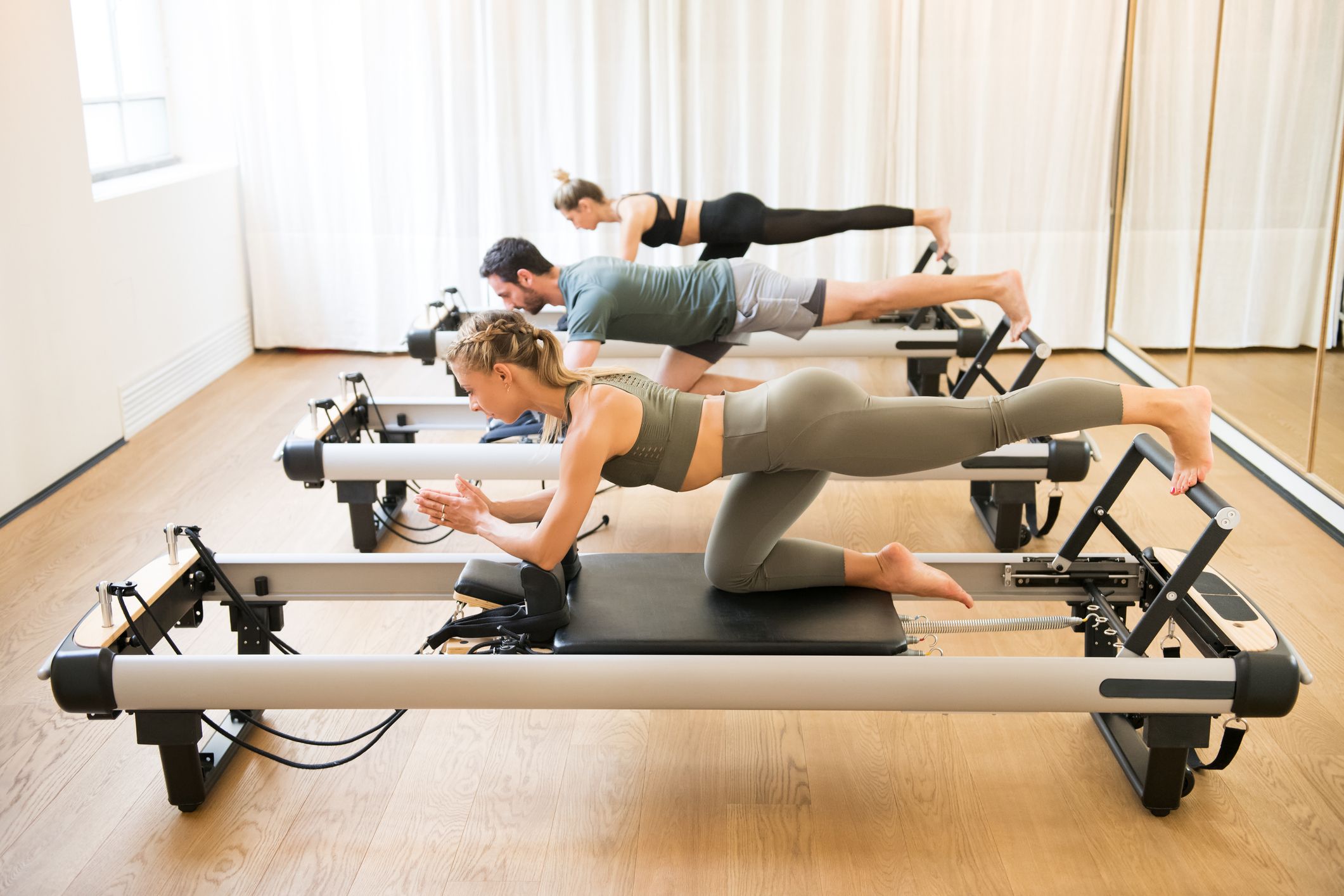
Then came the transition to the in-person training, and that’s where the real magic, and real struggle, began. Walking into the studio for the first time, seeing the gleaming Reformers, the towering Cadillac, the Wunda Chair, and the various Barrels, was like entering a specialized gym from another world. My initial anxiety quickly morphed into excitement. Our lead instructor, a woman with incredible grace and an eagle eye for detail, immediately made me feel at ease. She emphasized that becoming a good Pilates instructor wasn’t about perfection, but about understanding, empathy, and continuous learning.
The mat work, which I thought I had a handle on, took on a whole new dimension with her corrections. "Engage your core, not just your abs!" she’d say, gently adjusting my pelvis during a roll-up. "Breathe into your back," she’d remind me during the hundred, and suddenly, the exercise felt completely different, more expansive, less strenuous on my neck. I learned to feel the subtle differences, the tiny shifts in alignment that could transform an ineffective movement into a truly powerful one. My body started to wake up in ways I hadn’t experienced before. The deep core muscles, once dormant, began to fire, supporting my spine and giving me a sense of stability I’d never known. My lower back pain, the very reason I started this journey, began to recede, replaced by a feeling of strength and resilience.
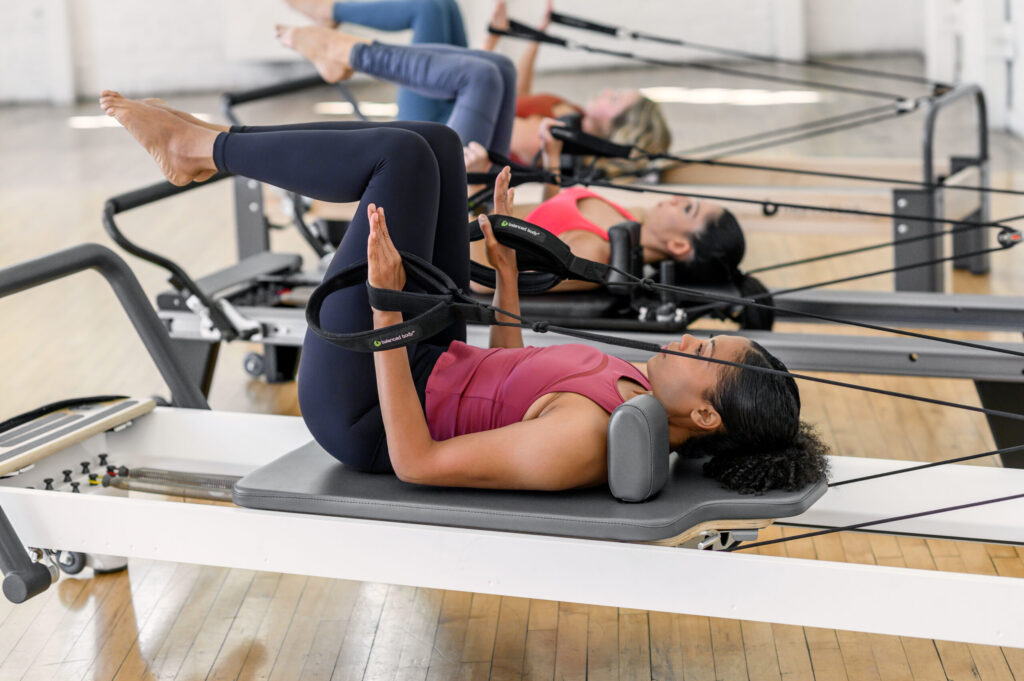
Then we moved onto the apparatus, and this was where the Pilates course truly expanded my horizons. The Reformer, with its sliding carriage and springs, initially felt intimidating. It looked like a medieval torture device to my untrained eye! But I soon discovered its incredible versatility. It could provide support, making challenging exercises accessible, or add resistance, intensifying simpler movements. I learned footwork variations, exercises for core stability like stomach massage, and full-body sequences that challenged my coordination and strength simultaneously. The Cadillac, with its various bars and straps, allowed for incredible spinal articulation and stretching, making me feel like I was floating one moment and incredibly strong the next. The Wunda Chair, deceptively simple in appearance, proved to be a powerhouse for building arm and leg strength, along with fierce core control. Each piece of equipment had its own language, its own way of challenging and supporting the body, and learning to speak that language was a revelation.
A huge part of the Pilates course was understanding how to modify exercises for different bodies and conditions. We learned about common injuries, postural imbalances, and special populations like pregnant clients or those with osteoporosis. This wasn’t just theoretical; we had practical sessions where we’d role-play, adapting exercises for imaginary clients with specific needs. It forced me to think critically, to observe intently, and to develop a deep sense of empathy. I started to see people not just as individuals, but as complex structures, each with their own unique movement patterns and histories. This focus on individual needs is what truly distinguishes a comprehensive Pilates training program.
The teaching methodology component was equally rigorous. We learned how to cue effectively, using descriptive language that resonated with clients. "Imagine a string pulling the crown of your head to the ceiling," or "Scoop your belly button towards your spine as if zipping up tight jeans." We practiced hands-on adjustments, learning to guide clients safely and effectively into proper alignment without being intrusive. I remember my first practice teaching session, my voice trembling, my mind racing through the sequence. It was nerve-wracking, but with each session, my confidence grew. I learned to trust my knowledge, to observe my "client" (often another student), and to respond to their needs in real-time. This iterative process of learning, practicing, receiving feedback, and refining my approach was invaluable.
The culmination of the Pilates course was the certification process. This involved written exams testing our knowledge of anatomy, Pilates history, and principles, as well as practical exams where we had to demonstrate proficiency in mat and apparatus exercises, and most importantly, teach a full session to a mock client. The pressure was intense, but by then, I felt prepared. The hours of studying, practicing, and teaching had solidified my understanding. When I received my Pilates instructor certification, it wasn’t just a piece of paper; it was a testament to months of dedication, growth, and a profound personal transformation. The feeling of accomplishment was immense.
My life post-Pilates course is almost unrecognizable from my life before. My back pain is a distant memory. My posture has improved dramatically, giving me a sense of poise and confidence I never knew I lacked. I feel stronger, more flexible, and more connected to my body than ever before. Pilates has become an integral part of my daily routine, not just something I teach, but something I live. My personal practice keeps me grounded and continually aware of my own body’s needs.
As a certified Pilates instructor, I now have the privilege of guiding others on their own wellness journeys. I’ve worked with clients from all walks of life – athletes looking to enhance performance, seniors seeking to maintain mobility, individuals recovering from injuries, and people simply wanting to feel better in their own skin. Seeing their progress, witnessing their "aha!" moments, and hearing how Pilates has positively impacted their lives is incredibly rewarding. It’s a career that feels truly meaningful, a far cry from the dullness I once experienced.
The journey doesn’t end with certification, of course. The world of Pilates is vast and ever-evolving. I continually seek out workshops, advanced training, and specialized courses to deepen my knowledge and refine my teaching skills. There’s always more to learn about the human body, new ways to adapt exercises, and fresh perspectives on movement. This commitment to ongoing education ensures that I remain an effective and inspiring Pilates instructor.
For anyone considering a Pilates course, whether for personal enrichment or to pursue a career, I wholeheartedly encourage it. Do your research diligently. Look for a program that offers comprehensive training, experienced instructors, and a curriculum that covers both the theoretical and practical aspects of Pilates. Consider the balance between online flexibility and hands-on experience. Don’t be afraid to ask questions, visit studios, and even take a few introductory classes before committing. Be prepared for a challenge, both mentally and physically, but also be prepared for an incredibly rewarding experience. This isn’t just about learning a series of exercises; it’s about learning a new way to inhabit your body, a new way to understand movement, and potentially, a new way to live. My Pilates journey transformed not just my physical self, but my entire perspective on health, wellness, and the power of mindful movement. It truly was an unforgettable journey, and one I’m still happily continuing every single day.