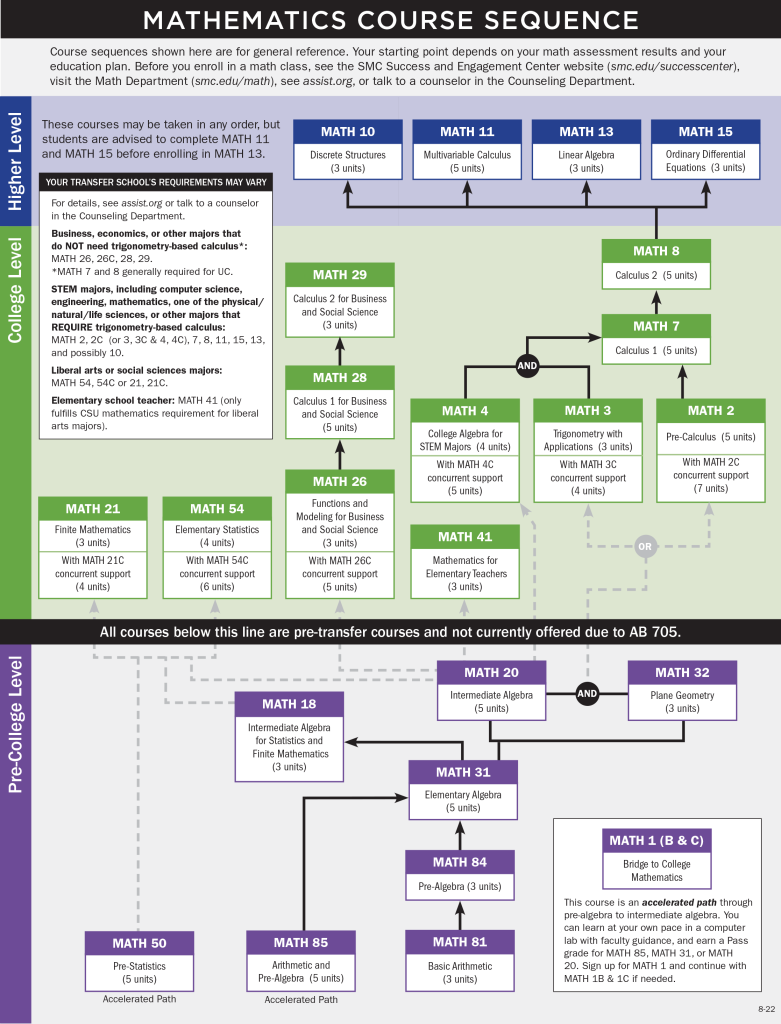

I remember a time when the mere mention of “math class” would send a shiver down my spine. It wasn’t a dramatic, movie-esque aversion; more like a quiet dread, a feeling that I was about to enter a world where logic twisted into riddles only a select few could solve. For years, I believed I wasn’t one of those chosen few. My journey through math courses, from the simplest arithmetic to the dizzying heights of calculus, has been anything but linear. It’s been a winding path, full of unexpected turns, frustrating dead ends, and exhilarating breakthroughs. And if you, like the younger me, feel a knot in your stomach at the thought of a math problem, then perhaps my story can offer a flicker of hope, or at least a sense of shared experience.
My first real encounters with structured math courses began, as they do for most, with the basics. Addition, subtraction, multiplication, and division. These felt like solid ground. You learn a rule, you apply it, and you get an answer. Simple enough. But even then, I found myself getting tripped up. Multiplication tables felt like an insurmountable mountain, a string of seemingly random facts I was expected to memorize. I’d sit there, brow furrowed, trying to recall "seven times eight" while my classmates rattled off answers with ease. It wasn’t until a kind teacher introduced us to visual aids – arrays of dots, groups of objects – that the abstract concept of repeated addition finally clicked. It was my first lesson in understanding that math wasn’t just about memorization; it was about understanding the underlying idea. This foundational experience, though small, planted a tiny seed of curiosity.
Then came the bridge to higher learning: pre-algebra. This was where numbers started to get a little feisty, introducing concepts like integers, fractions, decimals, and basic equations. The real game-changer here was the introduction of negative numbers. Suddenly, numbers weren’t just quantities you could count on your fingers; they had direction. Losing money meant going into the negatives, gaining it brought you back up. This simple analogy made sense, transforming a confusing concept into something tangible. We also started playing with variables – those mysterious ‘x’s and ‘y’s that would eventually become my constant companions. At first, solving for ‘x’ felt like a scavenger hunt with no clear map. But with practice, and a lot of trial and error, I started to see the patterns. I learned that math, at its core, was about balance, about keeping both sides of an equation equal. It was like a delicate scale, and my job was to make sure it never tipped.
Algebra, for many, is the first major hurdle in their math course journey, and it certainly was for me. It’s where the abstract really takes hold. Suddenly, we weren’t just dealing with numbers; we were dealing with relationships between numbers, expressed through equations and inequalities. Linear equations, quadratic equations, systems of equations – each new topic felt like learning a new language. I remember the frustration of staring at a problem, feeling completely lost, convinced that my brain simply wasn’t wired for this. But then, a moment would come. Maybe a teacher would explain it in a slightly different way, or I’d see an example that just clicked. And in that moment, the fog would lift, and I’d see the elegant structure beneath the symbols. Solving a complex algebraic problem felt like cracking a code, a genuine thrill of intellectual victory. I started to appreciate the power of algebra – its ability to model real-world situations, to predict outcomes, to solve problems that would be impossible to tackle with simple arithmetic. It taught me patience and perseverance, lessons that extended far beyond the classroom.
From the world of abstract symbols, we transitioned into the visual realm of geometry. This was a welcome change of pace. Suddenly, math wasn’t just about numbers and letters; it was about shapes, angles, lines, and planes. I found myself drawing diagrams, visualizing problems, and understanding concepts through spatial reasoning. Euclidean geometry, with its axioms and theorems, felt like building a magnificent structure brick by brick. Proving theorems was a unique challenge. It wasn’t about finding a single correct numerical answer; it was about constructing a logical argument, step by meticulous step, to demonstrate why something must be true. This was a different kind of problem-solving, one that honed my critical thinking skills and forced me to justify every assertion. I loved the tangible nature of geometry – measuring angles with a protractor, understanding the properties of triangles, calculating the area of a complex polygon. It made math feel connected to the physical world around me in a way that algebra, at times, did not.
Then came trigonometry, a course that initially sounded intimidating but quickly revealed itself as a fascinating extension of geometry and algebra. Sines, cosines, and tangents – these words conjured images of complex formulas, but in practice, they became tools for understanding relationships within right-angled triangles. I remember learning about SohCahToa and how it unlocked the ability to calculate unknown sides and angles. The real magic happened when we started applying trigonometry to real-world problems: finding the height of a flagpole without climbing it, calculating the distance across a river, or understanding the trajectory of a projectile. It was in these moments that math truly came alive for me. It wasn’t just an academic exercise; it was a powerful lens through which to view and interact with the world. The unit circle, initially a confusing swirl of angles and coordinates, eventually became a beautiful, cyclical representation of these relationships, a cornerstone for understanding wave functions and periodic phenomena.
Pre-calculus, for me, was a consolidation and an expansion. It felt like a warm-up for the main event, a chance to solidify all the algebraic and trigonometric concepts while introducing new ideas like sequences, series, vectors, and more complex functions. It was a course that truly bridged the gap between the discrete mathematics I had learned and the continuous mathematics that lay ahead. We delved deeper into the behavior of functions, understanding limits and asymptotes, concepts that felt abstract at first but were crucial for what was to come. It was a rigorous course, demanding attention to detail and a thorough understanding of foundational principles. There were moments of frustration, particularly with complex identities or intricate graphing problems, but each successful solution felt like a stepping stone, building my confidence for the next big challenge.
And then, the big one: Calculus. The word itself often inspires a mix of awe and dread. For me, it was a profound shift in perspective. Calculus isn’t just about static numbers; it’s about change. It’s about understanding how things move, grow, shrink, and accelerate. Calculus I, or differential calculus, introduced me to the concept of derivatives – the instantaneous rate of change. I remember the initial struggle to grasp what a limit truly meant, how zooming in closer and closer to a point could reveal the slope of a curve at that exact spot. It felt like unlocking a secret language of motion. The power rule, the product rule, the chain rule – these became my tools, allowing me to find the rate of change for incredibly complex functions. It wasn’t easy. There were many late nights spent wrestling with problems, trying to understand the intuition behind the formulas. But when it finally clicked, when I understood how derivatives could describe velocity and acceleration, or optimize a function to find its maximum or minimum, it was nothing short of exhilarating. It felt like I was finally seeing the world through a new pair of glasses, understanding the dynamics of everything around me.
Calculus II, or integral calculus, felt like the other side of the same coin. While differential calculus focused on breaking things down into infinitesimal changes, integral calculus was about building them back up, about accumulation. It taught me how to find the area under a curve, the volume of a solid, or the total change in a quantity given its rate of change. The fundamental theorem of calculus, connecting derivatives and integrals, felt like a revelation, a beautiful symmetry in the mathematical universe. Learning integration techniques, like substitution and integration by parts, felt like acquiring new tools for a craftsman. It was challenging, demanding a different kind of problem-solving approach, but the ability to calculate the total work done by a varying force or the total amount of fluid flowing through a pipe felt incredibly powerful and practical.
My formal math course journey largely culminated with these core calculus experiences, though I dipped my toes into other fascinating areas like linear algebra and statistics. Linear algebra, with its vectors and matrices, felt like a powerful framework for organizing and manipulating data, especially useful in computer graphics and data science. Statistics, on the other hand, offered a way to make sense of uncertainty, to draw conclusions from data, and to understand the world through probabilities and distributions. These courses, while distinct, all built upon the foundational logic and problem-solving skills honed in my earlier math studies. They reinforced the idea that math isn’t just one subject; it’s a vast, interconnected landscape of ideas, each offering unique insights into the world.
So, why bother with these math courses? Why endure the frustration, the late nights, the moments of feeling utterly lost? For me, the answer became clear over time. Firstly, math builds an incredible foundation for problem-solving. Every math problem, from a simple algebraic equation to a complex calculus integral, is a puzzle waiting to be solved. It teaches you to break down complex issues into smaller, manageable parts, to think logically, and to persevere when solutions aren’t immediately apparent. These are skills that transcend academics and are invaluable in every aspect of life, from managing personal finances to navigating professional challenges.
Secondly, math provides a language for understanding the world. Physics, engineering, computer science, economics, finance, even biology and medicine – all these fields rely heavily on mathematical principles. Understanding math means understanding the underlying mechanisms of technology, the patterns in nature, and the logic behind complex systems. It opens doors to countless career paths and empowers you to make informed decisions in a data-driven world. It’s not just about crunching numbers; it’s about critical thinking, about discerning truth from noise, and about making sense of the information overload we face daily.
Finally, and perhaps most importantly for me, math fosters a unique kind of intellectual satisfaction. There’s a profound beauty in the elegance of a well-formed proof, the symmetry of an equation, or the power of a formula to describe a complex phenomenon. When a concept finally clicks, when you solve a problem that seemed insurmountable, there’s a rush of pure joy, a sense of having expanded your own mental horizons. It’s a testament to the human capacity for abstract thought and logical reasoning.
For anyone just starting their math course journey, or for those who, like my younger self, feel intimidated, here are a few things I learned along the way. Don’t be afraid to struggle. Struggle is not a sign of weakness; it’s a sign that you’re learning. Every time you grapple with a difficult concept, your brain is building new connections. Seek understanding, not just memorization. Formulas are tools, but knowing why they work makes you a master craftsman, not just someone blindly following instructions. Practice, practice, practice. Math is like a sport; you get better by doing it. Don’t be afraid to ask questions, no matter how simple they might seem. Chances are, others have the same question. And finally, find a good teacher or a good resource. Sometimes, a different explanation is all it takes for a concept to click.
My journey through math courses transformed my relationship with numbers from one of apprehension to one of appreciation. It wasn’t always easy, and there were times I wanted to give up. But looking back, I wouldn’t trade those struggles for anything. They forged in me a resilience, a critical eye, and a deep respect for the incredible power and beauty of mathematics. It taught me that sometimes, the most rewarding paths are the ones that challenge us the most, and that even the most complex problems can be unraveled, one logical step at a time. If I, the kid who dreaded multiplication tables, could find my way through calculus, then I truly believe anyone can embark on their own rewarding math odyssey. The numbers are waiting; all you have to do is take that first step.