
My journey began, as many do, with a whisper of a dream. A graduate degree, a step up, a new horizon – whatever form it took, it shimmered just out of reach, guarded by a formidable acronym: GRE. The Graduate Record Examinations. It sounded less like a test and more like an ancient rite of passage, whispered about in hushed tones by those who had faced it and lived to tell the tale. I remember the first time I really looked at the official GRE website, my eyes scanning the sections – Verbal Reasoning, Quantitative Reasoning, Analytical Writing Assessment. A cold dread seeped into my stomach. It wasn’t just about knowing things; it was about knowing how to think, how to analyze, how to perform under pressure. And I, frankly, felt utterly lost.
The sheer volume of information available for GRE preparation was overwhelming. Books stacked to the ceiling in online stores, free resources that seemed to contradict each other, forum posts filled with anxiety and advice that felt tailored for someone else entirely. I tried to start with a textbook, dutifully turning pages, but my motivation sputtered. I’d read a section on permutations and combinations, feel a fleeting spark of understanding, only to lose it completely by the next page. Vocabulary lists blurred into an indistinguishable jumble of polysyllabic words. It became clear, pretty quickly, that I needed more than just raw materials; I needed a guide, a structure, a helping hand to pull me through this dense thicket. That’s when I started looking into GRE courses.
The world of GRE courses is a vast landscape, dotted with different approaches and promises. Initially, I felt like a prospector in a gold rush, unsure which claim to stake. There were the self-paced online courses, appealing for their flexibility and often lower price tag. You’d get access to a platform, video lessons, practice questions, and maybe some simulated tests. The idea of learning whenever I wanted, in my pajamas, was incredibly tempting. However, I knew myself. Without external deadlines and accountability, my pajamas might become a permanent fixture, and my studies would gather dust.
Then there were the live online courses. These offered scheduled classes, typically with an instructor leading a group of students through the material in real-time. It was like a traditional classroom, but from the comfort of my home. This seemed like a good middle ground – the structure I craved, but without the commute. The interaction with an actual human instructor, someone who could answer my questions directly, felt like a huge plus.
And of course, there were the in-person classes. For some, the traditional classroom setting, complete with whiteboards and fellow students physically present, is the gold standard. The immersive experience, the immediate feedback, the sense of community – these were undeniable benefits. But for me, balancing a full-time job with evening classes in a specific location felt like adding another layer of logistical gymnastics to an already demanding schedule.
Finally, there was private tutoring, the most bespoke and often the most expensive option. One-on-one sessions tailored precisely to my weaknesses and learning style. It sounded luxurious, almost too good to be true, but my budget quickly brought me back to reality. It was a fantastic option for those who could afford it, but I needed something more accessible.
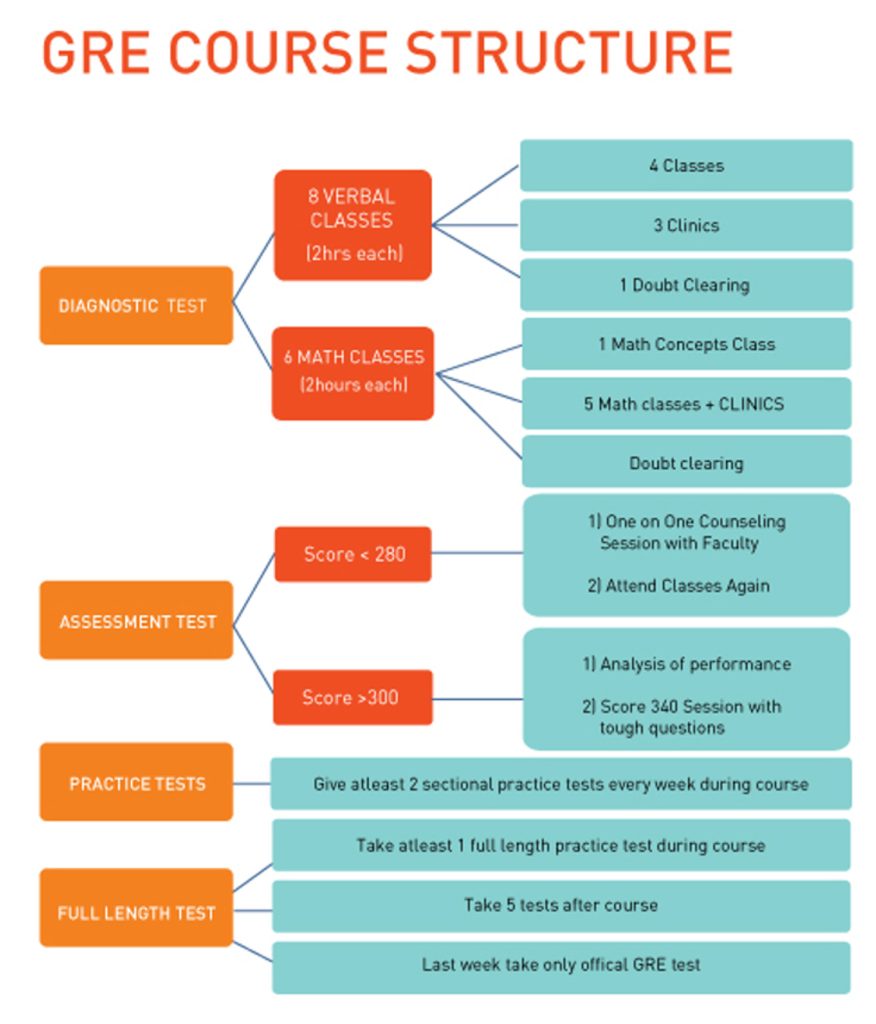
After much deliberation, weighing the pros and cons of each, I decided to enroll in a live online GRE course. It struck a balance for me: the discipline of scheduled classes, the expertise of an instructor, and the convenience of not having to leave my apartment. The course I chose promised comprehensive coverage, a hefty stack of practice questions, and a few full-length simulated tests. I remember the nervous excitement as I logged in for the first session.
Our instructor, a cheerful and remarkably patient woman named Sarah, introduced herself and laid out the roadmap. We started with the Verbal section, which for me, felt like wading through quicksand. My vocabulary was decent, but the nuanced meanings required for Sentence Equivalence and Text Completion questions felt like cracking a secret code. Sarah didn’t just give us lists; she taught us strategies. We learned about root words, prefixes, suffixes – not just memorization, but understanding the building blocks of language. We practiced context clues, learning to infer meaning even when a word was completely unfamiliar. For Reading Comprehension, she emphasized active reading, identifying main ideas, author’s tone, and supporting evidence, rather than just passively absorbing text. It was a revelation. Suddenly, the verbal section felt less like a guessing game and more like a solvable puzzle.
Then came Quantitative Reasoning, the math section. My high school math was a distant memory, hazy and fragmented. Algebra, geometry, data analysis – it all felt overwhelming. Sarah started us from the ground up, patiently reviewing fundamental concepts. She broke down complex problems into smaller, manageable steps. We learned about number properties, proportions, rates, and probability. But more than just the math itself, she taught us test-taking strategies: how to manage time effectively, when to guess, how to use estimation, and when to plug in numbers instead of solving algebraically. The course provided a treasure trove of practice questions, mimicking the official GRE format, which was crucial. I spent hours working through these problems, diligently reviewing my mistakes, understanding not just what I got wrong, but why.
The Analytical Writing Assessment (AWA) was surprisingly challenging. It wasn’t just about writing a good essay; it was about writing a specific type of essay under strict time constraints. Sarah walked us through the structure of both the "Analyze an Issue" and "Analyze an Argument" tasks. She taught us how to dissect a prompt, identify key assumptions, build a strong thesis, and support it with well-reasoned examples. We practiced outlining, writing introductions and conclusions, and developing body paragraphs. Getting feedback on my practice essays, even from peers in the course, was invaluable. It helped me refine my arguments and articulate my thoughts more clearly.
Throughout the course, the rhythm was demanding but rewarding. Each week brought new concepts, new strategies, and new sets of homework. I dedicated every free evening and most weekends to studying. There were moments of frustration, certainly. I remember one particular practice test where my quantitative score plummeted, and I felt a wave of despair wash over me. I questioned everything, wondered if I was cut out for this. But Sarah, our instructor, was more than just a teacher; she was a mentor. She encouraged us to view mistakes as learning opportunities, not failures. She stressed the importance of reviewing every single question, right or wrong, to understand the underlying logic. The online forum provided a space to connect with other students, to share anxieties and triumphs, and to collectively puzzle over tricky questions. That sense of community, even if virtual, was incredibly uplifting.
The simulated full-length tests were perhaps the most crucial part of the course. They were grueling, mirroring the actual test experience down to the timed sections and breaks. My first few practice tests were a rude awakening. I struggled with time management, often rushing through the last few questions or getting bogged down by a single problem. But with each successive test, I learned to pace myself better, to identify questions I could answer quickly and those that required more thought, and to strategically skip and return if needed. It was through these simulations that I truly internalized the strategies Sarah had taught us. They helped build my stamina and reduce test-day anxiety.
Looking back, the course provided me with far more than just content knowledge. It gave me a structured plan, accountability, expert guidance, and a framework for approaching the test. It demystified the GRE, transforming it from an insurmountable mountain into a series of climbable hills.
For anyone considering a GRE course, I’d offer a few pieces of advice, born from my own experience:
First, assess your learning style and commitment level. If you’re incredibly disciplined and self-motivated, a self-paced course might work. But if you thrive on structure, external deadlines, and direct interaction, a live online or in-person class might be a better fit. If your budget allows for it and you have very specific weaknesses, private tutoring is a powerful option.
Second, scrutinize the curriculum and materials. Does the course cover all sections comprehensively? Does it provide access to official ETS (Educational Testing Service) practice questions or full-length tests? Official materials are the gold standard because they perfectly replicate the test’s format and question types. A course that heavily integrates these is usually a good sign. Look for a wealth of practice problems, detailed explanations for answers (both correct and incorrect), and analytical tools to track your progress.
Third, consider the quality of the instructors. Can you find reviews about them? Do they have experience teaching the GRE? A good instructor isn’t just knowledgeable; they’re skilled at breaking down complex concepts, motivating students, and providing clear, actionable feedback. They should be able to simplify difficult ideas and offer effective strategies, not just regurgitate facts.
Fourth, evaluate the flexibility and accessibility. Does the course schedule align with your personal commitments? Are the online platforms user-friendly? Do they offer recorded sessions if you miss a live class? Good technical support is also vital for online courses.
Fifth, look into the support system. Beyond the classroom, what kind of help is available? Are there forums for questions? Opportunities for one-on-one check-ins with instructors? Additional resources for specific weaknesses? A robust support system can make a significant difference when you hit a snag.
Sixth, weigh the cost against the value. GRE courses can be a significant investment. However, think of it as an investment in your future. A good score can open doors to better graduate programs, scholarships, and career opportunities. Read reviews, compare features, and understand exactly what you’re paying for. Sometimes, a slightly more expensive course with superior materials and instruction is a better value in the long run.
Beyond the formal course, remember that a GRE course is a tool, not a magic wand. You still need to put in the work. I learned the importance of supplementing the course material with consistent self-study. I created my own flashcards for vocabulary, kept a dedicated notebook for math formulas and error logs, and regularly reviewed my weak areas. I also made sure to integrate self-care into my routine: regular breaks, enough sleep, and moments away from the books to recharge. Burnout is real, and it can derail even the best-laid plans.
The day of the actual test arrived, a culmination of months of effort. I walked into the testing center feeling a mix of nervousness and quiet confidence. The strategies I’d learned, the countless practice questions I’d solved, the full-length simulations – they all kicked in. I approached each section systematically, managing my time, employing the techniques Sarah had taught us. It wasn’t easy; no high-stakes test ever is. But I didn’t feel lost or overwhelmed. I felt prepared.
When my scores flashed on the screen, a wave of relief, then triumph, washed over me. I had achieved my target. More than just a number, it represented the effort, the perseverance, and the structured guidance that had carried me through.
The GRE isn’t just a test of academic aptitude; it’s a test of resilience, strategy, and self-discipline. For me, a GRE course was the anchor that kept me grounded, the compass that pointed me in the right direction, and the consistent push I needed to stay on track. If you’re standing at the base of that GRE mountain, feeling daunted by the climb, remember that you don’t have to go it alone. A good course can equip you with the tools, the map, and the companionship you need to reach the summit. It’s a challenging journey, but with the right preparation, it’s an incredibly rewarding one.