
It feels like only yesterday I was a wide-eyed kid, sprawled on the living room floor, utterly captivated by the cartoons flickering across our old television screen. I wasn’t just watching; I was studying. How did those characters move with such life, such emotion? How did worlds spring into existence, vibrant and full of possibility, all from a blank page or a block of digital clay? That question, a persistent whisper in the back of my mind, eventually grew into a roaring passion, leading me down a path I never truly imagined: an animation course.
Choosing that path wasn’t a snap decision. It was a pilgrimage of sorts, filled with late-night research, endless forum scrolling, and a healthy dose of self-doubt. Was I good enough? Did I have the talent? More importantly, where on earth do you even begin to learn something so magical and intricate? The internet, a sprawling map of information, pointed me towards a myriad of options: traditional art schools with decades of history, cutting-edge digital academies, and even flexible online programs designed for self-starters. Each promised to unlock the secrets of bringing static images to life, but finding the right fit felt like searching for a specific star in a galaxy.
I remembered the advice of an old friend, a concept artist who had been through the mill: "Look for a place that teaches you to think like an animator, not just use the software." That stuck with me. It wasn’t about memorizing buttons; it was about understanding the why behind every movement, every expression. I yearned for a structured environment, a place where mentors could guide my clumsy initial attempts, so I leaned towards a physical academy, one that blended traditional art fundamentals with modern digital techniques. The day I clicked "submit" on my application, a strange mix of exhilaration and terror washed over me. My adventure was about to begin.
Stepping into the classroom for the first time felt like entering a secret society. There were people from all walks of life, all ages, all with that same glint of passion in their eyes. Some were fresh out of high school, others were career changers, but we all shared a common dream: to tell stories through movement. Our instructors, seasoned industry veterans with portfolios that made our jaws drop, weren’t just teachers; they were storytellers themselves, sharing war stories from the trenches of animation studios, reminding us that this path, while rewarding, demanded grit and endless curiosity.
The very first lessons weren’t about fancy software or complex rigs. They were about the absolute bedrock of all animation: drawing. Hours were spent hunched over sketchbooks, filling pages with quick gestures, studying anatomy, light, and shadow. We learned to see the world differently, breaking down complex movements into simple lines, understanding the weight of a falling object, the subtle shift in a character’s pose that conveys emotion. It was tough. My hand ached, my perspective drawings often looked like they belonged in a funhouse mirror, but slowly, painstakingly, I started to see improvement. This wasn’t just drawing; it was learning to observe. This foundation, often overlooked by beginners eager to jump straight to computers, was crucial. It taught us that no matter how advanced the tools become, the art of observation and understanding form is timeless.
Then came the twelve principles of animation, a sacred text for any aspiring animator. Squash and stretch, anticipation, staging, straight ahead action and pose to pose, follow through and overlapping action, slow in and slow out, arcs, secondary action, timing, exaggeration, solid drawing, and appeal. Each principle was a revelation, a key unlocking a new layer of understanding. We didn’t just memorize them; we lived them. Our assignments involved animating a bouncing ball that truly felt weighty, a character walking with purpose, or a simple flour sack conveying emotion without a face. It sounds basic, but making a flour sack sad or angry pushed our creative boundaries and forced us to think about body language in a whole new way. These exercises, often done with pencil and paper or simple flipbooks, ingrained the core concepts deep within our artistic souls.
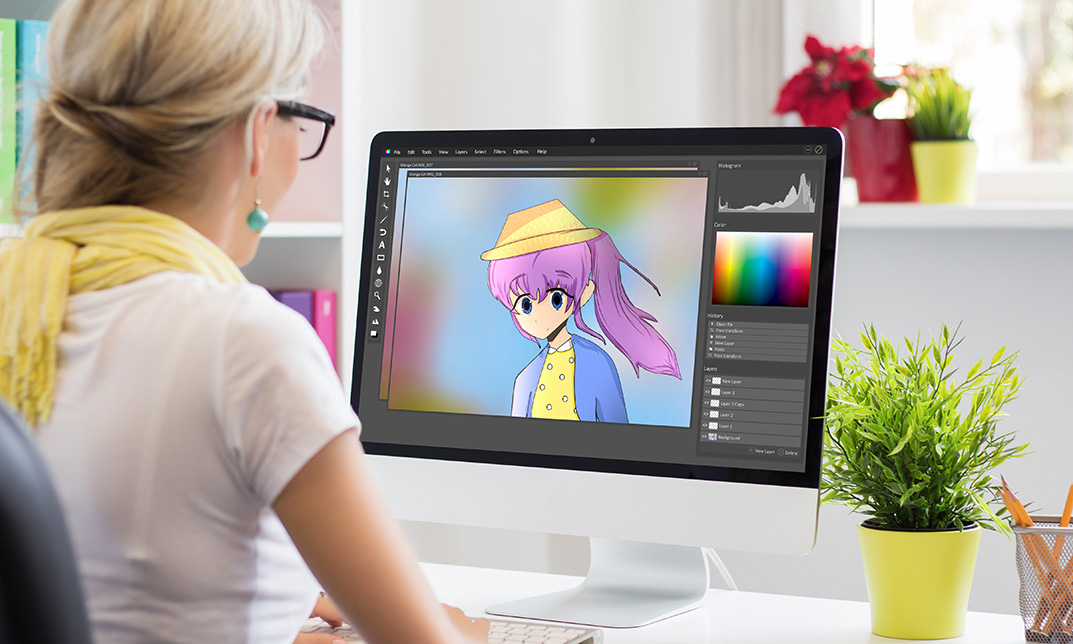
As we progressed, the digital tools began to enter the picture. Learning 2D animation software was an extension of our traditional drawing skills. We moved from paper to digital tablets, discovering layers, keyframes, and the magic of onion skinning. It was exhilarating to see our hand-drawn frames come alive with the click of a button, playing back a rough animation instantly. The transition felt natural because the principles remained the same. Whether drawing on paper or a screen, the goal was to create believable, engaging movement.
Then came the dive into the deep end: 3D animation. This was where things truly began to feel like wizardry. Suddenly, we weren’t just drawing; we were building worlds. We started with modeling – shaping virtual clay into characters, props, and environments using software like Autodesk Maya or Blender. It was a steep learning curve, moving from flat drawings to three-dimensional forms, understanding polygons, vertices, and edges. I remember countless hours spent meticulously adjusting points, trying to get a character’s hand to look natural, often feeling like I was wrestling with an alien language.
Rigging followed, and for many, this was the most mind-bending part. Imagine building a skeleton and a set of intricate controls inside your 3D model, allowing it to bend, twist, and deform realistically. It’s like being a puppet maker, but instead of strings, you’re dealing with complex hierarchies and mathematical transformations. My brain often felt like it was doing gymnastics trying to grasp inverse kinematics and joint orientations. There were moments of sheer frustration, where a misplaced pivot point could send an entire arm flailing wildly, but the satisfaction of finally seeing a character move smoothly under your control was immense.
Once our characters were modeled and rigged, the true animation began in 3D. This was where those twelve principles we learned in 2D became our guiding stars. We learned to set keyframes, defining the start and end poses of a movement, and then meticulously refine the in-between frames, adjusting curves in a graph editor to control the timing and spacing. We animated walk cycles, run cycles, nuanced facial expressions, and complex action sequences. It was a constant dance between technical precision and artistic intuition. We were encouraged to film ourselves acting out scenes, to study real-world movement, and to infuse our characters with personality and emotion. This wasn’t just moving objects; it was giving them a soul.
The course also emphasized storytelling, understanding that animation is a powerful medium for narrative. We delved into storyboarding, learning to visualize a sequence of events, frame by frame, planning camera angles and character actions. We discussed character development, narrative arcs, and how to evoke specific emotions from an audience. An animator isn’t just a technician; they are a visual storyteller, a performer who uses their craft to communicate ideas and feelings. Our assignments often involved creating short animated films, from concept to final render, forcing us to integrate all the skills we had learned.
One of the most valuable aspects of my animation course wasn’t just the curriculum; it was the community. My classmates became my collaborators, my critics, and my cheerleaders. We spent countless hours together in the labs, fueled by caffeine and a shared passion, helping each other debug rigs, offering feedback on animations, and celebrating small victories. Our instructors, with their wealth of industry experience, were more than just teachers; they were mentors, always ready to share insights, offer constructive criticism, and inspire us to push our boundaries. They taught us the importance of iteration, of not being afraid to scrap an animation and start over if it wasn’t working, and of constantly seeking feedback.
Of course, the journey wasn’t without its trials. There were late nights, missed deadlines (sometimes), and moments where I questioned if I was cut out for it. I remember one particularly challenging rigging assignment where I spent an entire weekend battling a recalcitrant elbow joint, only to discover on Monday morning that I had made a fundamental error in my joint placement. It felt like a monumental setback. But those moments of struggle were often followed by breakthroughs, by the sheer satisfaction of finally solving a complex problem or seeing a character move exactly as I had envisioned. Those struggles, in hindsight, were just as crucial as the successes, teaching me resilience and problem-solving.
As the course neared its end, the focus shifted towards professional development. We learned about creating an animation portfolio, compiling our best work into a cohesive demo reel that showcased our skills and artistic voice. This wasn’t just a collection of assignments; it was our calling card, our entry ticket into the industry. We learned how to present ourselves, how to network, and what to expect in an animation studio environment. The prospect of stepping out of the academic bubble and into the professional world was daunting, yet incredibly exciting.
Looking back, that animation course wasn’t just a series of lessons; it was a transformative experience. It taught me not just how to use software, but how to think creatively, how to problem-solve under pressure, and how to collaborate effectively. It opened my eyes to the sheer breadth of career opportunities available: character animator for feature films, game animator bringing virtual worlds to life, VFX artist creating stunning visual effects, motion graphics designer crafting dynamic commercials, or even a freelance artist telling my own unique stories. The skills I gained are universally applicable, not just in animation but in any field that values visual communication and creative thinking.
For anyone standing at the precipice, wondering if an animation course is the right path, I offer this advice: If you possess an insatiable curiosity for how things move, a burning desire to tell stories, and a willingness to put in the hard work, then absolutely, take the leap. It won’t always be easy. There will be moments of frustration, late nights, and the occasional creative block. But there will also be moments of pure magic: the first time your character truly emotes, the shared laughter with classmates over a silly animation, the satisfaction of seeing your vision come to life frame by frame.
An animation course is more than just learning a craft; it’s embarking on an odyssey of self-discovery, where you learn to see the world with new eyes, to infuse life into the inanimate, and to wield the power of movement to tell stories that resonate deeply. It’s a journey that continues long after the final certificate is handed out, a lifelong pursuit of learning, creating, and dreaming in motion. And for me, that journey, born from a childhood fascination, has been nothing short of extraordinary. The blank page no longer whispers; it sings with the promise of countless animated adventures yet to be told.