
I remember a time when my days felt like a series of muted tones, a landscape painted without vibrant colors. There was a yearning inside me, a quiet whisper for something more, something that could stir the depths of my soul and bring a different kind of joy to my routine. I wasn’t sure what it was, but I knew I felt a pull towards creation, a curiosity about those who could seemingly conjure beauty from thin air with just a pencil or a brush. For years, I told myself, "I’m not artistic," "I can’t even draw a straight line," or "That’s for other people, the naturally gifted ones." These were the easy excuses, the comfortable walls I built around my creative spirit.
But then, one day, a little spark ignited. Perhaps it was seeing a stunning watercolor online, or walking past a bustling local gallery, or simply feeling an overwhelming need to escape the digital haze of modern life. Whatever it was, that spark led me to type a simple phrase into a search bar: "Art Course for beginners." And that, my friends, was the first tentative brushstroke on a canvas that would become one of the most enriching journeys of my life.
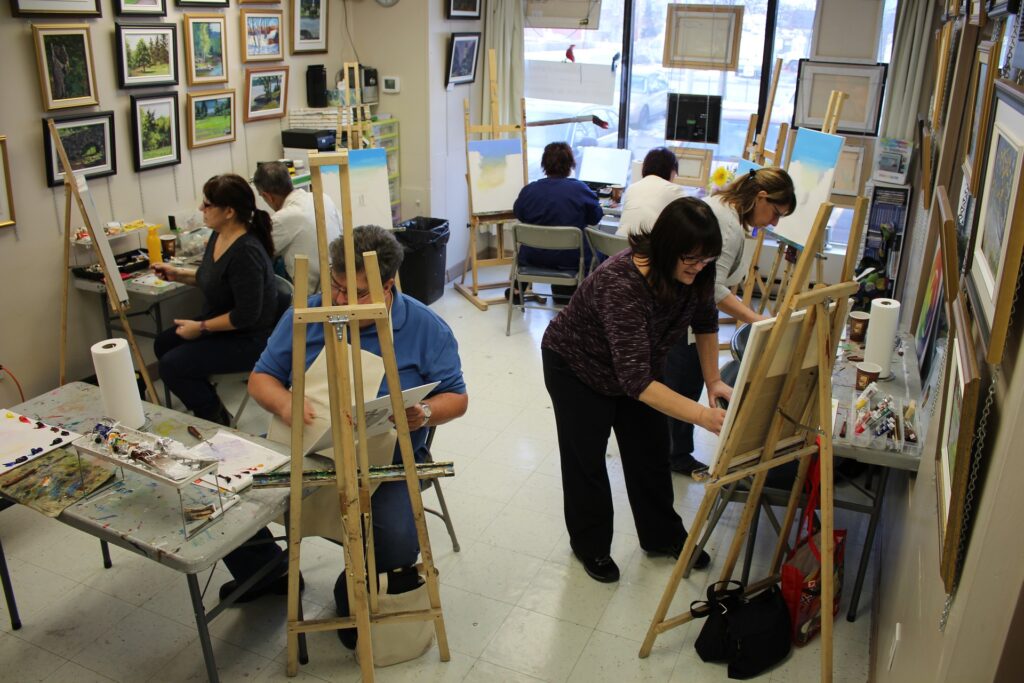
Stepping into that first drawing class was like walking into a secret garden I never knew existed. The air hummed with a quiet energy, a mix of turpentine, charcoal dust, and nervous anticipation. I saw people of all ages, from fresh-faced youngsters to seasoned individuals with stories etched into their smiles, all holding pencils and looking at still life arrangements with a focused intensity. My hands, usually so confident in their daily tasks, felt clumsy and unsure as I held a charcoal stick for the very first time. Our instructor, a kind woman with paint stains on her apron and an encouraging glint in her eyes, introduced us to the basics: line, shape, negative space, and the subtle dance of light and shadow.
It wasn’t about creating a masterpiece on day one, she explained. It was about learning to see. Really see. Not just looking at an apple, but understanding its curves, its weight, the way light fell on its skin, the shadow it cast. It was a revelation. Suddenly, the world around me began to appear in a new light, broken down into fundamental forms and values. My early attempts were, to put it mildly, comical. My apples looked like potatoes, my vases leaned precariously. But there was a strange joy in the struggle, a satisfaction in each new stroke, even if it wasn’t perfect. The beauty of an art course, especially for beginners, is that it strips away the pressure of perfection and replaces it with the freedom of exploration.
From that initial drawing class, my curiosity blossomed. I realized that "art course" wasn’t just one thing; it was a vast, vibrant universe waiting to be explored. After mastering some foundational drawing techniques, I felt drawn to color. That led me to my next adventure: a watercolor painting lesson. Watercolor, with its delicate washes and unpredictable flow, felt like learning a new language. It taught me patience, the beauty of serendipity, and how to embrace imperfections as part of the process. I learned about color theory – how primary colors mix to create secondary ones, how warm and cool tones can evoke different feelings, and the magic of creating depth with layers of transparent paint. It wasn’t just about mixing paint on a palette; it was about understanding how colors speak to each other on the page.
Then came the bold, vibrant world of acrylics. This medium was a complete contrast to the gentle whispers of watercolor. Acrylics dried quickly, allowed for bold layering, and offered a forgiving nature that was perfect for experimenting. I remember feeling a surge of liberation as I slapped thick paint onto a canvas, building up textures, and playing with impasto. It was less about precision and more about expression, about letting the brush dance to the rhythm of my emotions. Each painting course unlocked a different facet of my creative self, revealing strengths and preferences I never knew I had.
One of the most profound aspects of enrolling in art courses, beyond the technical skills, was the community. In each class, I met fellow travelers on this creative path. We shared struggles over a tricky perspective, celebrated small victories of a successful blend, and offered gentle critiques and encouragement. There was a shared understanding, a camaraderie that transcended age or background. We were all there for the same reason: to create, to learn, and to grow. These connections became as valuable as the lessons themselves, a reminder that the artistic journey doesn’t have to be a solitary one.
Of course, the world has changed, and so have the ways we can access learning. My initial experiences were all in local studios, the kind with easels and shared art supplies. But I soon discovered the incredible world of online art classes. This opened up a whole new realm of possibilities. Suddenly, I could learn from instructors across the globe, specialize in niche areas like digital painting, character design, or even abstract expressionism, all from the comfort of my own home. Online platforms offered structured courses, video tutorials, and even virtual critique sessions. While I sometimes missed the tactile feel of an in-person workshop, the flexibility and sheer breadth of options available online were undeniable. It meant that even with a busy schedule, I could always find time to nurture my creative side.
Choosing the right art course can feel a bit overwhelming at first, given the sheer variety. My advice for anyone just starting out is to consider a few things. First, think about what truly sparks your interest. Is it the precision of drawing, the fluidity of painting, the tactile nature of sculpture, or the modern appeal of digital art? Don’t feel pressured to pick the "best" or "most serious" art form. Pick what excites you.
Second, look into the instructor’s style. Some teachers focus heavily on traditional techniques, while others encourage more experimental approaches. Read reviews, look at their own artwork, and if possible, try a trial class or watch some of their free tutorials online to get a feel for their teaching method. A good instructor can make all the difference, transforming confusion into clarity and frustration into determination.
Third, consider the format. Do you thrive in a structured, in-person environment with immediate feedback? Or do you prefer the self-paced flexibility of online learning? Both have their unique advantages. Local art workshops often provide a sense of community and hands-on guidance, while online art classes offer unparalleled access to diverse subjects and teachers.
Finally, don’t let cost be the sole barrier. Many community centers offer affordable art classes, and online platforms often have free introductory lessons or subscription models that make learning accessible. Sometimes, investing a little in yourself is the most rewarding choice you can make. Remember, it’s not just about the monetary value; it’s about the value you place on your own growth and well-being.
My journey through art courses wasn’t always smooth sailing. There were moments of profound frustration, times when my hand wouldn’t obey my mind, or when a piece just refused to come together. I remember staring blankly at a canvas, convinced I had lost whatever spark I once had. It’s easy to fall into the trap of comparing your beginner work to the masterpieces of seasoned artists. But my instructors, and my fellow students, always reminded me that every artist, even the masters, started somewhere. They made mistakes. They had bad days. The key was to keep showing up, keep practicing, and keep learning.
This persistent effort, this gentle pushing through discomfort, became a metaphor for life itself. Art courses taught me resilience. They taught me to embrace the process, not just the outcome. They showed me that creativity isn’t a fixed talent, but a muscle that strengthens with exercise. The more I drew, the more I painted, the more I sculpted, the more my "artistic eye" developed, and the more confident I became, not just in my art, but in other areas of my life too.
Beyond the technical skills, what did I truly gain from these art courses? A newfound appreciation for beauty in the mundane. The ability to observe the world with a deeper sense of wonder. A powerful outlet for self-expression, a way to communicate emotions and ideas that words sometimes fail to capture. Art became a sanctuary, a meditative practice that brought calm and focus to my often-hectic existence. It was a form of stress relief, a therapeutic escape where the only thing that mattered was the present moment and the interaction between my hand and the material.
For those considering a career in art, art courses are an absolutely essential stepping stone. They provide the foundational skills, introduce you to various mediums, and help you build a portfolio – a collection of your best work that showcases your abilities to potential clients, galleries, or further educational institutions. Whether your dream is to become a graphic designer, an illustrator, a fine artist, or an art therapist, the structured learning and expert guidance offered in these courses are invaluable. They teach you not just how to create, but how to think like an artist, how to problem-solve visually, and how to develop a unique artistic voice.
But you don’t need to aspire to a professional art career to benefit immensely from these experiences. For many, art courses are about enriching life, cultivating a fulfilling hobby, and exploring personal growth. They are about rediscovering a sense of play, tapping into an innate human desire to create, and finding joy in the simple act of making something with your own hands. The journey of mastering techniques, from the precise strokes of hyperrealism to the wild gestures of abstract art, is a deeply satisfying one.
Today, my days are no longer painted in muted tones. They are filled with a richer palette, hues that I’ve learned to mix and blend myself. My sketchbook is a constant companion, filled with quick observations and imaginative sketches. My home studio, though modest, is a space of creation and contemplation. I still take art courses, always seeking new challenges, new mediums, and new perspectives. The learning never truly ends, and that’s the most exciting part.
If you’ve ever felt that quiet yearning, that little spark of curiosity about the world of art, I urge you to take that first step. Type "art course" into your search bar. Visit a local studio. Pick up a pencil and a piece of paper. You don’t need to be naturally gifted; you just need to be willing to learn, to experiment, and to embrace the beautiful messiness of creation. An art course isn’t just about learning to draw or paint; it’s about learning to see, to express, and to connect with a deeper, more vibrant part of yourself. It truly can be the brushstroke that changes everything.