
Imagine waking up one morning and realizing that the world, as you know it, has stopped. Your morning coffee isn’t on the shelf, your phone wasn’t delivered, and even the clean water coming from your tap is suddenly a distant memory. Sounds like a sci-fi nightmare, right? But in a strange way, this chaotic vision is exactly what a world without a functioning supply chain would look like. Every single item you touch, from your toothbrush to your car, has traveled an incredible journey to get to you. That journey, that intricate dance of moving goods, information, and money, is what we call the supply chain. And understanding it, even mastering it, is precisely what a top-notch Supply Chain Course offers.
For years, the supply chain was the unsung hero, quietly working behind the scenes. Then came global events – remember those days of empty shelves and delayed shipments? Suddenly, everyone realized just how vital this complex network is. It’s not just about trucks and warehouses; it’s about strategy, technology, people, and a whole lot of problem-solving. If you’ve ever found yourself wondering "how does that get here?" or "there must be a better way to do this," then leaning into a Supply Chain Management Course might just be the most insightful journey you embark on.
Why Jump into the World of Supply Chain? It’s More Than Just Logistics.
Think of a supply chain as the bloodstream of our global economy. If it’s healthy, everything flows smoothly. If there’s a clot or a leak, the whole system suffers. Businesses, big and small, are constantly looking for people who can keep that bloodstream pumping efficiently. They want professionals who can prevent those clots, find new pathways, and ensure everything gets where it needs to be, when it needs to be there, and at the right cost.
A good Supply Chain Course doesn’t just teach you definitions; it teaches you how to think like a conductor of a massive orchestra. You learn to anticipate problems, strategize solutions, and optimize every step of the journey. This isn’t a dry, academic field anymore; it’s dynamic, constantly evolving, and deeply impactful. Every decision you make in a supply chain role can save a company millions, improve customer satisfaction, or even contribute to a greener planet.
What Awaits You in a Supply Chain Course? Unpacking the Boxes
So, you’re intrigued. What exactly will you uncover when you dive into a Supply Chain Course? Prepare to discover a fascinating blend of business acumen, analytical thinking, and practical problem-solving. While specific course content varies, here are some core areas you’ll almost certainly explore:
-
The Five Pillars: Plan, Source, Make, Deliver, Return.
- Planning: This is where it all begins. How much do we need? When do we need it? Where should it go? You’ll learn about demand forecasting – predicting what customers will want – and how to set up a robust strategy.
- Sourcing: Finding the right suppliers, negotiating deals, ensuring quality, and building strong relationships. This is where Procurement Training comes into play, teaching you the art of smart buying.
- Making (or Manufacturing): Understanding the production process, optimizing factory layouts, ensuring efficiency, and maintaining quality control. This often overlaps with Operations Management Course content.
- Delivering (or Logistics): Getting the finished product to the customer. This involves transportation, warehousing, distribution networks, and the nitty-gritty of Logistics and Supply Chain Management.
- Returning: What happens when things go wrong, or customers want to send something back? Reverse logistics is a critical, often overlooked, part of the chain.
-
Mastering the Movement: Logistics and Transportation.
This is often the first thing people think of with supply chain. You’ll explore different modes of transport (road, rail, air, sea), route optimization, freight management, and how technology is making shipping smarter and faster. Understanding customs regulations for Global Supply Chain operations also becomes crucial here. -
The Art of Balance: Inventory Management.
Too much stock ties up cash and space; too little means lost sales and unhappy customers. Inventory Management Courses teach you how to strike that perfect balance, using various techniques to ensure you have just enough, just in time. This is where you learn about economic order quantity (EOQ), safety stock, and material requirements planning (MRP). -
Beyond Borders: Global Supply Chains.
Our world is interconnected, and so are our supply chains. You’ll learn about the complexities of international trade, currency fluctuations, cultural differences, and the unique challenges of moving goods across continents. This section often highlights why a broader Supply Chain Degree Program is so valuable, covering these intricate details. -
Data and Digital: Supply Chain Analytics & Technology.
The modern supply chain runs on data. You’ll dive into how data analytics, artificial intelligence (AI), machine learning, and even blockchain are transforming everything from forecasting to tracking goods. Understanding these tools is key for anyone looking to work in Digital Supply Chain. -
Bracing for Impact: Risk Management & Resilience.
From natural disasters to geopolitical events, disruptions are inevitable. A good Supply Chain Course will equip you with strategies to identify, assess, and mitigate risks, building a more resilient and adaptable supply chain. This is about ensuring business continuity no matter what challenges arise. -
Doing Good: Sustainable Supply Chain Practices.
The environmental and social impact of supply chains is a growing concern. You’ll explore topics like ethical sourcing, reducing carbon footprints, waste reduction, and creating a more responsible and Sustainable Supply Chain. It’s about making money while making a positive difference.
Your Learning Journey: Finding the Right Supply Chain Course for You
The beauty of today’s educational landscape is the sheer variety of ways you can learn. There’s a perfect fit for almost everyone, regardless of your current experience or schedule.
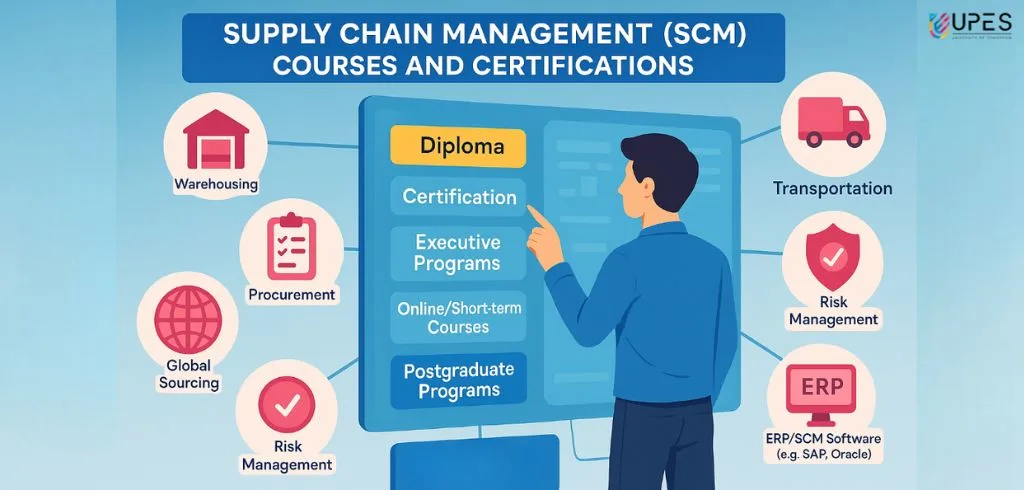
- Online Supply Chain Courses: For many, flexibility is key. Online Supply Chain Courses offer the chance to learn at your own pace, from anywhere in the world. They range from introductory modules to full-fledged degree programs, often leveraging interactive platforms and virtual simulations. If you’re looking for convenience and accessibility, this is a fantastic option.
- Supply Chain Certifications: Want a focused boost to your resume without committing to a full degree? Supply Chain Certifications are designed to provide specialized knowledge in areas like procurement, logistics, or operations. They’re often shorter, more intensive, and highly valued by employers looking for specific skills. Organizations like APICS (now ASCM) offer some of the Best Supply Chain Certifications recognized globally.
- Supply Chain Degree Programs: If you’re just starting your career or looking for a deep, comprehensive understanding, a Bachelor’s or Master’s in Supply Chain Management is an excellent choice. These programs provide a robust academic foundation, covering theory, advanced analytics, and strategic thinking. They often include internships, offering invaluable real-world experience.
- Executive Supply Chain Programs: For seasoned professionals looking to refine leadership skills, tackle strategic challenges, or pivot into executive roles, these programs offer advanced insights and networking opportunities with industry leaders. They focus on big-picture thinking and innovation.
- Specialized Training: Beyond the broad categories, you’ll find courses focusing on niche areas like E-commerce Supply Chain, cold chain logistics, healthcare supply chains, or specific software training. These are great for targeted skill development.
Who Benefits Most from a Supply Chain Course?
Frankly, almost anyone can gain valuable insights, but some will find it particularly transformative:
- Aspiring Professionals: If you’re a student trying to figure out your career path, the supply chain offers a huge array of Supply Chain Jobs with excellent growth potential.
- Career Changers: Perhaps you’re in marketing, sales, or finance and want to shift gears. The analytical and strategic skills learned in a Supply Chain Course are highly transferable.
- Current Professionals: Already working in logistics, procurement, or operations? An advanced Supply Chain Professional Development course can unlock promotions, increase your Supply Chain Salary, and keep your skills sharp.
- Entrepreneurs and Small Business Owners: Understanding your supply chain can dramatically reduce costs, improve efficiency, and give you a competitive edge. It’s critical for managing your inventory and deliveries.
- Anyone Curious About How the World Works: If you have a natural curiosity about how products move from raw materials to your doorstep, you’ll find this field endlessly fascinating.
Your Future Awaits: Exciting Career Opportunities
Completing a Supply Chain Course opens doors to a vast and varied landscape of career opportunities. The demand for skilled supply chain professionals continues to outpace supply, making it a very secure and rewarding field. Some common roles include:
- Supply Chain Manager: Overseeing the entire process, from sourcing to delivery.
- Logistics Coordinator/Manager: Focusing on transportation, warehousing, and distribution.
- Procurement Specialist/Manager: Managing supplier relationships and purchasing strategies.
- Inventory Analyst: Optimizing stock levels and forecasting demand.
- Operations Manager: Ensuring efficient production and service delivery.
- Demand Planner: Predicting customer needs and aligning supply.
- Supply Chain Consultant: Advising businesses on how to improve their supply chain. This is often a high-impact, high-reward role.
- E-commerce Logistics Manager: Specializing in the unique challenges of online retail fulfillment.
- Sustainability Manager: Focusing on ethical and environmentally friendly practices within the supply chain.
These roles exist across virtually every industry: manufacturing, retail, healthcare, technology, automotive, food and beverage, and even government. The skills you gain are universally applicable.
Choosing Your Path: What to Look For in a Supply Chain Course
With so many options, how do you pick the right one? Here are a few things to consider:
- Your Goals: Are you looking for a quick skill upgrade, a career change, or a foundational degree?
- Course Content and Curriculum: Does it cover the areas most relevant to your interests and career aspirations (e.g., more on Global Supply Chain if you want to work internationally, or more on Supply Chain Analytics if you love data)?
- Instructor Experience: Learn from people who have real-world experience, not just academic knowledge.
- Accreditation and Reputation: For degrees and certifications, ensure the institution or body is reputable and recognized by employers. Look for Best Supply Chain Certifications that carry industry weight.
- Learning Format: Do you prefer self-paced online learning, live virtual classes, or in-person instruction?
- Cost vs. Value: Invest wisely. A higher-priced course might offer better resources, networking, or job placement assistance. Consider the return on investment in terms of potential career advancement and salary.
- Industry Connections: Does the program offer networking events, guest speakers from industry, or career services specifically for supply chain roles?
The Future is Now: Why Supply Chain is More Exciting Than Ever
The world of supply chain management is not static; it’s a rapidly evolving landscape. Technology is continuously reshaping how we source, make, and deliver goods. We’re seeing more automation in warehouses, AI-driven forecasting, blockchain for enhanced traceability, and IoT (Internet of Things) devices providing real-time tracking.
But beyond the tech, there’s a growing emphasis on Supply Chain Resilience – the ability to bounce back from disruptions – and Sustainable Supply Chain practices. Companies are increasingly scrutinized for their environmental footprint and ethical sourcing. This means the demand for professionals who can navigate these complex, dynamic challenges is only going to grow. This isn’t just a job; it’s a chance to be at the forefront of innovation, solving real-world problems that affect everyone.
Your Next Step: Embark on the Journey
So, if you’re ready to peel back the layers of how products reach consumers, to understand the intricate dance of global commerce, and to equip yourself with skills that are critically important in today’s world, then a Supply Chain Course is your golden ticket. It’s a journey into a field that’s strategic, analytical, impactful, and deeply human. Whether you choose an Online Supply Chain Course for flexibility, a Supply Chain Certification for targeted expertise, or a full Supply Chain Degree Program for a comprehensive dive, you’re not just signing up for a class; you’re stepping into a world of endless possibilities. The global economy is waiting for you to help keep its heart beating strong.