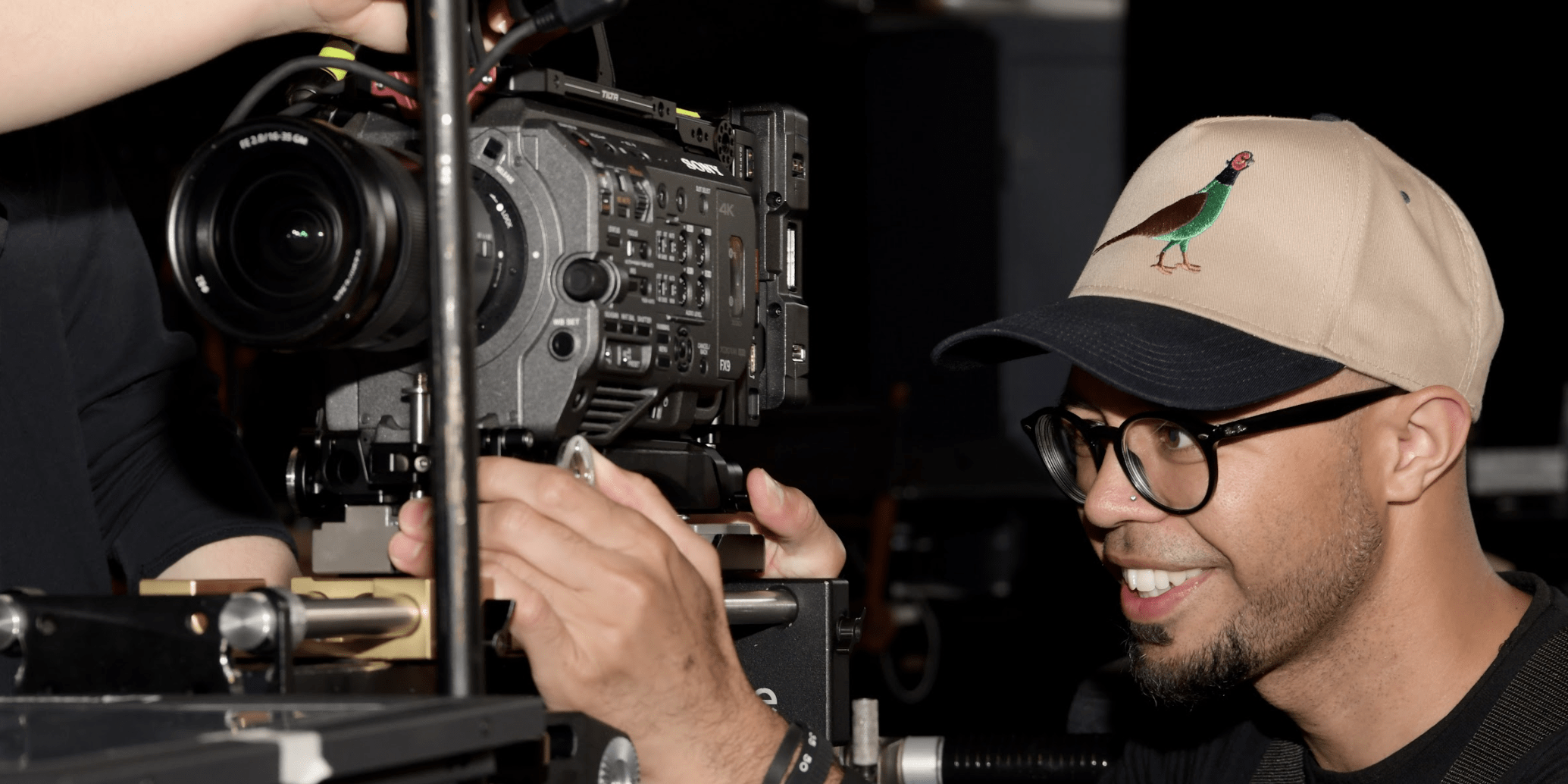

I remember standing at the threshold of that classroom, a knot of anticipation and fear tightening in my stomach. The sign above the door simply read ‘Directing Course,’ but to me, it felt like a portal to a world I’d only ever dreamed of peering into – let alone commanding. For years, I’d been a voracious consumer of stories, captivated by the magic spun on screen, but the how, the why, the actual alchemy of it all, remained a beautiful, tantalizing mystery. This was it, then: my chance to pull back the curtain, to understand the craft of filmmaking, and perhaps, to find my own voice within it.
Stepping into that room for the first time felt like diving headfirst into an ocean of new possibilities, albeit one where I initially felt completely out of my depth. The air was thick with a nervous energy, a shared sense of excitement and vulnerability among a diverse group of people, all drawn by the same siren call of storytelling. Our instructor, a seasoned filmmaker with eyes that seemed to hold a thousand stories, greeted us with a warm smile that instantly put some of my anxieties at ease. He began not with technical jargon or complex theories, but with a simple question: "Why do you want to tell stories?" That question, profound in its simplicity, became the bedrock of everything we would learn in the months that followed. This wasn’t just a film directing course; it was a journey into the heart of human connection.
Our initial weeks were a deep dive into the script, the very blueprint of any film. I quickly learned that directing wasn’t just about pointing a camera; it began long before any lens was even uncapped. We were taught how to dissect a screenplay, to peel back its layers, searching for the subtext, the unspoken motivations, the character’s true desires hidden beneath their dialogue. It was like being given a secret decoder ring. Suddenly, every line, every pause, every scene transition took on new meaning. We’d spend hours discussing character arcs, the three-act structure, and the importance of conflict. I remember one particular exercise where we had to read a scene aloud, then re-read it, but this time embodying a completely different subtext. The transformation was astonishing; the exact same words could convey love, betrayal, indifference, or rage, simply by shifting the underlying intention. This was my first true "aha!" moment in the directing course – realizing the immense power of interpretation and the director’s role in shaping it.
Then came the visual language, and my mind truly began to explode. Before this directing course, I thought composition was just about making things look nice. Oh, how wrong I was! We learned about framing, the rule of thirds, leading lines, negative space, and how each choice could subtly, or not so subtly, guide the audience’s eye and emotional response. A wide shot could convey isolation or grandeur, while a tight close-up could amplify intimacy or tension. Camera movement wasn’t just for show; a dolly shot could represent a character’s journey, a tracking shot their relentless pursuit, a handheld shot their instability. Our instructor would show us clips from classic films, freezing frames, dissecting every element, explaining how the director used light, shadow, color, and depth to tell the story without a single word being spoken. I started seeing the world differently, framing everyday moments in my mind, understanding how light hit a face or how two people occupied a space could convey a narrative. It was an invaluable part of learning how to direct.
Perhaps the most intimidating, yet ultimately most rewarding, aspect of the entire directing course was learning to work with actors. This, I quickly discovered, was less about giving orders and more about fostering trust, creating a safe space, and speaking a common language. We learned about different acting techniques, but more importantly, we learned about empathy. Our instructor emphasized that an actor’s performance is a gift, and the director’s job is to nurture it, to guide it, and to protect it. We practiced giving actionable notes – not just "make it better," but "what if your character is trying to hide a secret in this moment?" or "imagine you just lost something incredibly precious." Rehearsals became a dance, a delicate negotiation of intentions and emotions. There were days of frustration, of course, when a scene just wouldn’t click, but then there were moments of pure magic, when an actor, guided by a subtle suggestion, would unlock something profound and truthful. It taught me patience, observation, and the profound art of human connection, skills that extend far beyond the film set.
Blocking and staging were next on the curriculum, and this felt like choreographing a silent ballet. How do characters move within a space? Who is dominant? Who is submissive? Where do they stand when delivering a crucial line? Every step, every gesture, every turn of the head contributes to the narrative. We practiced with imaginary sets, using our classmates as stand-ins, mapping out movement patterns on paper and then bringing them to life. It was a fascinating exercise in spatial awareness and storytelling through physical presence. This practical directing training helped solidify the abstract concepts we’d been discussing.
Pre-production, the logistical backbone of any film, was where the abstract theories started to meet the concrete realities. We delved into storyboarding, drawing out every shot, planning camera angles and character positions. This was crucial for visualizing the film before a single frame was shot. We learned about shot lists, breaking down scenes into individual shots, planning coverage, and ensuring we had everything we needed to tell the story effectively. While we didn’t get into deep budgeting, we understood the importance of resource management and planning for the unexpected. It was about meticulous preparation, understanding that a well-planned shoot saves countless headaches and creative compromises down the line. It felt like building a sturdy ship before sailing it into unknown waters.
Then came the moment we all anticipated with a mixture of terror and excitement: our first short film project. This was the culmination of everything we’d learned in the directing course, a chance to apply all those theories and techniques. I remember the sleepless nights, meticulously planning every detail, from the exact shade of the costume to the way the light would fall through a window. The shoot itself was a whirlwind of controlled chaos. The microphone boom kept dipping into the frame, an actor forgot their line at a crucial moment, and the sun decided to hide behind clouds just when we needed golden hour. But through it all, I remembered our instructor’s words: "The director is the captain of the ship, even when it feels like it’s sinking." I had to make quick decisions, adapt, reassure my crew and actors, and keep the vision alive. It was exhilarating, exhausting, and utterly transformative. That experience truly hammered home the leadership aspect of directing.
Post-production, often seen as the editor’s domain, was another critical learning curve for us as aspiring directors. We sat in on editing sessions, understanding how the rhythm and pace of a film are crafted in the cutting room. A director’s vision doesn’t end when "cut" is called on set; it continues through the editor’s choices, the sound design, and the musical score. We learned how to communicate effectively with an editor, how to articulate the emotional arc of a scene, and how a slight adjustment in a cut could completely change its impact. We explored the power of sound – how ambient noise could build atmosphere, how silence could amplify tension, and how music could elevate emotion. It was a revelation to see how a film could be re-shaped, refined, and truly brought to life in the editing suite. The directing course ensured we understood that filmmaking is a collaborative art, but the director’s voice must resonate through every stage.
One of the most profound lessons I took from this directing course wasn’t just about cameras or actors, but about resilience. Filmmaking is a constant dance with challenges, from technical glitches to creative blocks, from budget constraints to unpredictable weather. I learned to embrace problem-solving, to see obstacles not as roadblocks but as opportunities for creative workarounds. It taught me to be resourceful, to think on my feet, and to trust my instincts. There were moments of doubt, of course, when I questioned if I had what it took, but those moments were always met with encouragement from our instructor and the camaraderie of my peers. We were a small band of storytellers, cheering each other on, offering constructive criticism, and sharing in each other’s triumphs.
The impact of that directing course extended far beyond the classroom walls. It didn’t just teach me how to direct a film; it taught me how to observe the world with a keener eye, to listen with a more open heart, and to appreciate the intricate tapestry of human experience. I began to see stories everywhere – in the way a stranger averted their gaze, in the worn hands of an old craftsman, in the laughter of children in a park. It deepened my appreciation for the films I loved, understanding now the immense thought and effort that went into every frame, every performance, every sound cue. It made me a more conscious consumer of art and a more empathetic human being.
For anyone considering a directing course, especially if you’re a beginner like I was, I can’t recommend it enough. It’s an immersive experience that strips away the mystique of filmmaking and replaces it with tangible skills and a profound understanding of the craft. You’ll learn that directing is a blend of art and science, intuition and logic, leadership and collaboration. You’ll discover that your unique perspective, your individual voice, is your most powerful tool. You’ll make mistakes, you’ll feel overwhelmed, but you’ll also experience moments of pure revelation and immense satisfaction.
The journey doesn’t end when the course finishes. It’s merely the beginning of a lifelong pursuit of mastering the art of storytelling. What a directing course truly provides is a solid foundation, a sturdy compass to navigate the vast and exciting world of filmmaking. It equips you with the knowledge, the tools, and most importantly, the confidence to take that first step, to call "action" on your own creative vision. My own canvas, once blank and intimidating, now feels like it’s unfolding, layer by layer, with every story I yearn to tell. And for that, I am eternally grateful for the experience of stepping through that door, into that directing course, and into the world of film.