
I remember a time, not so long ago, when the world felt like a collection of disconnected facts. The sky was blue because… well, it just was. Plants grew because… they just did. It wasn’t that I wasn’t curious; quite the opposite. My head was always buzzing with "hows" and "whys," but the answers often felt beyond my reach, hidden in textbooks that seemed to speak a different language. That’s where my adventure with a science course began – not with a grand decision, but with a quiet yearning to understand the intricate machinery of everything around me.
Choosing to dive into a formal science course wasn’t a snap judgment. It felt more like answering a call, a whisper from the universe inviting me to peek behind the curtain. I wasn’t a prodigy, nor did I have a long lineage of scientists in my family. I was just someone who found a peculiar joy in observing the tiny ants marching in a line, or wondering about the invisible forces that held the moon in its place. The idea of structured learning in science, however, felt a bit intimidating. Would it strip away the wonder and replace it with dry equations? Would I be smart enough? These were the anxieties that gnawed at me as I filled out the enrollment forms for my first comprehensive science course.
Stepping into that initial classroom felt like entering a new world. The air hummed with a different kind of energy. There were diagrams on the walls I didn’t yet understand, equipment I couldn’t name, and a sense of purpose that was both exciting and a little overwhelming. My first few weeks were a blur of new terms: atoms, cells, forces, elements. It was like learning a brand new language, one where every word unlocked a deeper secret about reality. I remember the sheer satisfaction of finally grasping the concept of a covalent bond, picturing two atoms sharing electrons like tiny, eager hands. It wasn’t just memorization; it was a sudden, clear image forming in my mind, a little piece of the universe slotting into place. This initial immersion in a science course was about building a foundation, not just for knowledge, but for a new way of thinking.
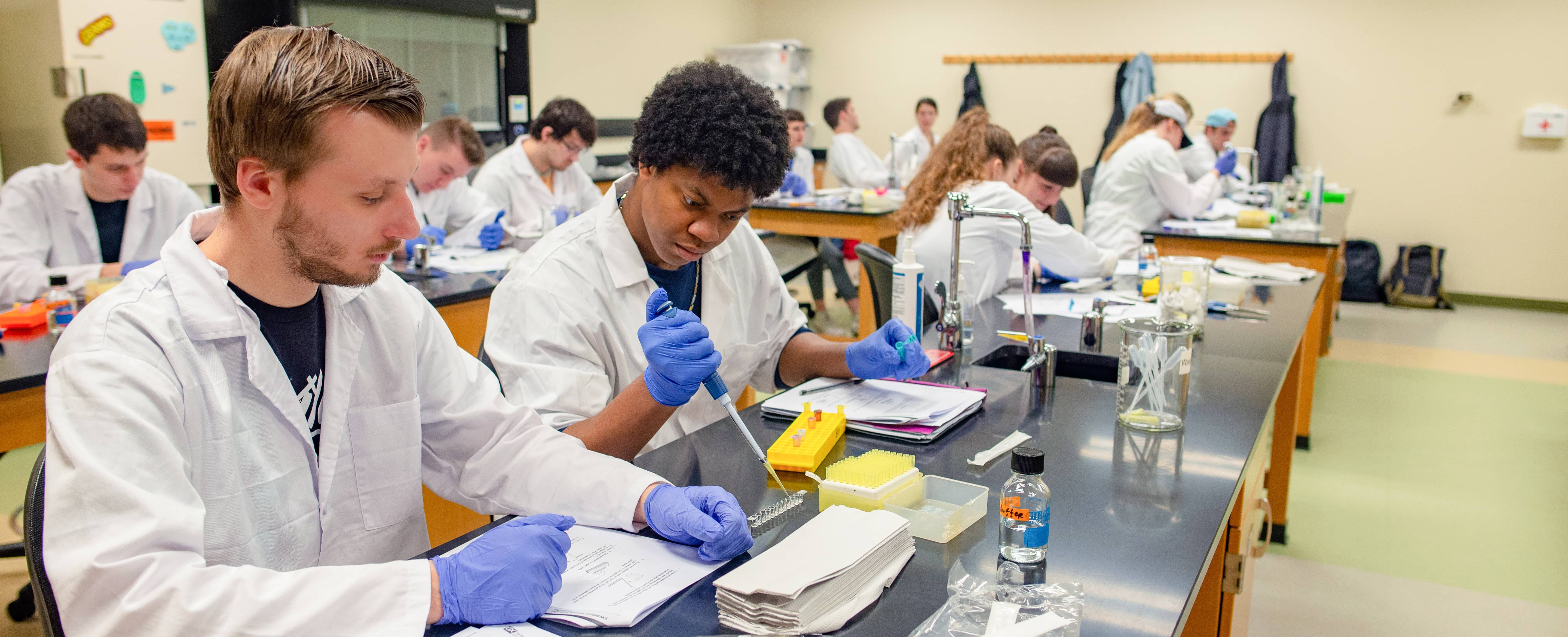
My journey through the science course quickly branched out, touching upon various disciplines, each with its own charm and challenges. Chemistry, for instance, became a fascinating exploration of transformation. I still recall the distinct smell of the chemistry lab – a mix of sterile cleaning agents and something faintly metallic, with an occasional whiff of something wonderfully, dangerously reactive. My hands, initially clumsy with test tubes and Bunsen burners, slowly gained a practiced grace. I learned to measure precisely, to observe carefully, and to record diligently. One particular experiment involved creating a vibrant precipitate, watching as two clear liquids, once separate, combined to form a cloud of brilliant yellow solids. It felt like magic, but I knew, deep down, it was the elegant dance of molecules, governed by predictable rules. The satisfaction wasn’t just in the visual spectacle, but in understanding why it happened, tracing the path of electrons and ions. This wasn’t just rote learning; it was engaging with the very fabric of matter, a core component of any robust science course.
Then there was biology, the study of life itself, which resonated with a different kind of awe. From peering through a microscope at the intricate structure of an onion cell – a tiny, living brick – to understanding the vast, interconnected web of an ecosystem, biology offered a constant stream of revelation. I remember the quiet concentration during a dissection, carefully tracing the path of nerves and blood vessels, marveling at the efficient design of a frog’s internal organs. It wasn’t gruesome; it was an intimate encounter with life, a chance to appreciate the engineering marvel that is a living creature. Learning about photosynthesis, how plants transmute sunlight into energy, changed the way I looked at every leaf, every blade of grass. It wasn’t just green; it was a silent, continuous factory, fueling life on Earth. A good science course in biology doesn’t just teach you facts; it cultivates a profound respect for the delicate balance of life.
Physics, on the other hand, was where my brain often felt stretched to its limits, but also where some of the most profound "aha!" moments occurred. Concepts like gravity, electromagnetism, and thermodynamics seemed so abstract at first. I struggled with the math, the vectors, and the seemingly counter-intuitive principles. But slowly, painstakingly, the pieces began to fit. I remember the moment I finally understood how a simple lever worked, or how a circuit completed, or the immense forces involved in planetary motion. It was like gaining a new pair of glasses that allowed me to see the invisible forces at play in the world – the push and pull, the energy transformations, the very rules that govern the universe. Standing on a bridge, I no longer just saw concrete and steel; I saw tension, compression, and the careful application of physical laws. Physics in a science course offers a unique perspective, revealing the grandeur and elegance of the cosmos in every mundane object.
Beyond the specific subjects, a comprehensive science course taught me invaluable skills that transcended the classroom. Lab work was more than just following instructions; it was about critical thinking, problem-solving, and resilience. Experiments rarely went perfectly the first time. Solutions wouldn’t change color as expected, readings would be off, or equipment would malfunction. These weren’t failures; they were opportunities. They forced me to troubleshoot, to review my methods, to collaborate with my peers, and to approach the problem from a different angle. This iterative process of hypothesis, experimentation, observation, and refinement became ingrained in my approach to any challenge, whether academic or personal. Learning to collect data meticulously, analyze it objectively, and draw conclusions based on evidence, rather than assumption, is perhaps the greatest gift any science course can bestow.
There were moments of genuine struggle, of course. Late nights poring over textbooks, equations that refused to make sense, concepts that felt impossibly abstract. There were times I doubted my ability, wondering if I had bitten off more than I could chew. But what kept me going was that initial spark of curiosity, coupled with the encouragement of patient instructors and the shared camaraderie with fellow students who were all navigating the same intellectual terrain. We celebrated small victories together – finally solving a particularly tricky physics problem, acing a chemistry practical, or understanding a complex biological pathway. These shared experiences underscored the human element of science; it’s not a solitary pursuit but a collective endeavor.
The beauty of a science course isn’t just in accumulating knowledge; it’s in transforming your way of thinking. It instills a healthy skepticism, a need for evidence, and an appreciation for the scientific method as a powerful tool for understanding the world. You start questioning headlines, seeking out primary sources, and recognizing logical fallacies. You become a better observer, noticing details you once overlooked. You develop a deeper understanding of current events, from climate change to medical breakthroughs, because you have a foundational grasp of the underlying scientific principles. This broader impact, this sharpening of the mind, is a less talked about but profoundly significant benefit of undertaking a dedicated science course.
For anyone contemplating a science course, perhaps feeling that same mix of curiosity and apprehension I once did, I offer this: you don’t need to be a genius. What you need is an open mind, a willingness to be wrong, and an insatiable curiosity. Science is not just for a select few; it’s for anyone who looks at the world and wonders "how?" or "why?". It’s about asking questions, not just finding answers. It’s about embracing the unknown and finding joy in the process of discovery. Whether you dream of becoming a researcher, an engineer, a doctor, or simply a more informed citizen, the foundational understanding gained from a science course is incredibly empowering. The transferable skills – critical thinking, problem-solving, data analysis, meticulous observation, and effective communication – are highly valued in almost any field imaginable.
My journey through that science course didn’t end when I received a certificate or a degree. It simply shifted gears. The foundational knowledge and, more importantly, the scientific mindset I developed continue to shape how I interact with the world every single day. I still find myself marveling at the simple elegance of a snowflake, understanding the physics behind its formation, or appreciating the complex biochemistry that allows my body to function. The world didn’t lose its magic; instead, it gained a deeper, more profound kind of wonder, one rooted in understanding rather than mere observation. Embarking on a science course was one of the most enriching decisions I ever made, not just for the knowledge it imparted, but for the way it taught me to see, to question, and to understand the magnificent, intricate tapestry of existence. It was, and continues to be, an unfolding adventure.