
I used to think writing was some magical gift, bestowed upon a chosen few who simply knew how to string words together like pearls on a necklace. For years, I’d stare at a blank page, my mind a buzzing hive of ideas, yet my fingers remained stubbornly paralyzed. The stories were there, vivid and loud in my head, but the moment I tried to coax them onto paper, they’d scatter like startled birds, leaving behind only a messy jumble of half-formed thoughts and a growing sense of frustration. It felt like trying to capture smoke with bare hands.
This went on for a long, long time. I’d start countless notebooks, each with a hopeful first page followed by a desert of untouched lines. Blogs were launched and abandoned. Journal entries petered out after a week. The dream of expressing myself, of sharing the worlds and insights bubbling within me, seemed forever out of reach. I felt like a musician with a beautiful melody in their heart but no instrument to play it.
Then, one rainy afternoon, scrolling through the endless digital labyrinth, I stumbled upon an advertisement for a writing course. Not just any course, mind you, but one that promised to demystify the process, to break down the intimidating art of writing into manageable, learnable steps. My first reaction was skepticism. Could a course really teach something so inherently personal, so artistic? My second reaction, however, was a tiny flicker of hope, a spark in the otherwise dim landscape of my writing aspirations. What if it wasn’t magic after all? What if it was a craft, something that could be learned, practiced, and refined?
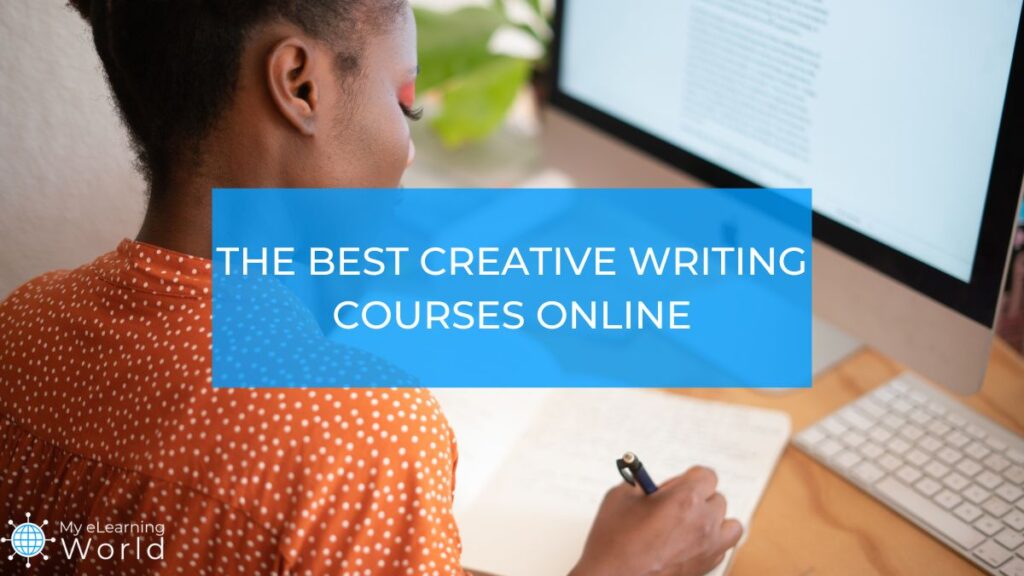
With a deep breath and a leap of faith, I signed up. I chose an online writing course, partly for the flexibility it offered around my work schedule, and partly because the thought of baring my fledgling words in front of actual humans in a physical classroom felt utterly terrifying. The course description focused on "creative writing for beginners," promising to cover everything from idea generation to crafting compelling narratives. It felt like the perfect starting point for someone like me, who felt like they were starting from negative one.
The first few modules were a revelation. I remember the instructor’s warm, encouraging voice in the introductory video, assuring us that every great writer started somewhere, often with wobbly, uncertain steps. This immediately put me at ease. My biggest fear was that everyone else in the class would be a secret literary genius, and I’d be exposed as the fraud I felt I was. Instead, I found myself among a diverse group of fellow aspiring writers, all sharing similar anxieties and hopes in the online forum. It was comforting to know I wasn’t alone in feeling like I was trying to climb Mount Everest in flip-flops.
The initial lessons dove straight into the bedrock of writing: idea generation. This was a concept I’d always struggled with, often waiting for inspiration to strike like lightning. The course taught us that ideas aren’t just found; they’re cultivated. We learned techniques like free-writing, mind-mapping, and observation exercises. I started carrying a small notebook everywhere, jotting down snippets of conversations, vivid descriptions of strangers, unusual signs, the way light fell on a particular building. Suddenly, the world around me transformed into a vast reservoir of potential stories. The instructor encouraged us to treat our notebooks not as places for perfect prose, but as messy, fertile grounds for raw thought. This simple shift in perspective was like unlocking a hidden door. My notebook began to fill, not with polished sentences, but with curious questions, evocative words, and fragments of scenes.
Next came structure. This was another game-changer. I’d always just started writing and hoped for the best, leading to rambling, incoherent pieces. The course introduced us to various narrative structures – the three-act structure, the hero’s journey, even simpler outlines for essays and short stories. It wasn’t about rigid rules, but about understanding the framework that holds a story together, giving it shape and momentum. Learning about rising action, climax, and resolution wasn’t just for epic novels; it applied to even the shortest anecdote. I began to see how a well-structured piece wasn’t just easier to read, but also easier to write because it provided a roadmap. It was like learning how to build a house: you need a blueprint before you start laying bricks.
One of the most profound lessons, and perhaps the one that resonated deepest with me, was "show, don’t tell." This phrase, now a cliché in writing circles, was a profound epiphany for me. I used to write things like, "Sarah was sad." The course challenged us to go deeper. How was Sarah sad? What did it look like? What did she do? "Sarah stared at the rain streaking down the windowpane, a cold knot tightening in her stomach. Her shoulders slumped, and a single tear traced a path down her cheek." Suddenly, the reader wasn’t just told about sadness; they felt it, they saw it. We practiced describing emotions, settings, and characters through their actions, dialogue, and sensory details. This exercise alone transformed my writing from dry statements into something much more vivid and immersive. It taught me to paint pictures with words, rather than just label them.
Then there was voice and tone. This felt like the truly artistic part, and also the most intimidating. How do you find your voice when you’re still struggling to form coherent sentences? The course emphasized reading widely and critically, analyzing how different authors achieved their unique sound. We experimented with different tones – humorous, serious, sarcastic, reflective. The instructor shared a brilliant analogy: your writing voice is like your speaking voice. It’s unique to you, and while you can adapt it for different situations (a formal presentation versus a casual chat), the core of it remains yours. The exercises involved writing the same scene from different perspectives or with different emotional undertones. Slowly, tentatively, I began to hear echoes of my own rhythm, my own way of looking at the world, emerge in my writing. It was like discovering a melody I didn’t know I possessed.
Grammar and mechanics, often seen as the dry, technical side of writing, were also covered. And surprisingly, I found myself enjoying it. The instructor presented these rules not as tedious burdens, but as tools that clarify meaning and prevent misunderstandings. Learning about comma usage, sentence structure, and the nuances of word choice wasn’t about being perfect; it was about ensuring my message landed exactly as intended. It was like learning the rules of the road – they allow for smooth, safe travel, not just restriction. Before, I’d skimmed over these details, hoping for the best. Now, I saw them as essential ingredients in the recipe for clear, impactful prose.
Perhaps the most challenging, yet ultimately rewarding, aspect of the course was feedback and revision. This was where my initial fear of judgment resurfaced. We had to submit our work, and then, crucially, we had to read and critique the work of our peers. Receiving feedback on my early attempts felt like a microscopic examination of my soul. Every red mark, every suggested change, initially stung. But the instructor taught us how to give and receive constructive criticism – focusing on specific elements, offering solutions, and understanding that feedback is about the writing, not the writer. I learned to detach my ego from my words, to see my drafts as malleable clay rather than fragile glass. And in critiquing others’ work, I honed my own critical eye, learning to spot areas for improvement that I could then apply to my own writing. Revision stopped being a chore and started becoming an exciting puzzle, a chance to polish and refine, to make something good even better. It was in the back-and-forth, the give and take of ideas and suggestions, that I truly began to understand the iterative nature of writing. A first draft, I learned, is just you telling yourself the story. The real work, the magic, happens in the revision.
The course also touched upon overcoming writer’s block, a monster I was intimately familiar with. Instead of waiting for inspiration, we learned about setting small, achievable goals, changing our environment, and using prompts to kickstart ideas. The idea that writing isn’t always about waiting for a muse, but about showing up and doing the work, even when it feels difficult, was a powerful one. It demystified the creative process, turning it into a disciplined, yet joyful, practice.
As the weeks turned into months, something extraordinary began to happen. The fear that had once paralyzed me started to recede. The blank page no longer felt like an adversary, but an invitation. I wasn’t just writing; I was thinking like a writer. I saw stories in everyday life, analyzed the structure of articles I read, and consciously paid attention to the nuances of language. My confidence grew, not because I suddenly became a literary superstar, but because I had acquired tools, strategies, and a framework. I understood the mechanics, and with that understanding came a newfound freedom to experiment, to play, to find my own way within the vast landscape of words.
The transformation wasn’t just about the words I put on paper; it was about how I saw myself. I was no longer just someone who wanted to write; I was someone who was writing. The course didn’t hand me a magic wand, but it gave me a sturdy toolkit and taught me how to use each instrument. It showed me that writing is not a destination, but a continuous journey of learning, practicing, and refining.
So, who is a writing course for? Based on my experience, it’s for anyone who has ever felt that gnawing desire to express themselves through words, but doesn’t know where to start. It’s for the aspiring novelist staring at an empty screen, the blogger struggling to connect with their audience, the student wanting to write clearer essays, the professional needing to craft more impactful emails and reports, or simply anyone who wants to articulate their thoughts with greater clarity and confidence. It’s for those who believe, deep down, that they have something to say, but just need a little guidance on how to say it.
If you’re considering taking a writing course, here are a few tips from someone who’s been there:
- Identify your goals: Are you looking to write fiction, non-fiction, poetry, or improve business writing? Different courses cater to different needs.
- Research instructors: A good instructor can make all the difference. Look for someone with experience, a clear teaching philosophy, and positive testimonials.
- Read the curriculum: Ensure the course covers the foundational elements you need, like idea generation, structure, voice, and revision.
- Consider the format: Online courses offer flexibility, while in-person workshops provide direct interaction. Both have their merits.
- Look for feedback opportunities: Constructive criticism is invaluable. A good course will integrate peer reviews or instructor feedback.
- Be prepared to work: A writing course isn’t a magic pill. It requires dedication, practice, and a willingness to step out of your comfort zone.
My journey through that writing course wasn’t just about learning grammar rules or story arcs. It was about discovering a part of myself I hadn’t known how to access. It was about turning a silent, internal world into something tangible, something shareable. It taught me that writing is less about being perfect and more about being brave enough to try, to make mistakes, to learn, and to keep going. The blank page still holds its challenges, but now, it also holds the promise of endless possibilities, of stories waiting to be told, and of a voice that has finally found its way home. And for that, I am eternally grateful for that rainy afternoon and that small, brave click of a mouse.