
I remember standing at the crossroads, a swirling vortex of uncertainty and a faint flicker of curiosity guiding my gaze. On one side lay the well-trodden path of predictable routines, and on the other, an exciting, somewhat daunting avenue beckoned: the world of news reporting. It wasn’t a sudden epiphany, but rather a slow-burning desire to understand the stories shaping our world, to peel back the layers of events, and perhaps, to even tell a few of them myself. That yearning eventually led me to enroll in a News Reporting Course, a decision that, looking back, feels like the most significant compass adjustment in my life’s journey.
Before I stepped into that first classroom, my understanding of news was largely confined to what I consumed passively – headlines flashing across screens, voices from the radio, printed words on paper. I imagined reporters as intrepid adventurers, always at the scene of the action, with a microphone in hand and a steely gaze. While parts of that romanticized image hold true, the course quickly taught me that the reality is far more intricate, demanding, and profoundly rewarding. It’s not just about being there; it’s about seeing, understanding, verifying, and then, with immense care, communicating.
The initial days of the course felt like learning a new language. We weren’t just told about news; we were encouraged to think like news gatherers. Our instructors, seasoned journalists with decades of experience etching lines of wisdom around their eyes, didn’t just lecture; they shared war stories, ethical dilemmas, and moments of profound connection with strangers. They hammered home the first, most fundamental lesson: what is news? It sounds simple, but distinguishing between mere information and a truly newsworthy event – one that impacts people, sparks debate, or reveals truth – became our first intellectual hurdle. We delved into the elements: timeliness, proximity, prominence, impact, conflict, novelty. It was like being given a special pair of glasses that suddenly made the world’s daily hum resolve into distinct, compelling narratives.
Then came the bedrock of all good journalism: research and verification. This wasn’t just about Googling something. Oh no. This was about digging, cross-referencing, questioning assumptions, and understanding the delicate art of source evaluation. We learned about primary and secondary sources, the importance of official documents, and the inherent biases that can creep into even the most seemingly neutral statements. Our assignments often involved dissecting news stories we admired or critiqued, tracing their origins, and attempting to verify every single claim. It was tedious work at times, like sifting through sand for a single grain of gold, but the satisfaction of unearthing a confirmed fact, of establishing undeniable truth, was immensely gratifying. This phase of the News Reporting Course truly instilled in me a healthy skepticism and a profound respect for verifiable information, a skill invaluable far beyond the newsroom.
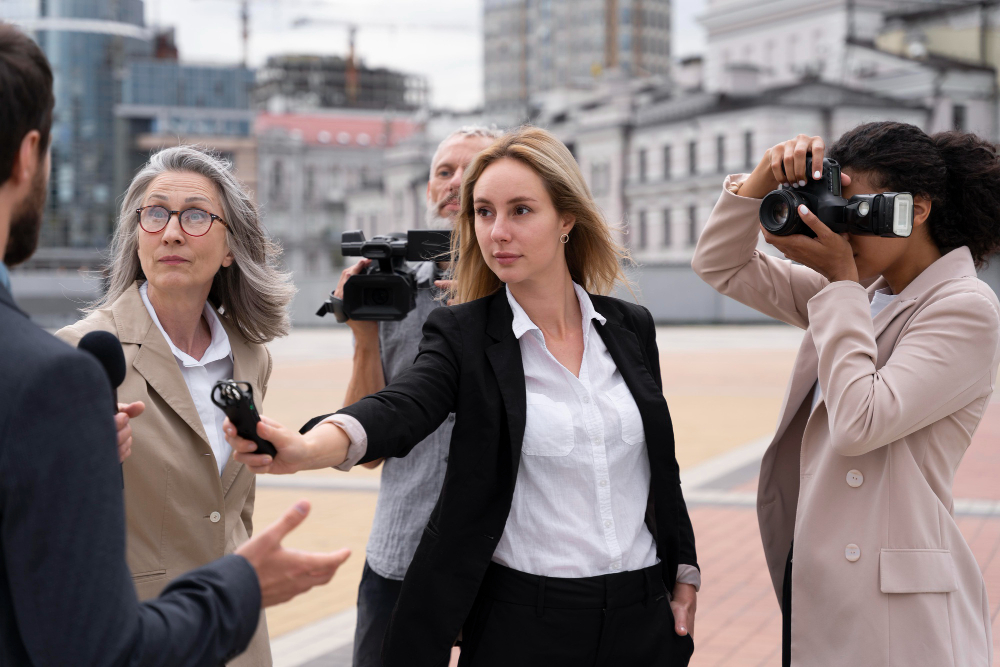
The thought of interviewing strangers used to make my palms sweat. I imagined awkward silences, fumbled questions, and uncooperative subjects. The course, however, turned this fear into an exhilarating challenge. We started with mock interviews, role-playing with classmates, practicing everything from open-ended questions to follow-ups, learning to listen more than we spoke, and to observe body language. Our instructors taught us about building rapport, the subtle art of making someone feel comfortable enough to share their story, even when the topic was sensitive or difficult. We learned to prepare meticulously, to research our subjects, and to have a clear objective for each conversation. But perhaps the most powerful lesson was about empathy – understanding that behind every quote is a person with experiences, feelings, and a perspective that deserves to be heard accurately and respectfully. My first real interview, a local shopkeeper discussing the impact of new city regulations, was nerve-wracking but ultimately empowering. I walked away not just with quotes, but with a deeper understanding of a community issue and the quiet pride of having connected with another human being on a meaningful level. This practical element of the journalism training was where the theoretical lessons truly came alive.
Writing for news is an entirely different beast than writing an essay or a story. Gone were the flowery descriptions and meandering introductions. The News Reporting Course demanded clarity, conciseness, and precision. We were introduced to the inverted pyramid structure – the most crucial information at the top, followed by supporting details, and then background information. "Don’t bury the lead!" became our mantra. Crafting compelling headlines, writing punchy, informative lead paragraphs that hook the reader immediately, and maintaining an objective tone while still conveying impact were skills we honed through endless exercises. We wrote hard news reports, feature articles, opinion pieces, and even learned the basics of scriptwriting for broadcast. Each piece was meticulously critiqued, not just for grammar or style, but for its adherence to journalistic principles. It was a rigorous process, often frustrating, but the transformation in my writing from verbose to impactful was undeniable.
Perhaps the most profound and challenging aspect of the entire experience was the module on ethics in journalism. This wasn’t a theoretical discussion; it was a deep dive into the moral compass that guides every reporter. We grappled with scenarios that had no easy answers: when does the public’s right to know outweigh an individual’s right to privacy? How do you report on tragedy with sensitivity and respect? What constitutes a conflict of interest? How do you ensure fairness and avoid bias, even unconscious bias, in your reporting? These discussions were intense, often leaving us with more questions than answers, but they ingrained in us the immense responsibility that comes with wielding the power of information. We learned about codes of conduct, the importance of transparency, and the potential consequences of unethical practices. This part of the journalism training wasn’t just about skills; it was about character, integrity, and the very soul of responsible reporting. Understanding media ethics became paramount.
Beyond the core reporting skills, the News Reporting Course also ventured into the practicalities of media law – a surprisingly fascinating, if sometimes intimidating, landscape. We learned about defamation, libel, slander, copyright, and the legal ramifications of what we publish. It was a crucial lesson in understanding the boundaries and protections that exist for journalists, and equally, the severe penalties for overstepping those bounds. Knowing our legal rights and responsibilities wasn’t just about avoiding lawsuits; it was about empowering us to report fearlessly and accurately, secure in the knowledge of where the lines are drawn.
As the world evolved, so did the course. We didn’t just learn about traditional print or broadcast; we plunged into the dynamic realm of digital journalism. This meant understanding the power of social media for news gathering and dissemination, the basics of multimedia storytelling – capturing compelling photos, shooting short video clips, even recording audio for podcasts. We explored data journalism, learning how to interpret statistics and present them engagingly. The emphasis was on being a versatile, adaptable journalist, capable of working across various platforms. This focus on modern reporting tools ensured that the training was relevant and forward-looking, preparing us for the multifaceted demands of today’s newsrooms.
The practical fieldwork was arguably the most exhilarating part of the News Reporting Course. This is where theory met reality, often with a jolt. We were sent out into the community, tasked with finding stories, interviewing real people, and meeting tight deadlines, just like professional reporters. I remember one assignment where I had to cover a local council meeting. The sheer volume of information, the dry official language, and the challenge of distilling complex debates into a concise, engaging report taught me more than any textbook ever could. Another time, I had to find and interview three people with differing opinions on a contentious local development project. It pushed me out of my comfort zone, forcing me to approach strangers, ask difficult questions, and synthesize diverse viewpoints fairly. These real-world simulations were invaluable in building confidence and demonstrating the true grit required to be a reporter. It was during these experiences that I truly felt like I was becoming a part of the vibrant world of news gathering, applying investigative reporting skills in a tangible way.
There were moments of frustration, certainly. The feeling of hitting a dead end in research, struggling to get a crucial interview, or battling writer’s block under a looming deadline. But these challenges were part of the learning curve, each one a stepping stone towards resilience. The camaraderie among my classmates was also a huge support. We were all in this together, sharing tips, commiserating over tough assignments, and celebrating small victories. Our instructors weren’t just teachers; they were mentors, guiding us with patience, pushing us when we needed it, and always, always emphasizing the importance of ethical, responsible reporting.
By the time the course concluded, I wasn’t the same person who had hesitantly walked into that first classroom. My perspective on the world had irrevocably shifted. I no longer just consumed news; I understood the immense effort, skill, and integrity that went into its creation. I had developed a keen eye for detail, a critical mind, and a newfound confidence in my ability to ask questions, to listen deeply, and to articulate complex ideas clearly. The News Reporting Course had equipped me not just with a skillset, but with a profound appreciation for the role of journalism in a democratic society – as a watchdog, a storyteller, a truth-seeker, and a catalyst for change.
Stepping out of the course, I felt prepared, not just to embark on a career in journalism, but to engage with the world more thoughtfully. I understood the power of words, the weight of a story, and the essential responsibility of those who choose to tell them. For anyone with a burning curiosity, a desire to understand, and a commitment to truth, a News Reporting Course is more than just a training program; it is an awakening, a journey into the heart of how our world communicates and comprehends itself. It’s an invitation to join a vital conversation, armed with the tools to make it honest, insightful, and impactful. My transformative journey through this course has shown me that news reporting is not merely a profession; it is a calling, a continuous pursuit of understanding, and a powerful way to contribute to the tapestry of human experience.